Establishing secure connection…Loading editor…Preparing document…

Louisiana Executory Process

This template is fully customizable. Edit the text, fill out the fields, and send it for signature. Give it a try!
Louisiana Executory Process

What the Louisiana Executory Process Is and When It Applies

The Louisiana Executory Process is a civil-law remedy used in Louisiana to enforce certain written instruments that expressly grant the creditor a right of immediate seizure and sale without the ordinary plenary suit. It provides an expedited judicial route to seize property subject to a mortgage, pledge, or other security when the debt is evidenced by a proper written instrument and procedural prerequisites are met. The process is governed by state procedural law and includes service, a petition, and a judge's order authorizing seizure and sale subject to protections for debtors and potential post-seizure remedies.

Why the Executory Process Matters for Louisiana Creditors and Debtors

The executory remedy offers speed and predictability for enforcing security interests, reducing time and expense compared with ordinary judicial proceedings while preserving certain statutory protections for debtors.

Why the Executory Process Matters for Louisiana Creditors and Debtors

Who Typically Prepares or Signs an Executory Process Filing

Users include lenders, mortgage servicers, commercial landlords, and attorneys who handle secured transactions and enforcement in Louisiana.

  • Lenders and servicers filing to enforce a mortgage or pledge against collateral under a written instrument.
  • Commercial landlords or creditors seeking expedited seizure where the instrument grants executory rights.
  • Attorneys preparing petitions, ensuring service, and advising on debtor protections and redemption rights.

Step-by-step: Preparing and Filing an Executory Process Petition

Follow these sequential steps to prepare a compliant petition and begin enforcement while preserving debtor protections.

  • 01
    1. Gather Documents: Collect the written instrument and supporting loan records.
  • 02
    2. Draft Petition: State grounds, attach the instrument, and list relief requested.
  • 03
    3. Serve Parties: Effect service according to state rules before the hearing.
  • 04
    4. Obtain Order: Judge may grant seizure and sale with conditions.

Core Components to Include in a Professional Executory Process Filing

A complete filing organizes legal grounds, evidence, and practical instructions so the court can determine entitlement to the expedited remedy.

Caption

Court identification, docket number, petitioner and respondent names, and procedural posture at the top of the petition.
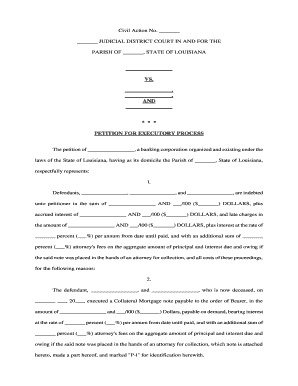
Statement of Right

Clear assertion that the instrument grants an executory right and citation to the specific instrument page or clause.

Attached Instrument

A certified or original copy of the written instrument evidencing the debt and the executory clause must be attached.

Affidavit of Amount

Itemized affidavit showing principal, interest, fees, and how totals were calculated at the relevant date.

Service Evidence

Proof of service or attempted service consistent with Louisiana procedural rules and local court requirements.

Relief Sought

A precise request for seizure, sale, appointment of custodian if required, and any stay terms or bond.

Configuring an Online Workflow for Filing and Serving the Petition

When moving the process online, standardize fields, attachments, and signer roles to reduce errors and speed filing.

Field Configuration
Document Template Use a template with required exhibits and auto-inserted instrument references.
Signer Roles Assign attorney, petitioner, and paralegal roles with email-based authentication.
Evidence Upload Require PDF/A attachments and name files consistently for clerk review.
Service Tracking Enable automated proof-of-service generation and storage.

Typical Process Flow From Petition to Seizure

This sequence shows the core handoffs from document preparation to enforcement and post-seizure stages.

  • Prepare Petition: Draft and attach the evidentiary instrument.
  • File With Court: Clerk receives petition and assigns a judge.
  • Judge Review: Judge issues order if procedural conditions are satisfied.
  • Seizure and Sale: Authorized officers seize collateral and proceed to sale.

Digital Signing and eFiling Requirements

Ensure your e-signature and e-filing platform meets authentication, audit, and document retention standards for Louisiana filings.

  • File formats: PDF/A and DOCX accepted by many clerks.
  • Authentication: Email + SMS or stronger sign-in options recommended.
  • Audit Trail: Timestamp, IP, and signer data required for evidence.

Timing Considerations and Court Filing Deadlines

Although timing varies by parish and case details, act promptly: delays in service, filing, or seizure can jeopardize remedial rights.

Pre-Filing Review:

Allow time to compile instrument, affidavit, and exhibits.

Service Window:

Complete service per local rules before the hearing date.

Seizure Scheduling:

Seizure often occurs shortly after judge signs the order.

Redemption Periods:

Debtor redemption timelines vary; account for statutory windows in calculations.

Appeal Timeframes:

Post-seizure challenges have tight deadlines—monitor calendar closely.

Key Milestones from Petition to Sale

Track these numbered stages to ensure procedural compliance and reduce the risk of reversal or delay.

01

Document Assembly

Compile instrument, affidavits, and supporting records before filing.

02

Court Filing

Submit petition to the clerk with required exhibits and proposed order.

03

Service and Notice

Serve the respondent and any interested parties per rule.

04

Execution

Authorized seizure, custody, and eventual sheriff's sale occur under order.

How Executory Process Differs from an Ordinary Judicial Suit

Compare the summary executory remedy with the ordinary plenary judicial process to choose the appropriate enforcement path.

Criteria Executory Process Ordinary Suit
Speed faster slower
Hearing limited review full trial possible
Relief Type seizure/sale monetary judgment
Typical Use enforcing security instruments broad civil disputes

eSignature Vendor Comparison for Filing and Execution Workflows

Comparing starting price and core features helps select an eSignature provider for high-volume filing, notarization, and secure storage.

signNow DocuSign Adobe Sign PandaDoc HelloSign
Starting Price $8/user/mo $15/user/mo $14/user/mo $19/user/mo $15/user/mo
Free Trial 7-day trial Depends on plan Depends on plan Depends on plan Depends on plan
Bulk Send Yes (Business Premium+) Depends on plan Depends on plan Depends on plan Depends on plan
Audit Trail Yes Yes Yes Yes Yes
HIPAA Compliant Yes (BAA) Yes Yes No No
Envelope Cap No cap 100 envelopes/user/year Varies Varies Varies

Real-world Examples of Digital Workflows Supporting Enforcement

These customer stories show practical uses of secure eSign and document workflows in enforcement and collateral management.

Optica Ventures LLC

Their operations team standardized templates and attachments to reduce errors and speed filings.

  • The interface simplified remote signer steps for borrowers and officers.
  • As a result, Optica reported faster document turnaround and fewer clerical defects while maintaining audit logs and secure storage for court-ready records.

Tech Data

Tech Data integrated eSign into its revenue processes to streamline approvals and evidence gathering.

  • Integration with ERP and audit trails anchored compliance.
  • The change reduced manual routing, improved tracking of executed instruments, and centralized signed files for legal review and enforcement workflows.

Common Pitfalls to Avoid When Preparing Executory Process Filings

  • Incomplete instrument attachments or missing pages that omit the executory clause cause judges to deny summary enforcement and require plenary suit.
  • Incorrect party names or outdated ownership records lead to defective service and potential nullification of seizure orders.
  • Failure to follow local service rules or clerk requirements creates procedural grounds for stay or dismissal.
  • Attempting seizure without clear proof of amounts due or without required affidavits invites rehearing and potential cost sanctions.

Security, Compliance, and Authentication Considerations

Encryption: TLS 1.2/1.3 in transit; AES-256 at rest
Audit Trail: Timestamps, IP, and action history
Certifications: SOC 2 Type II and ISO 27001
Regulatory Support: ESIGN, UETA compliance
HIPAA: Compliant with BAA when required
21 CFR Part 11: Support for FDA record needs

Legal Risks and Potential Consequences of Errors

Denial of Relief: Judge may deny seizure
Reversal Risk: Seizure could be set aside
Monetary Damages: Counterclaims for wrongful seizure
Sanctions: Costs or attorney-fee awards
Loss of Priority: Improper recording affects lien priority
Compliance Gaps: HIPAA or procedural breaches risk fines

Frequently Asked Questions About the Louisiana Executory Process

Answers to common procedural, evidence, and electronic-signing questions to reduce filing errors and anticipate court scrutiny.


Need help? Contact support

be ready to get more
Join over 28 million airSlate SignNow users