Establishing secure connection…Loading editor…Preparing document…

Petition Contesting Probate of Will

This template is fully customizable. Edit the text, fill out the fields, and send it for signature. Give it a try!
Petition Contesting Probate of Will

What a Petition Contesting Probate of Will Is

A Petition Contesting Probate of Will is a formal court filing that challenges the validity or probate process of a decedent's will. It sets out the petitioner’s legal interest, the grounds for contest (for example, lack of testamentary capacity, undue influence, forgery, or improper execution), and the specific relief requested from the probate court. The petition triggers notice, pleading, and proof requirements under state probate procedure, and typically initiates a contested probate matter that proceeds by motion, hearing, or trial before a judge. Procedures and remedies vary by jurisdiction.

Why a Petition Matters for Estate Outcomes

Filing a petition allows interested parties to challenge wills that may be invalid or improperly admitted to probate. A successful contest can prevent distribution under an invalid document and protect estate assets and beneficiary rights.

Why a Petition Matters for Estate Outcomes

Who Typically Prepares and Files This Petition

The petition is used by people with a direct legal interest in an estate who believe the will is defective or improperly probated.

  • Heirs and beneficiaries with standing who would receive differently under intestacy or an earlier will
  • Creditors asserting claims affected by probate distributions
  • Personal representatives or co-executors disputing probate procedure or document validity

Core Components of a Professional Petition Contesting Probate of Will

A thorough petition organizes jurisdictional facts, petitioner standing, the contested instrument, legal grounds, supporting facts, and the specific relief requested.

Caption

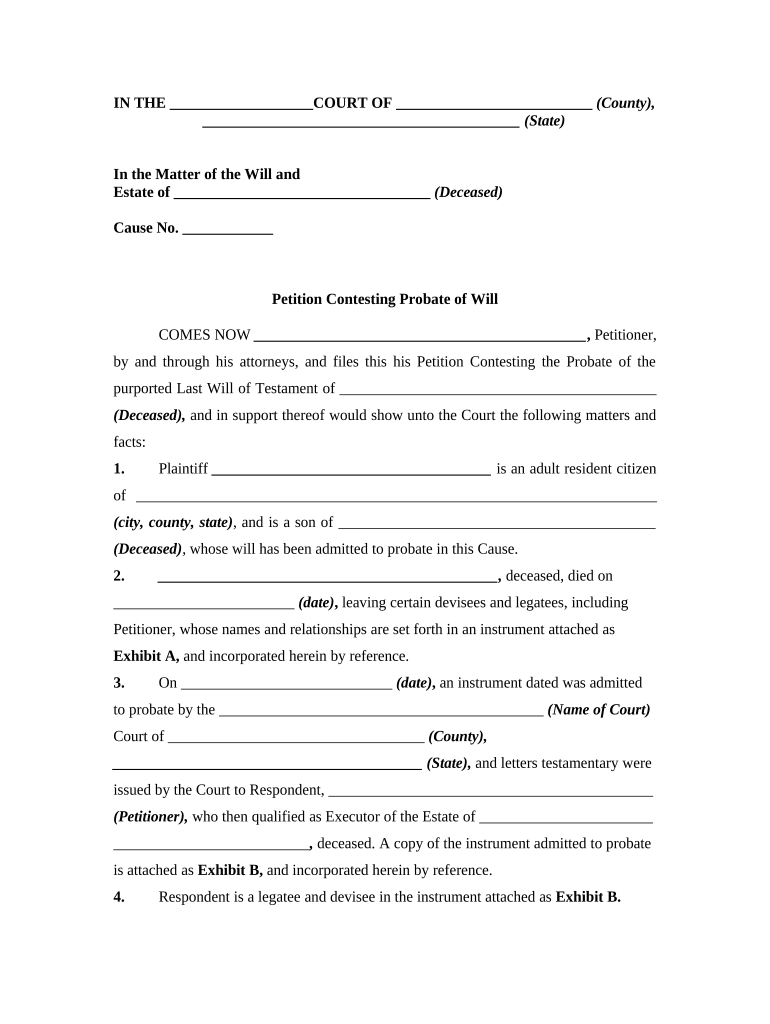
Court name, case number, party names, and title of the pleading. Accurate captioning ensures proper case assignment and service; clerks reject incorrect captions.
Jurisdiction

Statement the court has authority over the matter and that venue is proper, including decedent residence and county where probate was opened.

Standing Allegation

Clear explanation why the petitioner has legal standing to contest (heir, devisee, creditor), supported by relationship or documentation.

Grounds for Contest

Specific legal bases such as lack of capacity, undue influence, fraud, improper execution, or forgery, with concise factual support for each allegation.

Evidence Summary

List of exhibits and witnesses the petitioner will rely on, including affidavits, medical records, witness declarations, or handwriting analysis reports.

Prayer for Relief

Precise request to the court (deny probate, admit different will, remove personal representative, award fees), and any requested procedural orders.

Required Information and Fields to Include

Decedent Information: Full legal name and last residence
Case Reference: Probate case number
Petitioner Identity: Name and contact for petitioner
Grounds Summary: Short list of contest grounds
Relief Sought: Specific remedies requested
Exhibit List: Documents and witness names

Step-by-Step: Preparing and Filing the Petition

Follow a clear sequence: prepare the petition, attach supporting evidence, serve interested parties, file with the probate court, and attend hearings as scheduled.

  • 01
    Draft Petition: Draft facts, grounds, and relief concisely
  • 02
    Gather Evidence: Collect affidavits and relevant records
  • 03
    Serve Parties: Serve pursuant to state probate rules
  • 04
    File and Calendar: File with clerk and request hearing

Configuring an Online Filing and eSubmission Workflow

Set up a repeatable workflow that handles document assembly, signature collection, notarization (if needed), and court-ready output.

Field Configuration
Document Template Use a court-captioned template
Signature Order Petitioner, counsel, then notary
Authentication Email or SMS code for signers
Output Format PDF/A with audit trail

Where to File and How the Petition Moves Through Court

A contesting petition is filed in the probate court that handled the estate; after filing, parties must be served and hearings scheduled according to local rules.

  • File with Clerk: Submit original and required copies to county probate clerk
  • Serve Interested Parties: Serve all heirs, beneficiaries, and the personal representative
  • Request Hearing: File any required motions to set an evidentiary hearing
  • Court Adjudication: Court rules on validity and issues orders

Digital Signing and eSubmission Considerations

Electronic workflows can streamline petition preparation, signature collection, and evidence assembly when courts accept electronic filings.

  • File Formats: PDF, PDF/A, DOCX supported
  • Authentication: Email, SMS, or ID-proofing
  • Court Rules: Local efile rules control acceptance

Typical Timelines and Court Deadlines to Monitor

Timing expectations vary by state; prompt action and attention to service and notice periods preserve rights to contest probate.

Initial Filing Window:

Many jurisdictions require filing within 60–120 days of probate notice, though rules vary.

Service Deadlines:

Service typically must occur shortly after filing under local probate rules.

Response Period:

Opposing parties frequently have 20–30 days to answer once served.

Evidentiary Hearing:

Hearings may be set weeks to months after filing depending on court calendar.

Appeal Window:

Appeals from probate orders follow state appellate time limits, often 30 days.

Common Mistakes to Avoid When Preparing a Petition

  • Missing or incorrect case captions that cause clerk rejections and delays in docketing
  • Failure to verify standing or misidentifying the petitioner’s legal interest before filing
  • Insufficient factual detail tying legal grounds to admissible evidence and witness identification
  • Inadequate service on interested parties leading to default rulings or dismissal

Legal Risks and Consequences of an Improper Petition

Dismissal Risk: Case dismissed for lack of standing or untimely filing
Sanctions: Court may sanction frivolous or bad-faith filings
Costs Awarded: Loser may pay attorney fees and costs
Perjury Exposure: False affidavits can lead to criminal exposure
Estoppel: Delay can forfeit rights to later challenge
Evidence Loss: Poor preservation may damage the case

eSignature Vendor Snapshot for Filing and Evidence Workflows

This table compares typical starting prices and capabilities for common eSignature vendors used to prepare and manage petition documents and evidence. Verify plans and features with each vendor before purchase.

signNow DocuSign Adobe Sign PandaDoc HelloSign
Starting Price $8/user/mo $15/user/mo $14/user/mo $19/user/mo $15/user/mo
Free Trial 7-day free trial Free trial available Free trial available Free trial available Free trial available
Bulk Send Yes Yes Yes Yes No
Audit Trail Yes Yes Yes Yes Yes
HIPAA Compliant Yes Yes Yes No No

Frequently Asked Questions About Contesting Probate

Answers to common questions about grounds, timing, evidence, e-signing, and practical steps to prepare a petition to contest probate.


Need help? Contact support

be ready to get more
Join over 28 million airSlate SignNow users