Establishing secure connection…Loading editor…Preparing document…

Missouri Mechanic's Lien

This template is fully customizable. Edit the text, fill out the fields, and send it for signature. Give it a try!
Missouri Mechanic's Lien

Overview of the Missouri Mechanic's Lien

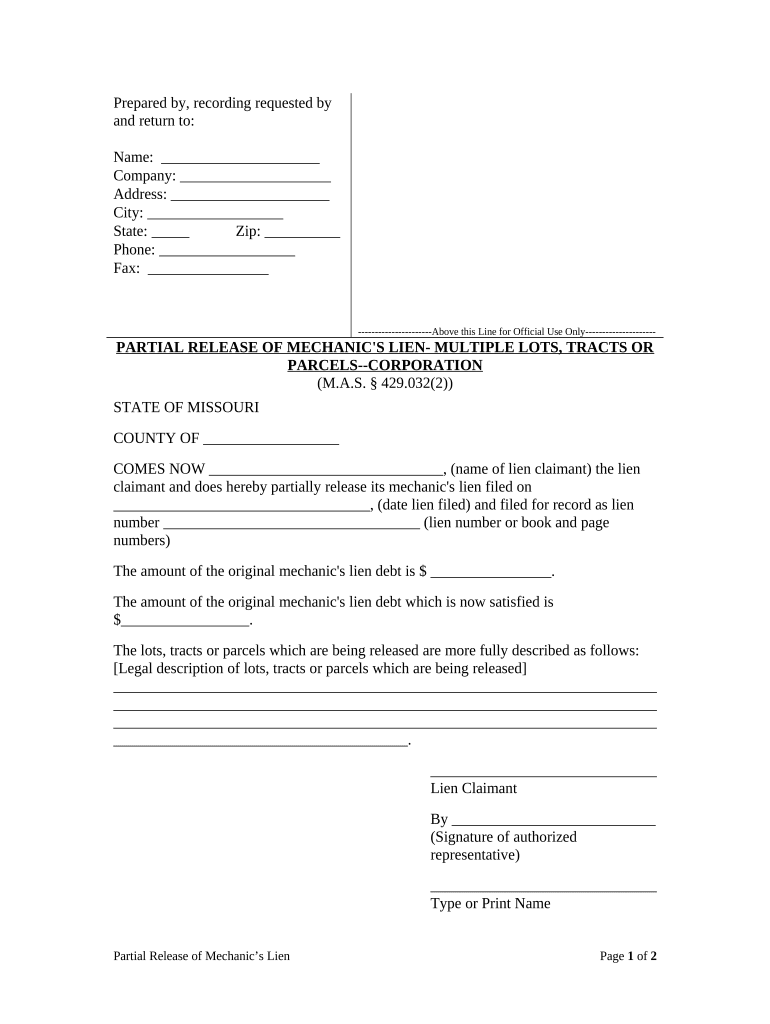
A Missouri Mechanic's Lien is a statutory claim recorded against real property to secure payment for labor, materials, or services supplied to improve that property. It alerts title searchers and the owner that the claimant asserts an unpaid obligation tied to the specific parcel. The lien document identifies the claimant, owner, property, contract value, and statutory basis for the claim; recording and procedural rules are governed by Missouri law and local recording offices. Proper preparation is essential to preserve enforcement rights and to avoid rejection or invalidation at foreclosure or quiet-title.

Why the Missouri Mechanic's Lien Matters

A properly prepared lien protects the supplier's right to seek payment, supports collection through foreclosure, and can improve leverage in settlement discussions. Filing preserves legal remedies that are otherwise time‑limited and puts potential purchasers and lenders on notice.

Why the Missouri Mechanic's Lien Matters

Who Typically Files or Responds to a Missouri Mechanic's Lien

Contractors, subcontractors, suppliers, and design professionals use mechanic's liens to secure unpaid work on Missouri real property.

  • General Contractors: File or coordinate claims when subcontractor nonpayment affects project balance and final payment.
  • Subcontractors & Suppliers: Record a lien when direct payment from owner is unavailable or contract claims are disputed.
  • Property Owners & Lenders: Monitor recorded liens to protect title and require release prior to sale or refinance.

Knowing which party should file and who must be served reduces procedural errors and preserves enforcement windows.

Filing Steps at a Glance

Follow these core steps to prepare and preserve a lien claim in Missouri.

  • 01
    Verify Eligibility: Confirm you furnished labor or materials under a qualifying contract.
  • 02
    Prepare Lien: Complete claimant, owner, property description, amount, and sworn statement.
  • 03
    Record Claim: File with the county recorder where the property is located.
  • 04
    Serve Notice: Deliver required notices to property owner and others per statute.

Typical Digital Workflow for Preparing a Lien Document

Configure a consistent workflow to reduce errors when preparing multiple lien claims.

Field Configuration
Upload Document PDF or DOCX accepted
Place Fields Signature, date, text fields
Authentication Email or SMS code
Save Template Reusable county-specific template

How Recording and Service Usually Work

Recording and proper service follow a defined sequence to create enforceable notice.

  • Prepare Claim: Draft lien with sworn statement and supporting figures.
  • Record with County: Submit to county recorder where property is located.
  • Provide Owner Notice: Serve statutory notice to owner and relevant parties.
  • Enforce or Release: File foreclosure action or record a release after payment.

Digital Tools and Integrations to Support Filing

Use secure e-signature and document management tools to streamline preparation, signing, and retention.

  • Supported Formats: PDF, DOCX, and fillable forms
  • Integrations: Salesforce, NetSuite, Google Workspace, Procore
  • Authentication: Email, SMS, or advanced methods

Ensure the chosen platform supports tamper-evident storage, audit trails, and exportable signed records for court or title review.

Timing Considerations and Typical Deadlines

Deadlines vary by jurisdiction and by whether the project is private or public; confirm local statute and county procedures before filing.

Notice of Intent:

Some projects require pre-filing notice; check contract and state rules.

Recording Window:

Time to record varies by state statute and contract type.

Enforcement Period:

Statutory period to initiate foreclosure varies by state.

Service Requirements:

Many statutes mandate service on owner and possibly lender.

Release Timing:

Record lien release promptly after full payment to clear title.

Consequences of an Incorrect or Untimely Lien

Lien Invalidity: Claim may be void if statutory requirements are unmet.
Court Dismissal: Enforcement action can be dismissed on procedural grounds.
Perjury Exposure: False sworn statements can create criminal liability.
Attorney Fees: Unsuccessful claims may trigger fee awards against filer.
Title Impediment: Uncleared liens delay sales and refinancing.
Statutory Interest: Interest or penalties may accrue on unpaid amounts.

Security and Compliance Considerations for Electronic Lien Documents

Encryption: TLS 1.2/1.3 in transit; AES-256 at rest
Audit Trail: Timestamped logs, IP, and action history
Regulatory Compliance: ESIGN, UETA, SOC 2 Type II, ISO 27001
HIPAA Support: BAA available where PHI is involved
Access Controls: Role-based permissions and SSO options
Tamper Evidence: Document integrity checks and version history

Common Preparation Mistakes to Avoid

  • Using an incorrect legal description or parcel identifier, which can render the lien ambiguous and subject to challenge.
  • Failing to serve required notices to the property owner or lender, resulting in procedural dismissal of enforcement actions.
  • Listing inaccurate claimant or owner names that do not match county records, causing recorder rejection or contested title issues.
  • Omitting sworn statements or signatures required by statute, leading to invalidation or refusal by the county recorder.

Essential Elements of a Professional Missouri Mechanic's Lien

A complete lien includes several discrete elements; each supports enforceability and reduces the risk of rejection or attack.

Claimant Identity

Full legal business or individual name, business type and mailing address to ensure precise attribution and valid service for enforcement proceedings.
Owner Identification

Exact recorded owner name(s) and mailing address as shown in county records so notices reach the correct party and title searches reflect the lien.

Property Description

Complete legal description or parcel number pulled from the deed; a precise description prevents challenges based on ambiguity or mistaken parcels.

Contract/Work Details

Brief statement of the underlying contract, include dates of performance or delivery to connect claimed sums to the improvement.

Amount Claimed

Itemized unpaid amounts and total due; show calculations and credits to reduce disputes over the asserted balance.

Sworn Statement

Signature under penalty of perjury with date, and any required notarization or verification to satisfy recorder and court requirements.

Supporting Documents That Strengthen a Lien Claim

Attach documentation that substantiates the claim and streamlines enforcement and title clearance.

Contract or Purchase Orders

Attach or reference the underlying contract, change orders, and purchase orders that show the scope and agreed pricing for work performed.

Invoices and Payment Records

Itemized invoices, payment history, and unpaid balance statements demonstrate the amount owed and support the calculation in the lien.

Delivery or Completion Proof

Delivery receipts, sign-offs, or certificate of completion evidence performance dates and whether the work was finished.

Prior Notices

Include pre‑lien notices or notices of intent when required by contract or statute to show compliance with procedural prerequisites.

Representative Use Cases from Field Practice

Two concise scenarios show how liens are used and resolved in practice.

Contractor Claim Example

A general contractor completes a renovation but remains unpaid by the owner after final invoice is due

  • Subcontractor files a lien for unpaid balance to preserve collection rights
  • The parties negotiate a settlement after the lien prompts lender review and short payment to release the claim.

Supplier Claim Example

A materials supplier delivers high-value supplies to a build and is not paid due to contractor insolvency

  • Supplier records a lien tied to the parcel to establish priority and leverage recovery
  • The supplier later forecloses or is paid following either bankruptcy proceeds or owner settlement.

Key Milestones from Service to Enforcement

Sequential milestones typically move from notice through recording and then to enforcement if unresolved.

01

Pre-Filing Notices

Deliver any contractually or statutorily required notices before recording.

02

Record Claim

File lien with county recorder to create public notice of the claim.

03

Service and Cure

Serve owner and allow statutory cure periods where applicable.

04

Foreclosure Filing

If unpaid, file suit to foreclose the lien within the statutory enforcement window.

eSignature Vendor Comparison for Lien Preparation and Signing

Compare common vendor features and starting prices to support secure electronic signing and document workflows for lien documents.

signNow DocuSign Adobe Sign PandaDoc HelloSign
Starting Price $8/user/mo $15/user/mo $14/user/mo $19/user/mo $15/user/mo
Free Trial 7-day free trial Varies by vendor Varies by vendor Varies by vendor Varies by vendor
Bulk Send Yes Yes Yes Yes No
Audit Trail Yes Yes Yes Yes Yes
HIPAA Compliant Yes Yes Yes No No
Envelope Cap No cap 100 envelopes/user/year Varies by plan Varies by plan Varies by plan

Frequently Asked Questions About Missouri Mechanic's Liens

Answers to common questions about preparation, recording, service, and enforcement of mechanic's liens in Missouri.


Need help? Contact support

be ready to get more
Join over 28 million airSlate SignNow users