Establishing secure connection…Loading editor…Preparing document…

Nevada Lien

This template is fully customizable. Edit the text, fill out the fields, and send it for signature. Give it a try!
Nevada Lien

What a Nevada Lien Is and when it applies

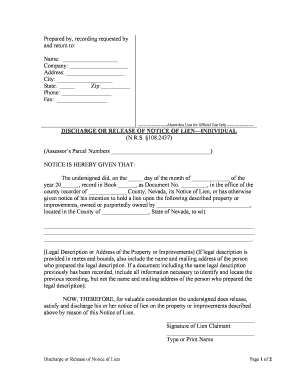
A Nevada Lien is a recorded claim against real property or personal property created to secure payment for goods, labor, services, or a judgment. In Nevada this instrument is typically used by contractors, subcontractors, suppliers, and judgment creditors to preserve a right to payment and obtain priority against the property. A properly drafted lien identifies the claimant, the property, the amount claimed, and the statutory basis for the lien and must be recorded with the appropriate county recorder to place third parties on notice.

Why using a formal Nevada Lien matters

Filing a Nevada Lien preserves a secured claim, creates public notice, and can establish priority over later creditors when properly recorded and enforced.

Why using a formal Nevada Lien matters

Who commonly prepares or receives a Nevada Lien

Typical parties who prepare or face liens in Nevada and why they are involved.

  • Real Estate and Construction professionals — contractors, subcontractors, and suppliers working on Nevada projects.
  • Financial and Legal services — lenders and attorneys who enforce judgments or secure interests against property.
  • Property owners and managers — to respond to claims, clear title, or negotiate releases and waivers.

Each party has different responsibilities: claimants must meet statutory content and timing; property owners must address or contest claims promptly.

Core elements every Nevada Lien should include

A complete Nevada Lien includes identity, property description, amount claimed, basis for the claim, filing details, and authenticating signatures or acknowledgements to meet recorder requirements.

Claimant

Full legal name and contact information for the party asserting the lien, including business and mailing address.
Debtor

Name and address of the property owner or party liable for payment; accurate identification prevents misfiling.

Property Description

Legal description or parcel number sufficient for county recording; street addresses alone can be insufficient for title searches.

Amount Claimed

Exact unpaid principal plus itemized amounts for labor, materials, interest, and contract balance as permitted by statute.

Legal Basis

Statute or contract citation showing why the lien is valid, e.g., construction lien or judgment lien authority.

Execution and Notary

Signature by authorized person and notary acknowledgement or other recorder-required authentication for acceptance by the county recorder.

Filing a Nevada Lien: step-by-step overview

Follow these stages in order to prepare, record, and preserve a Nevada Lien with the county recorder and interested parties.

  • 01
    Prepare the claim: Draft with claimant, debtor, property description, amounts, and statutory basis.
  • 02
    Authenticate: Have authorized signer execute and obtain required notary or acknowledgment.
  • 03
    Record: Submit the lien to the county recorder where the property is located.
  • 04
    Provide notice: Serve required notices to the debtor and other statutory recipients.

How lien recording interacts with title and enforcement

Recording a lien publicly encumbers the property and establishes a claim that can become enforceable against subsequent purchasers and lienholders when properly perfected.

  • Public notice: Recorder indexing alerts title searches and future buyers.
  • Priority effect: Recording date typically sets priority among competing claims.
  • Enforcement: Unpaid claims may proceed to foreclosure or lien enforcement actions.
  • Release: Recorded releases or satisfactions clear the public record when paid.

Typical online workflow settings when preparing a Nevada Lien

When using a digital workflow, configure fields and authentication to match statutory requirements and recorder acceptance rules.

Field Configuration
Document Template Prepopulate claimant, address, and legal description fields to reduce errors.
Conditional Fields Show additional itemization fields only if amounts exceed a threshold.
Signer Authentication Require signer email + ID verification or notarization per recorder rules.
Storage & Export Save a PDF/A copy with audit trail for long-term retention.

Digital tools and technical needs for e-filing a Nevada Lien

Confirm platform capabilities before e-signing and preparing the final recorded instrument.

  • Integrations: Salesforce, NetSuite, Google Workspace supported for document workflows.
  • File formats: PDF and DOCX acceptable; PDF/A recommended for archiving.
  • Authentication: Support for email, SMS, KBA, or notarization workflows is useful.

Ensure the platform captures an audit trail, supports notarization or RON where permitted, and exports recorder-ready PDFs for submission.

Timing considerations and statutory filing windows

Deadlines depend on lien type and Nevada statute; confirm applicable timelines before preparing and recording a claim.

Statutory filing window:

Varies by lien type; check Nevada Revised Statutes for exact deadlines.

Notice requirements:

Some claimants must serve preliminary notices before recording.

Recording to establish priority:

Record promptly to secure priority over later encumbrances.

Enforcement period:

Enforcement windows may begin after recording; review Nevada judgment and lien statutes.

Cure opportunity:

Debtor notice periods may allow payment or contest before foreclosure.

Key milestones from claim to resolution

A sequential view of major stages helps you monitor deadlines and maintain priority.

01

Draft and review

Prepare detailed claim, confirm legal description, and verify amounts.

02

Execution and notarization

Obtain signature and notarial acknowledgement required for recording.

03

Record with county

Submit instrument to the county recorder where property sits.

04

Serve notices

Provide debtor and required parties with statutory notice of claim.

Common mistakes when preparing a Nevada Lien

  • Incorrect property description: Using only a street address rather than the legal description can lead to recorder rejection and loss of priority.
  • Name mismatches: Listing a claimant or owner under an informal or trade name may cause indexing errors and title search problems.
  • Missing statutory basis: Failing to cite the applicable statute or contract clause can create grounds for dismissal or invalidation.
  • Insufficient authentication: Omitting required notary acknowledgement or improper notarization may prevent acceptance by the county recorder.

Risks and consequences of an incorrect or improper lien

Claim rejection: Recorded instrument may be rejected or removed
Priority loss: Delayed or improper filing reduces lien priority
Civil exposure: Counterclaims, damages, and attorney fees possible
Criminal risk: Wrongful or fraudulent filing can trigger criminal penalties
Title encumbrance: Clouded title complicates sales and refinancing
Enforcement costs: Foreclosure and litigation increase overall expense

Security and compliance elements for electronic lien workflows

Encryption: TLS 1.2/1.3 in transit, AES-256 at rest
Audit Trail: Complete timestamped signing history
HIPAA BAA: BAA available where PHI is involved
Notary Journal: Retention of audio‑video and journal entries
Access Controls: Role-based permissions and SSO support
Certifications: SOC 2 Type II, ISO 27001 compliance

eSignature vendor comparison for preparing and executing liens (signNow listed first)

Platform selection affects eSigning cost, HIPAA support, bulk send, and envelope limits — signNow is listed first per comparison requirements.

signNow DocuSign Adobe Sign PandaDoc HelloSign
Starting Price $8/user/mo $15/user/mo $14/user/mo $19/user/mo $15/user/mo
Free Trial 7-day trial Varies Varies Varies Varies
Bulk Send Yes (Premium plan) Yes Yes Yes No
Audit Trail Yes Yes Yes Yes Yes
HIPAA Compliant Yes (BAA) Yes Yes No No
Envelope Cap No cap 100 env/user/year Varies Varies Varies

Representative examples of Nevada Lien use

These brief cases show common real-world scenarios where a recorded lien was required or contested.

Construction Claim

A subcontractor files a lien after nonpayment for materials supplied

  • Filed after final delivery to the site
  • The recorded lien created notice, prompted negotiation, and resulted in a prompt partial payment and settlement within 90 days.

Judgment Creditor

A judgment creditor records an abstract against the debtor's property

  • Recorded at county recorder for enforcement
  • The lien preserved priority, enabling the creditor to pursue levy or foreclosure to satisfy the judgment.

Frequently asked questions about Nevada Liens

Practical answers to common procedural, timing, and enforceability questions when preparing and recording a Nevada Lien.


Need help? Contact support

be ready to get more
Join over 28 million airSlate SignNow users