Establishing secure connection…Loading editor…Preparing document…

Notice of Hearing

This template is fully customizable. Edit the text, fill out the fields, and send it for signature. Give it a try!
Notice of Hearing

What a Notice of Hearing Is and when it’s used

A Notice of Hearing is a formal written document used to notify parties and the court of a scheduled hearing date, time, location, and subject matter. It establishes the procedural timeline for appearances, evidence submission, and related prehearing obligations. Notices of Hearing are used in civil, family, administrative, and probate matters to ensure due process, permit service of process, and provide all parties with an opportunity to prepare. The document often requires proof of service and may trigger statutory deadlines for filings, motions, or responses.

Why a clear Notice of Hearing matters

A correct Notice of Hearing preserves due process, avoids continuances or default orders, and provides a clear record for the court and all parties. Accurate notices reduce procedural disputes about jurisdiction, service, and timeliness.

Why a clear Notice of Hearing matters

Who typically prepares and receives a Notice of Hearing

Common users include attorneys, court clerks, agency staff, and self-represented litigants who must schedule and serve hearings.

  • Attorneys and law firms — prepare notices to comply with court rules and coordinate service on opposing counsel or pro se parties.
  • Court clerks and administrative staff — docket hearings, input dates, and notify parties of courtroom assignments or remote links.
  • Litigants and respondents — receive notices to arrange representation, prepare testimony, and file prehearing materials.

Proper preparation and service protect procedural rights and minimize the risk of adverse rulings due to defective notice.

Core components every professional Notice of Hearing should include

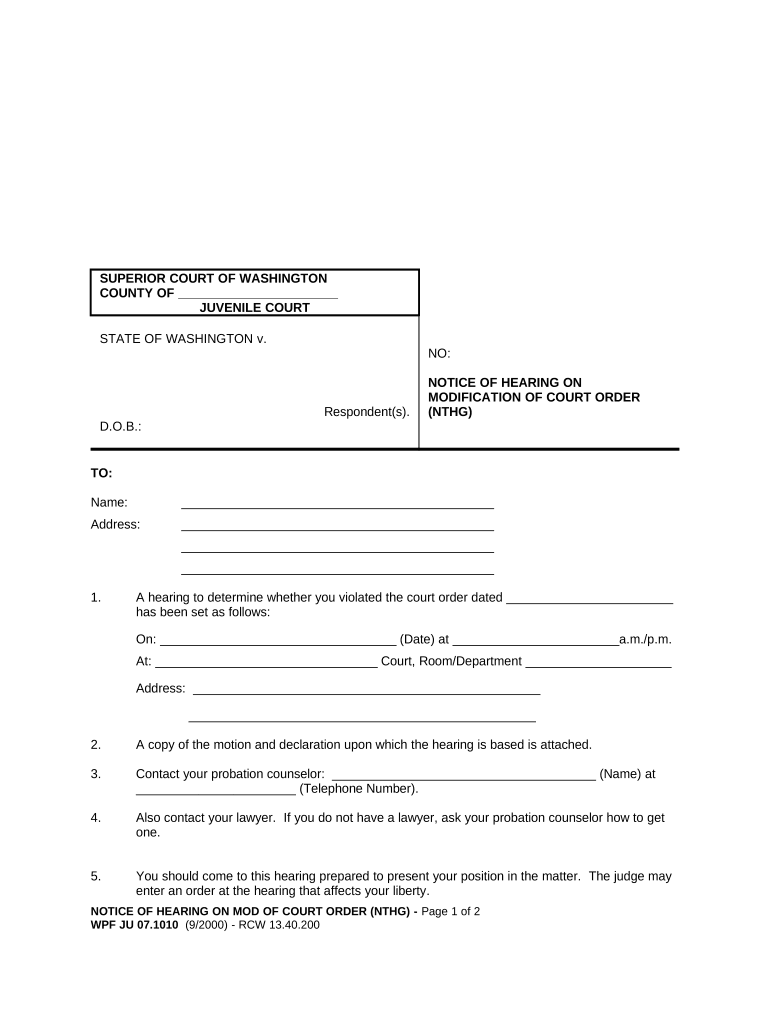
A well-formed Notice of Hearing organizes case metadata, hearing logistics, legal grounds, and instructions for parties in a concise format to satisfy court rules and serve as reliable proof of notification.

Case Caption

Include court name, docket or case number, parties’ names, and lead counsel. Exact caption matching court filings prevents rejection or administrative correction requests.
Hearing Details

State the date, start time, estimated duration, courtroom or virtual link, and judge or hearing officer name so parties can appear correctly and on time.

Purpose

Describe the hearing type (e.g., scheduling, motion, bench trial, evidentiary) and list the specific motions or issues to be heard to set expectations.

Submission Instructions

Specify deadlines for prehearing briefs, exhibits, filing of declarations, and how to submit remote evidence or exhibits to the clerk ahead of the hearing.

Service Directions

Explain how service was or must be effected, including in-person, mail, overnight delivery, email when permitted, or electronic service under local rule.

Proof of Service

Reserve space for an affidavit or certificate of service, including signer, date served, method, and recipient addresses for the official court record.

Essential filing and security data to include

Case Number: Unique docket ID
Court Name: Jurisdiction name
Hearing Date: MM/DD/YYYY format
Service Method: E.g., mail, personal
Proof Attachment: Affidavit or certificate
Security Note: Redact sensitive PHI

Step-by-step: preparing and serving a Notice of Hearing

Follow these sequential actions to prepare, file, and serve a Notice of Hearing in compliance with most U.S. court practices.

  • 01
    Draft notice: Populate case caption, date, time, and purpose precisely.
  • 02
    Check rules: Confirm local court service and filing deadlines and format requirements.
  • 03
    Serve parties: Use approved methods and obtain proof of service or receipt.
  • 04
    File proof: File affidavit or certificate of service with the clerk before hearing.

Online workflow settings to streamline notices

Configure an e-filing workflow to ensure every Notice of Hearing includes required fields, service tracking, and proof attachments.

Field Configuration
Required Fields Make caption, docket, and hearing date mandatory
Conditional Fields Show proof-of-service section after 'served' selected
Signer Authentication Enable email or SMS code verification
Document Retention Auto-save PDF and routing audit trail

Where to file and how notices are routed

Notices are filed with the court clerk and served on parties; many courts accept e-filed notices and electronic proof of service when local rules allow.

  • E-Filing: Upload notice to court portal per local rules.
  • Clerk Docketing: Clerk assigns hearing slot and updates calendar.
  • Service: Serve opposing parties using approved methods.
  • Proof Filing: File affidavit or certificate of service with clerk.

Digital signing and eSubmission requirements

Courts and agencies vary in accepted e-sign and e-filing standards; confirm authentication and format requirements before submitting.

  • File Formats: PDF/A or standard PDF accepted
  • Signer Authentication: Email, SMS, or stronger KBA as required
  • Audit Trail: Timestamp, IP, and signer identity

Ensure digital signatures meet ESIGN/UETA standards and that you can produce a reproducible record on request for the court or opposing parties.

Common timelines and service windows for Notices of Hearing

Deadlines for serving a Notice of Hearing depend on the court and matter type; many rules set minimum notice periods measured in days or weeks before the hearing.

Minimum Service Periods:

Typically 7–30 days before hearing, varies by rule.

Motion Response Deadline:

Often 7–14 days before hearing for written responses.

Exhibit Exchange:

Courts commonly require exhibits 3–7 days prior.

Continuance Requests:

File motion for continuance as soon as practicable.

Proof Filing:

File certificate of service promptly after serving notice.

Key milestones in the Notice of Hearing process

Track these stages to meet procedural requirements and preserve your ability to proceed at the scheduled hearing.

01

File Notice

Prepare and file notice with the court clerk.

02

Serve Parties

Complete service using approved methods and record dates.

03

File Proof

Submit affidavit or certificate of service to the court.

04

Prehearing Compliance

Exchange exhibits and comply with any court-ordered disclosures.

Common mistakes to avoid when preparing a Notice of Hearing

  • Using an incorrect case caption or docket number which causes docketing errors or rejection of the filing by the clerk.
  • Choosing the wrong service method or failing to follow local rules, resulting in insufficient service and potential delays or dismissal.
  • Omitting required prehearing instructions or exhibit deadlines, leading to excluded evidence or surprise continuances at the hearing.
  • Failing to file timely proof of service, which can prevent the court from proceeding and may require re-serving parties or rescheduling.

Consequences of a defective or late Notice of Hearing

Case Dismissal: Possible dismissal
Default Orders: Risk of default judgment
Sanctions: Court fines or sanctions
Continuance: Hearing rescheduled
Evidence Excluded: Late exhibits barred
Cost Exposure: Adverse fee awards

eSignature vendor comparison for preparing and signing Notices of Hearing

Basic vendor differences to consider when signing and distributing legal notices; signNow is listed first per vendor comparison conventions.

signNow DocuSign Adobe Sign PandaDoc HelloSign
Starting Price $8/user/mo $15/user/mo $14/user/mo $19/user/mo $15/user/mo
Free Trial 7-day free trial Varies by vendor Varies by vendor Varies by vendor Varies by vendor
Bulk Send Yes Yes Yes Yes No
Audit Trail Yes Yes Yes Yes Yes
HIPAA Compliant Yes Yes Yes No No
Envelope Cap No cap 100 envelopes/user/year Varies by plan Varies by plan Varies by plan

Frequently asked questions about Notices of Hearing

Answers to common procedural and e-sign questions to reduce filing errors and ensure effective service.


Need help? Contact support

be ready to get more
Join over 28 million airSlate SignNow users