Establishing secure connection…Loading editor…Preparing document…

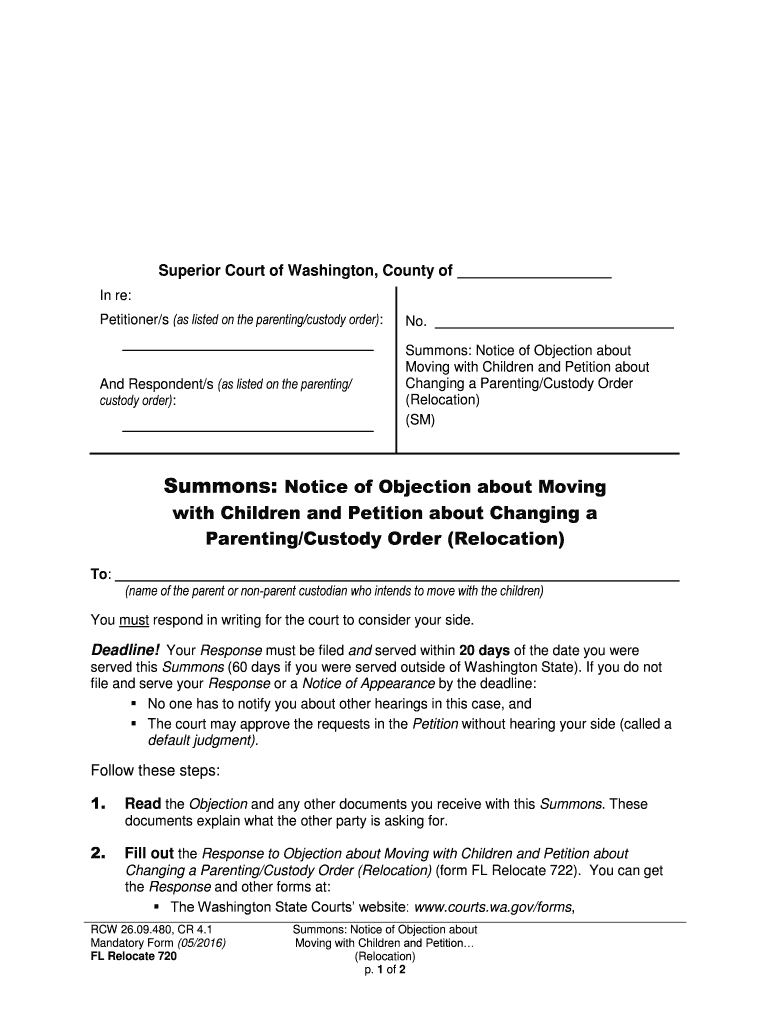
Notice of Intent to Move with Children

This template is fully customizable. Edit the text, fill out the fields, and send it for signature. Give it a try!
Notice of Intent to Move with Children

What the Notice of Intent to Move with Children Is

A Notice of Intent to Move with Children is a written statement provided by a parent or legal guardian when they plan to relocate a child who is subject to a custody or parenting-time order or agreement. The notice explains the new residence, expected move date, and any proposed changes to parenting time or contact arrangements. It documents the moving parent's intent, gives the other parent formal notice, and creates a record that can be used by family courts if disputes arise over jurisdiction, relocation permission, or modification of custody orders.

Why a Formal Notice Matters

Providing formal written notice protects parental rights, preserves evidence of timely disclosure, and reduces the risk of court sanctions or emergency motions. It also helps other parties plan responses and supports negotiation or mediation before court involvement.

Why a Formal Notice Matters

Who Typically Prepares or Receives This Notice

The notice is used when a custodial or shared-parenting parent intends to relocate a child in a way that may affect existing custody or parenting-time arrangements.

  • Parent who plans to relocate the child and must provide formal notice under a court order or parenting plan.
  • Non-custodial parent who receives the notice and may accept, object, or seek court review.
  • Family law attorneys, mediators, and court clerks who manage filings and responses related to relocation.

Even when the move is cooperative, providing a clear written notice reduces misunderstandings and creates a documented timeline for potential court proceedings.

Core Elements to Include in a Professional Notice

A complete notice should be concise but include the factual and legal information a court, the other parent, and attorneys need to evaluate the relocation request.

Identification

Full names of both parents and the child or children, relationship to the child, and any case or docket number to link the notice to existing court orders.
Current Residence

The child's current address including city, county, and state so recipients can confirm the baseline custody location and current school district.

Proposed New Address

The new address or general location (city and state) and an explanation if exact address is not yet known, including intended school district and county.

Move Date

The planned date of relocation presented in MM/DD/YYYY format; indicate whether that date is approximate or firm and whether temporary arrangements are anticipated.

Parenting Time Impact

Describe how the move will affect scheduled parenting time and offer proposed modifications or a plan for exchange, visitation, and travel costs.

Signature and Verification

Signature block with printed name, date, and contact information; include a notarization or verification line if required by the parenting plan or state rule.

Required Information Checklist

Child Details: Full name(s) and date(s) of birth
Case Identifiers: Court name and docket number
Addresses: Current and proposed locations
Move Date: MM/DD/YYYY format
Contact Info: Phone and email for notifying parent
Signature: Printed name and signature date

Step-by-Step: Completing the Notice

Follow these sequential steps to prepare, sign, and provide the Notice of Intent to Move with Children while preserving evidence and compliance with court orders.

  • 01
    Prepare document: Fill in child and case details accurately.
  • 02
    State the move: Provide the new location and planned move date.
  • 03
    Explain impacts: Describe proposed parenting-time adjustments in detail.
  • 04
    Sign and serve: Sign, notarize if required, and deliver per the parenting plan.

Where to File and How the Notice Travels

After completing the notice, follow the routing steps below so that the court and the other parent receive reliable proof of delivery and timing.

  • Serve the other parent: Deliver by agreed method or service rules in the parenting plan.
  • File with court: File the notice or accompanying motion at the family court clerk's office.
  • Send copies to counsel: Provide counsel and mediators with stamped copies for their files.
  • Keep records: Retain proof of service and filing receipts for the case file.

How to Customize and Submit the Notice Online

Use a secure document workflow to populate fields, gather signatures, and log delivery. Configure options that match court and parenting-plan requirements.

Field Configuration
Move Date MM/DD/YYYY format with validation
Address Fields Separate street/city/state/ZIP
Signature Block Enable signer name and date fields
Proof of Service Attach affidavit or automated audit trail

Digital Signing and Delivery Considerations

Choose a platform that supports secure e-signatures, tamper-evident PDFs, and audit trails to document consent and timing.

  • Authentication: Email or SMS code verification
  • Audit Trail: Timestamps, IP, and action log
  • File Formats: PDF or DOCX accepted

Ensure the solution complies with ESIGN and UETA for legal enforceability, and confirm any additional state or court rules about notarization or original signatures before relying on an electronic version.

Timing and Typical Deadlines to Watch

Timing requirements vary by parenting plan and state statute; meet any contract or order deadlines and allow reasonable time for the other parent to respond or seek a court order.

When to notify:

Provide notice as soon as the relocation decision is firm.

Court filing window:

File a motion if the parenting plan or order requires court approval.

Response period:

Allow reasonable time for objection or mediation request.

Emergency filings:

Be prepared for expedited hearings if custody safety issues arise.

Mediation timelines:

Mediators often set short scheduling windows for relocation disputes.

Common Preparation Mistakes to Avoid

  • Failing to include a clear case or docket number, which delays court processing and may cause misfiling.
  • Using informal language or vague dates instead of exact MM/DD/YYYY formatting required by courts and agreements.
  • Not retaining proof of service or failing to follow the parent plan's specified delivery method for notices.
  • Assuming relocation is permitted without checking the existing custody order, which can lead to emergency motions or contempt actions.

Potential Legal Risks of Incorrect or Omitted Notices

Contempt: Court may hold a parent in contempt
Modification Risk: Custody order can be modified against mover
Emergency Orders: Judge may limit relocation immediately
Travel Restrictions: Court may restrict out-of-state travel
Financial Liability: Court can impose cost awards
Enforcement Delays: Delayed notice can complicate resolution

Comparing eSignature Options for Serving Notices

Select a provider that supports audit trails, secure delivery, and the authentication level your jurisdiction or judge expects. Listed prices reflect common starting tiers.

signNow DocuSign Adobe Sign PandaDoc HelloSign
Starting Price $8/user/mo $15/user/mo $14/user/mo $19/user/mo $15/user/mo
Free Trial 7-day free trial Trial varies Trial varies Trial varies Trial varies
Bulk Send Yes Yes Yes Yes No
Audit Trail Yes Yes Yes Yes Yes
HIPAA Compliant Yes Yes Yes No No
Envelope Cap No cap 100 envelopes/user/year Varies Varies Varies

Frequently Asked Questions and Troubleshooting

Answers to common legal and practical questions about preparing, signing, and serving a Notice of Intent to Move with Children.


Need help? Contact support

be ready to get more
Join over 28 million airSlate SignNow users