Establishing secure connection…Loading editor…Preparing document…

Letter of Resignation

This template is fully customizable. Edit the text, fill out the fields, and send it for signature. Give it a try!
Letter of Resignation

What a Letter of Resignation Is and When to Use It

A Letter of Resignation is a brief written notice from an employee to an employer that states the employee's intent to leave a job. It typically confirms the last day of work, optionally provides a reason, and can offer transitional assistance. The letter serves as a clear record for payroll, benefits, and human resources and can be delivered in paper, email, or electronic signed form. A concise professional letter helps preserve relationships, documents intent for personnel files, and clarifies timing for final pay and benefits administration.

Why a Clear Letter of Resignation Matters

A written resignation creates an unambiguous record of your decision and the effective date, supports payroll and benefits processing, and reduces disputes about timing. It also helps maintain professional relationships by communicating intent respectfully and documenting transition plans.

Why a Clear Letter of Resignation Matters

Who Typically Prepares a Letter of Resignation

The Letter of Resignation is used by employees across job levels when ending employment; HR and managers routinely receive and process these letters.

  • Individual contributors notifying direct managers and HR about voluntary departure and final work date.
  • Supervisors or executives documenting resignation and transition arrangements for continuity planning.
  • Contractors or temporary staff providing notice to staffing agencies or company contacts per contract terms.

Delivery method and timing often depend on employer policy, employment agreement terms, and whether the resignation is immediate or includes a notice period.

Core Elements to Include in a Professional Letter of Resignation

A concise, well-structured resignation letter reduces ambiguity and supports an orderly transition. Include essential elements below and keep tone factual and courteous.

Heading

Date, recipient name, title, company name, and company address. Places the document in context and helps HR routing and records.
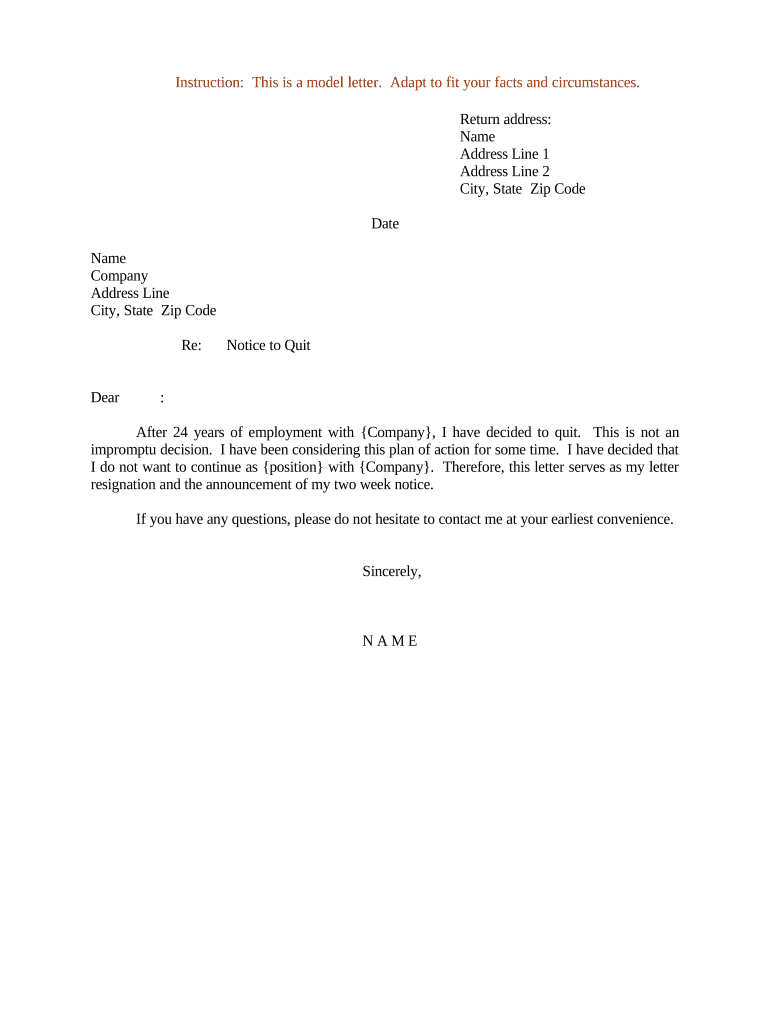
Statement of Resignation

A clear sentence such as 'I resign from my position as [title] effective [MM/DD/YYYY].' This establishes intent and the effective separation date.

Notice Period

Specifically state the notice provided (e.g., 'two weeks') or the final work date; ties to employer policy or employment agreement expectations.

Transition Offer

Optional brief note offering to assist with handover, training a replacement, or preparing documentation to smooth transition.

Gratitude

A short, neutral sentence thanking the employer for the opportunity; keeps the tone professional and preserves references.

Signature

Typed name plus handwritten or electronic signature and signature date. Ensures attribution and document authenticity.

Required Information and Common Fields

Employee name: Full legal name
Job title: Current position
Employer name: Company legal name
Effective date: MM/DD/YYYY
Signature: Handwritten or e-sign
Contact info: Phone or email

Step-by-Step: Preparing and Submitting a Letter of Resignation

Follow these steps to prepare a clear, professional resignation and make sure it reaches the appropriate parties.

  • 01
    Draft the letter: Write a concise statement of resignation and last work date.
  • 02
    Check policy: Review employer handbook or contract for notice requirements.
  • 03
    Deliver to manager: Provide letter to your manager and HR per company practice.
  • 04
    Confirm receipt: Ask HR for confirmation of receipt and next steps.

Typical Delivery and Processing Flow

Resignation letters move through a predictable workflow once submitted; understanding each step helps you set expectations.

  • Employee Submit: Provides letter to manager or HR via email, hard copy, or eSubmission.
  • Manager Acknowledgment: Manager receives and acknowledges; begins transition planning.
  • HR Update: HR records separation date and updates payroll and benefits.
  • Exit Steps: Finalize final paycheck, benefits continuation, and return of company property.

How to Customize and Submit an Online Resignation Workflow

Configure an online process that ensures the letter reaches HR and preserves an audit trail for payroll and records.

Field Configuration
Recipient routing Manager → HR sequential routing
Authentication level Email link or SMS code for signer identity
Signature type Audit-backed eSignature with timestamp
Notification Auto-notify HR and manager when signed

Secure Delivery Options and Technical Considerations

Choose a delivery channel that balances convenience with traceability and employer policy compliance.

  • Email: Simple and common; preserve sent items and read receipts for proof.
  • Paper: Hand-delivered or mailed with tracking; useful when signatures or originals are required.
  • eSubmission: Use an eSignature platform that records timestamp, signer attribution, and audit trail.

Whichever method you choose, retain a copy of the signed letter and any delivery confirmation for personnel records and future reference.

Timing Considerations and Common Deadlines

Timing affects final pay, benefit eligibility, and contractual obligations; verify deadlines that apply to your situation.

Notice period:

Follow employer policy or employment agreement timelines.

Final paycheck timing:

State law often governs when final wages are due.

Benefits cutoff:

Health and retirement benefits may terminate on separation date.

Return of property:

Coordinate return of keys, devices, and badges before last day.

Record retention:

Keep copies for at least 3 years for payroll documentation.

Common Mistakes to Avoid When Preparing a Resignation Letter

  • Providing no effective date or ambiguous phrasing, which creates uncertainty about the last workday and payroll obligations.
  • Including excessive negative commentary that can complicate exit references and future employment verification.
  • Failing to check contractual or union notice requirements, potentially breaching terms or incurring penalties.
  • Not retaining proof of delivery or a signed copy, leaving you without documentation in case of disputes.

Risks and Administrative Consequences of an Incorrect Resignation Letter

Payroll delays: Missing or unclear dates
Benefit gaps: Incorrect separation date
Contract breach: Failure to honor notice obligations
Reference issues: Unprofessional content
Legal disputes: Unclear terms on garden leave
Record problems: No proof of submission

Typical eSignature Vendor Comparison for Signing a Letter of Resignation

Choose an eSignature provider that preserves a verifiable audit trail and meets any required compliance standards for your industry.

signNow DocuSign Adobe Sign PandaDoc HelloSign
Starting Price $8/user/mo $15/user/mo $14/user/mo $19/user/mo $15/user/mo
Free Trial 7-day free trial, no credit card required Varies Varies Varies Varies
Bulk Send Yes Yes Yes Yes No
Audit Trail Yes Yes Yes Yes Yes
Envelope Cap No envelope cap 100 envelopes/user/year Varies by plan Varies by plan Varies by plan

Frequently Asked Questions About Letters of Resignation

Answers to common questions about drafting, delivering, and documenting a resignation; includes eSignature considerations and recordkeeping.


Need help? Contact support

be ready to get more
Join over 28 million airSlate SignNow users