Establishing secure connection…Loading editor…Preparing document…

Ohio Bankruptcy Forms and Information Package

This template is fully customizable. Edit the text, fill out the fields, and send it for signature. Give it a try!
Ohio Bankruptcy Forms and Information Package

What the Ohio Bankruptcy Forms and Information Package Covers

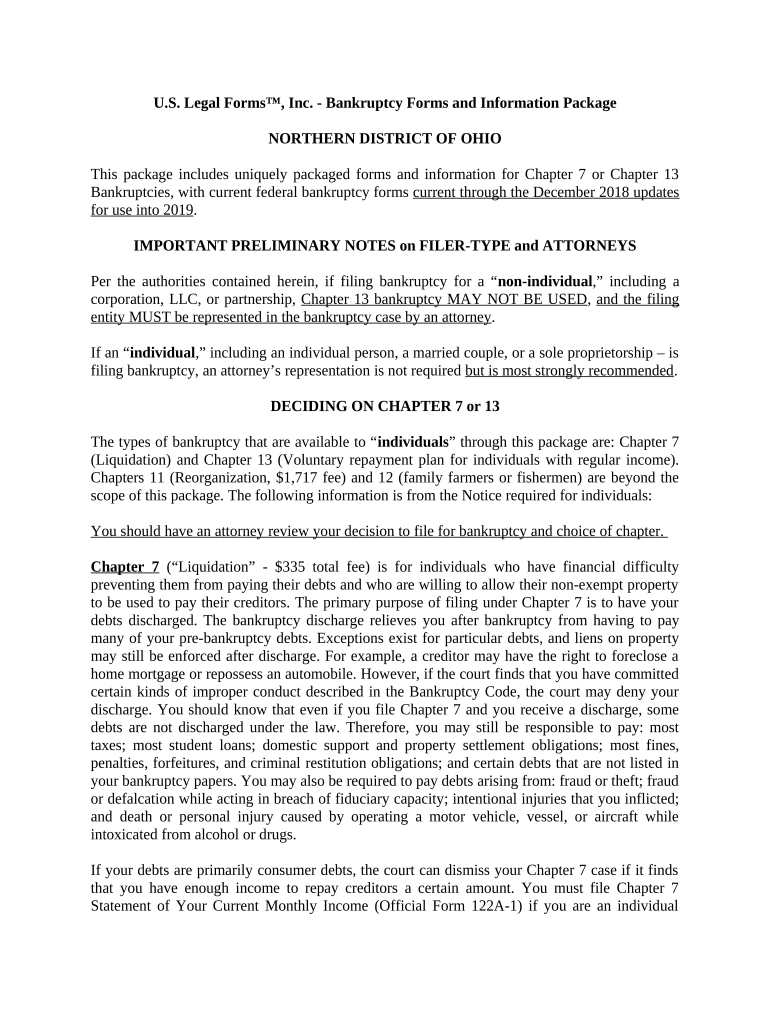
The Ohio Bankruptcy Forms and Information Package is a collection of court forms, instructions, and checklists commonly required to open a consumer bankruptcy case filed in an Ohio federal bankruptcy court. It typically includes the voluntary petition, schedules of assets and liabilities, statement of financial affairs, creditor matrix, means test worksheets, a certificate of credit counseling, proof of income (pay stubs or tax returns), and filing-fee information. The package is designed to help debtors and their counsel assemble the documentation needed to meet Federal Rules of Bankruptcy Procedure filing requirements and local district court procedures for electronic filing and service.

Why a Complete Package Matters for Ohio Filings

A complete, organized package reduces filing delays, limits missing-information notices from the clerk, and helps ensure compliance with federal rules and local court practices. Properly prepared schedules and supporting documents also reduce the risk of case dismissal, trustee objections, or inadvertent creditor notices.

Why a Complete Package Matters for Ohio Filings

Who Typically Prepares and Uses This Package

Debtors, bankruptcy attorneys, paralegals, and court filing services prepare the package; trustees and creditor representatives review it after filing.

  • Pro se Debtors preparing a Chapter 7 or Chapter 13 filing with court guidance and checklists.
  • Bankruptcy Attorneys and law firms assembling schedules, exemption elections, and the creditor matrix.
  • Clerks and Trustees who use the package to validate filings and schedule the meeting of creditors (341 meeting).

The package is also used by financial counselors and non-attorney petition preparers for collection and verification of client documents prior to filing.

Step-by-step: Assemble and File the Package

Follow these core steps to prepare an Ohio bankruptcy filing and reduce the likelihood of clerical rejection or trustee objections.

  • 01
    Gather Documents: Collect IDs, paystubs, tax returns, bank statements, and creditor statements.
  • 02
    Complete Forms: Fill the petition, schedules, statement of affairs, and means test accurately.
  • 03
    Review Exemptions: Select Ohio or federal exemptions and document the basis for each claim.
  • 04
    File and Serve: File with the bankruptcy court (CM/ECF) and serve the trustee and required creditors.

Configuring an Online Filing Workflow

If you use e-filing and e-signature tools, configure fields and routing to match court and trustee requirements.

Field Configuration
Document Templates Pre-fill debtor details and common schedules
Signer Roles Debtor signature, attorney signature, preparer signature
Authentication Email + optional SMS or ID-proofing for stronger attribution
Retention Archive PDFs and audit trails for required retention periods

Typical Electronic Submission Flow

A clear e-submission flow ensures each required party signs and receives the correct documents.

  • Prepare Package: Assemble and convert documents to court-acceptable PDF
  • Place Fields: Add signature, date, and checkbox fields in the correct locations
  • Authenticate: Confirm signer identity using email or stronger methods if required
  • Submit to Court: Upload to CM/ECF and ensure the filing fee is paid

Technical and Integration Considerations

Confirm that your e-signature platform supports PDF, DOCX imports, audit trails, and integrates with your document-management or court-filing tools.

  • File Formats: PDF and DOCX support
  • Integrations: Salesforce, NetSuite, Google Workspace, Microsoft 365
  • Security: AES-256 at rest, TLS 1.2/1.3 in transit

Use platforms that capture complete audit trails and retain signed records to meet ESIGN and court reproducibility requirements.

Key Deadlines and Timing to Watch

Meeting trustee and court deadlines is essential; some items are time-sensitive during the initial 341 meeting and plan confirmation process.

Credit Counseling Certificate:

Before filing; certificate required

Means Test:

File with petition; affects chapter eligibility

341 Meeting:

Held 20–40 days after filing typically

Domestic Support Obligations:

Excluded from discharge unless properly addressed

Post-petition Filings:

Timely submit pay advices and tax returns as requested

Milestones from Petition to Resolution

This sequential timeline outlines common processing stages in a consumer bankruptcy case.

01

File Petition

Petition and schedules filed electronically with the court.

02

341 Meeting Scheduled

Trustee schedules and notices are issued to creditors.

03

Trustee Review

Trustee examines assets, income, and exemption claims.

04

Adversary / Objections

Creditors or trustee may file objections or adversary proceedings.

Common Preparation Pitfalls to Avoid

  • Incomplete creditor addresses in the matrix lead to returned notices and extra filings.
  • Missing paystubs or inconsistent income reporting triggers trustee requests for supplemental documents.
  • Incorrect exemption selections or unsupported valuations provoke objections and potential litigation.
  • Unsigned or improperly dated signature blocks result in clerical rejection by the clerk.

Consequences of Errors or Omissions

Case Dismissal: Courts may dismiss cases for repeated noncompliance
Denial of Discharge: Material omissions can lead to denial under 11 U.S.C. §727
Trustee Investigation: Trustee may require costly discovery and litigation
Penalty Exposure: False statements may lead to sanctions or referral for prosecution
Reopened Cases: Cases may be reopened to correct defects, adding expense
Creditor Claims: Improper schedules may cause unsecured claims to be mishandled

Essential Data Elements in the Package

Debtor Identity: Full legal name
Contact Info: Street address and phone number
Income Details: Employer and recent paystubs
Assets: Bank accounts, vehicles, real estate
Liabilities: All creditor names and balances
Supporting Docs: Tax returns, counseling certificate

eSignature Pricing Snapshot for Package Workflows

Comparing common vendor plans helps estimate e-signature costs; signNow is listed first per comparison conventions used here.

signNow DocuSign Adobe Sign PandaDoc HelloSign
Starting Price $8/user/mo $15/user/mo $14/user/mo $19/user/mo $15/user/mo
Free Trial Yes, 7-day trial Varies Varies Varies Varies
Bulk Send Yes Yes Yes Yes Varies
Audit Trail Yes Yes Yes Yes Yes
HIPAA Compliant Yes Yes Yes No No

Examples of How the Package Is Used

Real-world examples illustrate how a complete package reduces friction in typical bankruptcy scenarios.

Attorney-Led Chapter 7

An attorney prepares schedules and the creditor matrix in a single PDF for e-filing

  • Trustee reviews financial schedules at the 341 meeting
  • The organized package reduced trustee follow-ups and avoided a supplemental filing, saving administrative time.

Pro Se Filing

A pro se debtor used a checklist to collect paystubs and credit counseling certificate before filing

  • The clerk accepted the petition on first submission
  • Clear documentation prevented a notice to correct and expedited scheduling of the 341 meeting.

Practical Tips for Accurate and Efficient Completion

Applying consistent best practices reduces errors and supports smooth court processing.

Verify Names and Addresses
Cross-check debtor and creditor names against recent statements and tax documents to avoid returned notices and misdirected claims.
Attach Supporting Documents
Attach paystubs, tax returns, and counseling certificates with the initial filing when possible to minimize follow-up requests.
Use Structured Templates
Employ validated templates that map fields to schedules and the creditor matrix to reduce manual entry errors.
Keep Audit Trails
Ensure e-signature tools retain timestamps, IP addresses, and authentication records to meet ESIGN and court reproducibility needs.

Representative Professionals Who Sign or Authorize These Documents

Debtor — Primary Signer

The debtor must sign the petition and declaration under penalty of perjury. Their signature attests to the accuracy of schedules, exemptions, and the statement of financial affairs; the court relies on this attribution when evaluating discharge and trustee inquiries.

Attorney — Authorized Filers

If represented, an attorney signs the verification and files documents on CM/ECF. Attorneys are responsible for verifying client information, advising on exemptions, and responding to trustee or creditor inquiries after filing.

Frequently Asked Questions and Troubleshooting

Common questions arise about required documents, signatures, and electronic filing; concise answers below address frequent issues encountered in Ohio filings.


Need help? Contact support

be ready to get more
Join over 28 million airSlate SignNow users