Establishing secure connection…Loading editor…Preparing document…

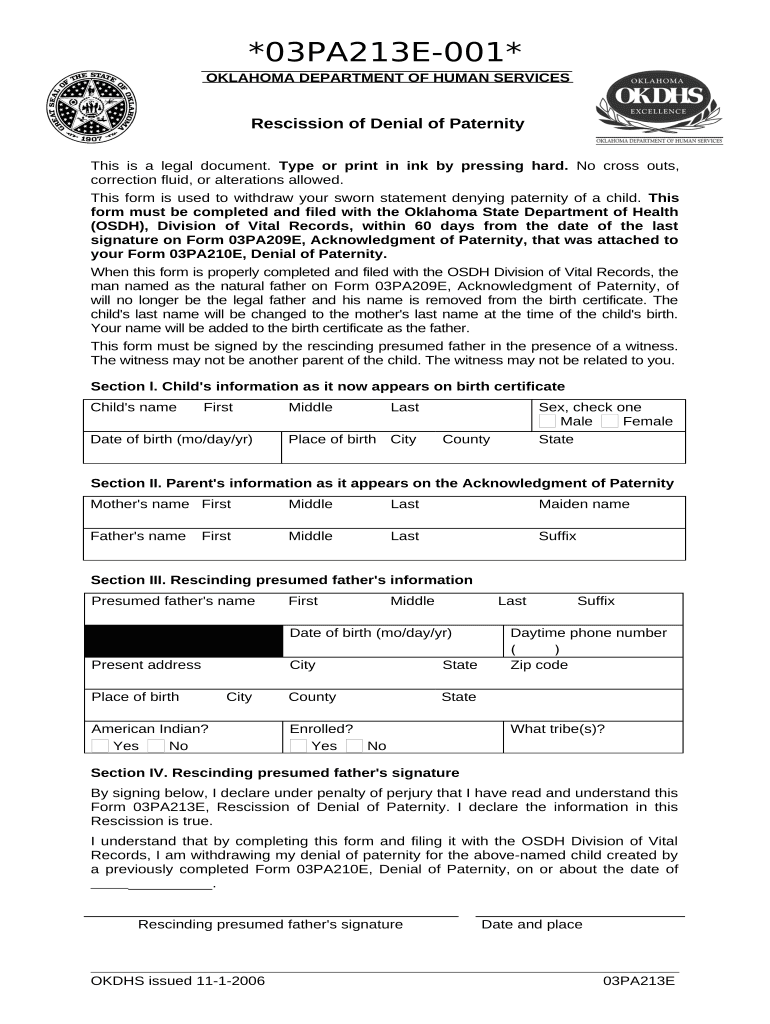
Oklahoma Denial of Paternity

This template is fully customizable. Edit the text, fill out the fields, and send it for signature. Give it a try!
Oklahoma Denial of Paternity

What the Oklahoma Denial of Paternity Is

The Oklahoma Denial of Paternity is a written declaration by an individual denying legal paternity for a child in circumstances where parentage is being questioned or asserted. The document is used in family‑court or administrative proceedings to record a denial, trigger genetic testing, or to clarify parties for child support and custody matters. It does not by itself resolve parentage; courts may require additional proof, hearings, or DNA testing before entering a final order. Proper completion, notarization when required, and timely filing affect legal effect and enforceability.

Why a Clear Denial of Paternity Matters

A properly completed denial provides a formal record that can prompt genetic testing, guide temporary orders, and narrow issues before a judge. It helps clarify who is a party to the case and can affect temporary support or visitation arrangements while parentage is resolved.

Why a Clear Denial of Paternity Matters

Who Typically Prepares or Signs This Form

This form is most often completed by individuals named or alleged as parents, attorneys, or child‑support agencies initiating or responding to a paternity action.

  • Alleged fathers: Use to formally deny paternity and request testing when paternity is contested.
  • Mothers or custodial parents: May file to document allegations or to request testing and court determination.
  • Child support or agency attorneys: File denials as part of initial pleadings or administrative proceedings.

Courts may require additional affidavits, service on parties, and proof of identity; consult local court rules for procedural details.

Step-by-Step: Completing the Oklahoma Denial of Paternity

Follow these sequential steps to prepare a clear denial suitable for filing or submission to the court or agency.

  • 01
    Gather Documents: Collect IDs, birth certificate, and case numbers.
  • 02
    Fill Core Fields: Enter names, DOBs, and reason for denial.
  • 03
    Sign and Notarize: Sign in front of notary if required.
  • 04
    File and Serve: File with court and serve opposing parties.

How the Denial Typically Moves Through the System

A denial creates a procedural trigger: courts or agencies follow set steps to verify, test, and adjudicate parentage claims.

  • File: Submit form to the appropriate court or child support office.
  • Service: Ensure other parties receive a copy per court rules.
  • Testing: Court may order DNA testing if parentage is contested.
  • Adjudication: Judge issues a determination based on evidence and testing.

Common Digital Workflow Settings for eFiling or eSubmission

Configure verification, attachments, and retention to match court or agency requirements before submitting electronically.

Field Configuration
Authentication Method Email + SMS code or identity proofing where required
Notarization Option Support for in-person or RON where permitted
Attachment Handling Allow PDF, DOCX, and image uploads for IDs
Retention Policy Maintain signed record and audit trail for required period

Delivery Options and Technical Requirements

Choose a submission path that meets legal and court technical rules: eFile, mail, in-person filing, or electronic delivery to an agency.

  • Document Formats: PDF, DOCX, and scanned images supported
  • Authentication: Email, SMS, or stronger identity proofing
  • Integrations: Works with major storage and case systems

Match format and authentication to the receiving agency’s rules; retain a complete audit trail and a certified copy for personal records.

Security and Compliance Features to Consider

Encryption: TLS 1.2/1.3 in transit
Data at Rest: AES-256 encryption
Audit Trail: Detailed timestamp and IP history
HIPAA: BAA required for PHI
ESIGN / UETA: Supports legally binding eSignatures
SOC 2: SOC 2 Type II available

Penalties and Legal Risks of an Improper Denial

Perjury Risk: False statements may lead to perjury charges
Court Sanctions: Incomplete forms can result in sanctions or fines
Support Liability: Court may still order support pending resolution
Delay Consequences: Delays can prolong temporary orders and hearings
Evidence Issues: Unverified denials may be given little weight
Jurisdiction Problems: Filing in wrong venue can void the filing

Common Preparation Mistakes to Avoid

  • Using nicknames or initials instead of full legal names leads to identity mismatches and processing delays with the court or agency.
  • Failing to notarize when required can render the denial noncompliant and necessitate re-execution in front of a notary.
  • Not serving the denial on opposing parties per local rules may result in the court refusing to consider the document.
  • Leaving out case or docket numbers, or attaching wrong documents, causes rejection or misfiling and adds weeks to resolution time.

Realistic Scenarios Where a Denial Is Used

These short scenarios illustrate how a denial of paternity functions in typical case flows and what follows after filing.

Agency-Filed Dispute

A state child support agency receives a paternity claim and the alleged father submits a denial form to contest parentage

  • The agency requests DNA testing
  • The tested results and court hearing determine ongoing support obligations, while the denial document remains part of the administrative record and case file.

Court-Driven Action

A custodial parent files for child support and names an alleged father; the individual files an Oklahoma Denial of Paternity

  • The court schedules genetic testing and a status conference
  • After test results, the court issues an order resolving parentage, and the denial is retained with the case docket.

Key Milestones from Filing to Court Determination

Track milestones carefully to meet filing, service, testing, and hearing deadlines that affect the pace and outcome of parentage proceedings.

01

Prepare Denial

Complete accurate form and gather supporting IDs

02

Notarize/Verify

Execute notary or verify identity if required

03

File and Serve

File with court and serve other parties promptly

04

Testing and Hearing

Comply with ordered genetic testing and attend hearing

Timing Expectations and Processing Windows

Processing times vary by county and whether DNA testing or additional hearings are required. Plan for administrative and court calendars.

Initial Filing:

Immediate filing opens the case; service timelines follow local rules

Service Window:

Most jurisdictions require service within weeks of filing

Testing Turnaround:

DNA lab results commonly take 1–3 weeks

Hearing Scheduling:

Court calendars may schedule hearings 4–12 weeks out

Final Order:

Final parental determination follows testing and briefing

eSignature Vendor Pricing and Feature Comparison

Basic pricing and select capabilities for common eSignature vendors. signNow is listed first per vendor comparison conventions.

signNow DocuSign Adobe Sign PandaDoc HelloSign
Starting Price $8/user/mo $15/user/mo $14/user/mo $19/user/mo $15/user/mo
Free Trial Yes, 7-day free trial Varies by vendor Varies by vendor Varies by vendor Varies by vendor
Bulk Send Yes (Business Premium) Yes Yes Yes No
Audit Trail Yes Yes Yes Yes Yes
HIPAA Compliant Yes Yes Yes No No

Frequently Asked Questions About Oklahoma Denial of Paternity

Answers to common questions about completion, notarization, effect, and next steps after filing a denial in Oklahoma.


Need help? Contact support

be ready to get more
Join over 28 million airSlate SignNow users