Establishing secure connection…Loading editor…Preparing document…

Oregon Circuit Court Form

This template is fully customizable. Edit the text, fill out the fields, and send it for signature. Give it a try!
Oregon Circuit Court Form

What the Oregon Circuit Court Form Is and When it Applies

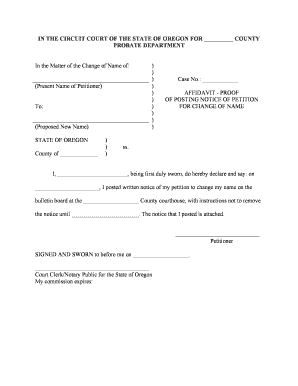
The Oregon Circuit Court Form is a standardized court filing used in Oregon trial courts to initiate actions, respond to cases, or record orders and administrative requests. Forms cover a wide range of matters — civil complaints, family law petitions, small claims, domestic violence petitions, guardianship and probate filings — and conform to local rule and statewide formatting standards for docketing and service.

Why a Properly Prepared Form Matters

Accurate, correctly formatted filings reduce rejection risk, speed court processing, and establish a clear record for deadlines and service. Using a consistent template helps ensure required fields, signature blocks, and jurisdictional details comply with Oregon local rules and the clerk’s office requirements.

Why a Properly Prepared Form Matters

Who Typically Prepares and Files These Forms

Choose the preparer based on legal complexity, required service, and whether signature notarization or witness verification is necessary.

  • Self-represented litigants preparing small claims or family law petitions using court-provided instructions.
  • Attorneys submitting civil complaints, motions, or case management forms on behalf of clients.
  • Court clerks, mediators, or agencies filing administrative requests or compliance certificates.

Core Elements Every Professional Oregon Circuit Court Form Should Include

A complete filing follows a consistent structure so clerks and judges can process it without follow-up; the following elements are typically required across form types.

Caption

Court name, county, case number, parties named exactly as plaintiff/petitioner and defendant/respondent for accurate docket placement and service.
Title

Clear document title (Complaint, Motion, Affidavit, Response) identifying the filing purpose and statutory basis if applicable.

Body

Concise factual statements, numbered paragraphs, and legal claims or relief sought written in plain language and tied to relevant statutes.

Relief

Specific request to the court (monetary amount, injunction, custody order) with precise language to avoid ambiguity at hearing.

Signature

Typed name, signature block, date, and counsel identification including Oregon Bar number where applicable for attorney filings.

Certificate

Certificate of service or proof of mailing stating how and when opposing parties were served per Oregon Rule of Civil Procedure requirements.

Required Data Elements to Include

Party Names: Full legal names
Case Caption: Court and county
Case Number: Assigned or leave blank
Filing Date: MM/DD/YYYY
Service Information: Method and date
Signature Block: Signer name and contact

Step-by-Step: Preparing and Submitting an Oregon Circuit Court Form

Follow these sequential steps to prepare a compliant filing and reduce the chance of rejection or the need for clerk follow-up.

  • 01
    Select the Form: Choose the correct statewide or local form for your matter.
  • 02
    Complete Fields: Fill required fields using MM/DD/YYYY and full names.
  • 03
    Attach Exhibits: Label and paginate attachments, citing exhibits in the body.
  • 04
    File and Serve: E-file where available and complete certificate of service.

Typical Workflow for Electronic Filing and Distribution

Electronic workflows reduce manual handoffs; these steps reflect a typical e-filing lifecycle from draft to docketing.

  • Draft: Prepare form and exhibits in a single PDF.
  • Validate: Confirm required fields, signatures, and attachments.
  • E-file: Submit through court eFiling portal or approved vendor.
  • Serve: Complete certificate of service and notify parties.

Configuring an Online Workflow for Court Filings

Set up a consistent template and routing rules to streamline repeat filings and maintain an audit-ready record.

Field Configuration
Document Type Civil, Family, Small Claims, Probate
Signing Order Parallel (simultaneous) or sequential signer order
Authentication Email OTP, SMS code, or identity proofing
Archive Format PDF/A stored with audit trail

How to Share or Deliver the Completed Form

Confirm the clerk’s preferred method and retain the filing receipt and audit trail for your records.

  • Court eFiling: Use county-approved portals where available.
  • Email / Secure Portal: Allowed only if court or parties accept electronic service.
  • Cloud Integrations: Store copies on Box, Google Drive, or NetSuite

Consequences of Incorrect or Incomplete Filings

Rejection: Filing may be rejected
Delay: Proceedings postponed
Sanctions: Court fines or sanctions
Perjury Risk: False statements risk criminal exposure
Fee Forfeiture: Costs not refunded
Service Defect: Orders may be unenforceable

Common Pitfalls to Avoid When Preparing Court Forms

  • Using abbreviated party names or inconsistent identifiers that hinder service and proof of identity.
  • Failing to attach necessary exhibits or referencing attachments that are missing from the submission packet.
  • Using an incorrect filing venue or county which can cause administrative dismissal or transfer delays.
  • Omitting the certificate of service or providing an incorrect service date that invalidates notice to other parties.

Typical Timelines and What to Expect After Filing

Timing depends on method of submission and court workload; the items below describe common benchmarks for filings and processing.

E-filing Acknowledgment:

Immediate receipt from portal typically within minutes

Clerk Review:

1–7 business days for acceptance or rejection

Service Deadlines:

Follow local rules; service often required within 90 days of filing

Hearing Scheduling:

May take 2–12 weeks depending on calendar and case type

Appeal Notice:

Short statutory window — consult specific rule for timing

Practical Examples of Common Filing Scenarios

Two representative scenarios show how form completion and distribution typically proceed in real matters.

Small Claims Filing

A plaintiff completes the court form with claimant and defendant details and the amount sought.

  • The form lists damages and factual basis.
  • After e-filing and paying the fee, the plaintiff serves the defendant and files a certificate of service; a hearing is then scheduled.

Family Law Petition

A petitioner fills the petition, financial affidavit, and parenting plan exhibits.

  • Exhibits are paginated and referenced.
  • The filer ensures proper notarization where required, serves the respondent per rule, and retains the filing receipt and proof of service for the hearing record.

eSignature Vendor Pricing Comparison Relevant to Court Form Workflows

Common vendor pricing and feature differences affecting high-volume court forms and signature workflows; signNow is listed first per standard comparison format.

signNow DocuSign Adobe Sign PandaDoc HelloSign
Starting Price $8/user/mo $15/user/mo $14/user/mo $19/user/mo $15/user/mo
Free Trial 7-day free trial Varies Varies Varies Varies
Bulk Send Yes Yes Yes Yes No
Audit Trail Yes Yes Yes Yes Yes
HIPAA Compliant Yes Yes Yes No No

Frequently Asked Questions About Filing and Electronic Signing

Answers to common questions about whether and how Oregon Circuit Court Forms can be completed and submitted electronically, and what to check before filing.


Need help? Contact support

be ready to get more
Join over 28 million airSlate SignNow users