Establishing secure connection…Loading editor…Preparing document…

Parental Consent

This template is fully customizable. Edit the text, fill out the fields, and send it for signature. Give it a try!
Parental Consent

What a Parental Consent Form Is and When It’s Used

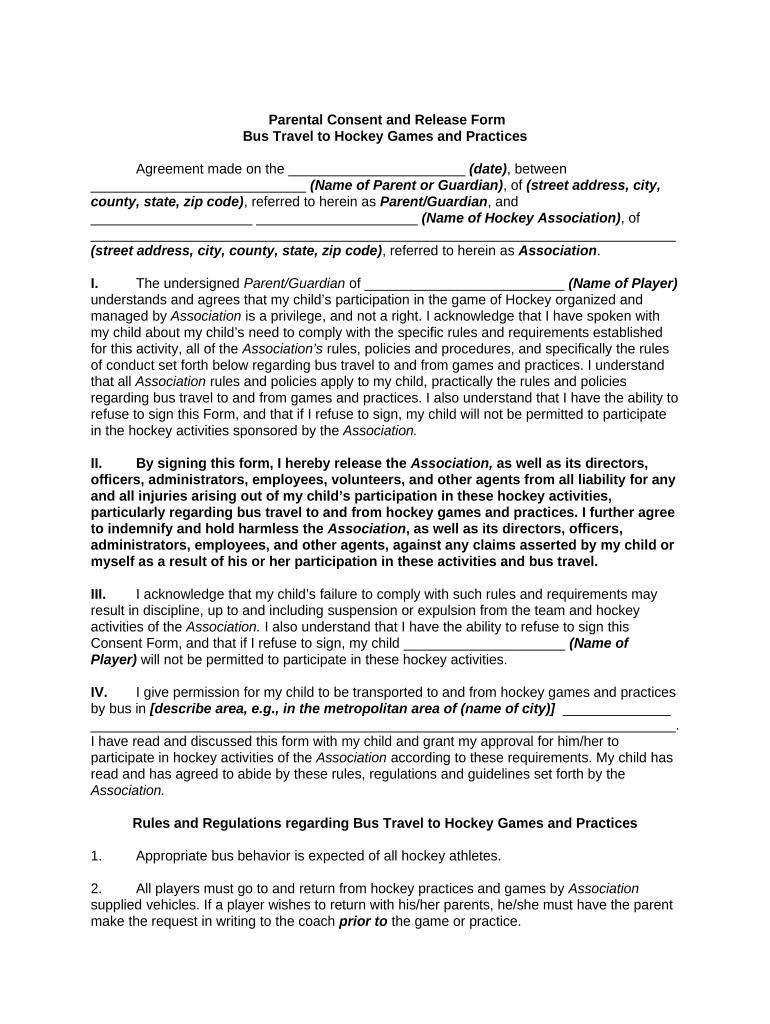
A Parental Consent is a written authorization from a parent or legal guardian permitting a minor to engage in a specific activity, receive medical treatment, travel, or have personal information released. Typical uses include school trips, medical care, sports participation, and photography releases. Electronic versions can be enforceable under the ESIGN Act (15 U.S.C. ch. 96) and state UETA laws when they satisfy intent, consent, attribution, and retention requirements.

Why a Clear Parental Consent Matters

A professionally drafted Parental Consent clarifies authority, reduces administrative delays, protects minors in emergencies, and documents permission for third parties. Accurate consent minimizes liability and ensures institutions can rely on a reproducible record of authorization.

Why a Clear Parental Consent Matters

Who Typically Prepares or Accepts a Parental Consent

The Parental Consent is used by parents, guardians, and organizations that serve minors.

  • Parents and legal guardians who need to authorize travel, medical care, or activities for children.
  • Schools, camps, and youth programs that require documented authorization before activities off-site or medical treatment.
  • Healthcare providers and clinics needing documented permission for non-emergency treatment or information release.

Different recipients may require notarization, witnesses, or specific language; confirm requirements before submitting the form.

Essential Elements of a Professional Parental Consent

A usable Parental Consent is concise but complete, identifying parties, scope, duration, contact details, and authentication. Use clear, unambiguous language so third parties can act on the consent without extra verification.

Parties

Full legal names of the minor and the parent or guardian, with relationship stated to avoid ambiguity when custody issues exist.
Minor Identification

Date of birth and a government ID reference (type and number) or photocopy attachment to confirm the minor’s identity for providers and carriers.

Scope of Consent

Specific activities authorized (travel, medical treatment, photography) and any limitations or conditions; avoid vague or open-ended language.

Effective Dates

Clear start and end dates or a statement of event-specific coverage so third parties know when permission is valid.

Emergency Instructions

Emergency contact, preferred medical providers, insurance details, and explicit medical treatment authorizations where appropriate.

Authentication

Signature blocks with date, notarization or witness lines if required, and space to include electronic signature evidence or audit-trail reference.

Step-by-Step: Complete and Authenticate a Parental Consent

Follow these four essential steps to produce a valid, usable consent form.

  • 01
    Gather Documents: Collect child ID, parent ID, insurance card, and custody documents if relevant.
  • 02
    Fill Required Fields: Enter full names, DOB, scope, contacts, and dates using specified formats.
  • 03
    Authenticate: Sign electronically or in ink; obtain notarization or witnesses if recipient requires it.
  • 04
    Distribute Copies: Provide signed copies to the organization, retain originals, and store an electronic copy securely.

Where to Send or File a Signed Parental Consent

Destination depends on the use case; maintain a clear routing record so all stakeholders can act on the authorization.

  • School or Camp: Send the signed consent to the program administrator and retain a copy in the student record.
  • Healthcare Provider: Attach the consent to the minor’s medical chart and verify acceptance of e-signed forms under HIPAA policies.
  • Travel Carrier: Provide the consent to airlines or tour operators as required for unaccompanied minor travel.
  • Legal or Custody Records: File copies with attorneys or custodial records when consent relates to court-ordered custody or guardianship.

Configuring an Online Parental Consent Workflow

Set up fields and authentication to match the recipient’s acceptance criteria and local legal requirements.

Field Configuration
Signature Type Electronic signature with audit trail or uploaded wet-sign image
Authentication Email link, SMS code, or stronger multi-factor authentication if required
Conditional Fields Show medical authorization only when treatment consent box is checked
Retention Policy Store signed copy and audit trail for the period required by recipient

Technical Requirements for eSigning and Sharing

Verify that the signing platform supports required formats, authentication, and integrations before issuing electronic consent.

  • File Formats: PDF, DOCX, or flattened PDF accepted
  • Integrations: Google Workspace, Microsoft 365, NetSuite, Procore
  • Security: TLS in transit; AES-256 at rest

Risks and Consequences of an Incorrect or Incomplete Consent

Invalid Authorization: Third parties may refuse to act on the consent
Medical Refusal: Provider may decline treatment without proper authorization
Travel Denial: Airline or carrier can deny boarding for unaccompanied minors
Civil Liability: Parent or caregiver may face disputes over authority
Child Welfare Flags: Inconsistent documentation can trigger protective services inquiries
Administrative Delays: Organizations may require additional verification, delaying care or travel

Common Mistakes to Avoid When Preparing Parental Consent

  • Using nicknames or initials instead of the minor’s full legal name can prevent verification and acceptance by providers or carriers.
  • Omitting precise dates or leaving the duration open-ended creates ambiguity about when consent applies and may be rejected.
  • Failing to include emergency contact information or insurance details can delay urgent medical decisions if primary guardian is unreachable.
  • Not checking whether the receiving party requires notarization, witnesses, or a specific signature format leads to invalidation.

Practical Tips for Accurate and Efficient Completion

Apply these practices to reduce friction and improve acceptance by third parties.

Verify Identity
Confirm the minor’s and signer’s IDs match the names on the form; attach photocopies of passports or driver’s licenses when required by the recipient to avoid later disputes.
Be Specific
Spell out the exact activity, location, and dates covered by the consent; narrow scope prevents misinterpretation and ensures organizations can act without additional approvals.
Record Authentication
Use an eSignature platform that captures an audit trail (timestamp, IP, signer email) and keep a PDF copy of the signed record; this supports attribution under ESIGN and UETA.
Confirm Local Rules
Check recipient and state requirements for notarization or witnesses; if international travel is involved, verify destination-country entry rules for minors.

Real-World Parental Consent Scenarios

Two common scenarios show how consent forms are used and what third parties expect.

School Field Trip

A parent authorizes a one-day off-site field trip for a minor with emergency instructions and contact numbers.

  • The school requires full name, DOB, and signature.
  • The signed consent is kept in the student record and must include a dated signature and emergency contact to be accepted by most districts.

Medical Treatment Authorization

A guardian permits non-emergency medical care while a child travels with a relative.

  • The clinic asks for insurance details and a photocopy of guardian ID.
  • Providers typically require either notarization or a verified electronic signature with an audit trail before proceeding with treatment for a minor.

Who Is Authorized to Sign a Parental Consent

Parent/Guardian

A biological or legal parent or appointed legal guardian normally has authority to sign. When custody is shared or restricted, include documentation (court order or custody agreement) to demonstrate authority; recipients may refuse forms lacking proof.

Authorized Agent

A parent may designate an agent by power of attorney or written delegation for specific events. The consent should reference the power of attorney and include supporting documentation so third parties can verify delegated authority.

eSignature Pricing and Feature Snapshot for Parental Consent Workflows

Basic pricing and feature availability across common eSignature vendors; signNow is listed first per comparison convention.

signNow DocuSign Adobe Sign PandaDoc HelloSign
Starting Price $8/user/mo $15/user/mo $14/user/mo $19/user/mo $15/user/mo
Free Trial 7-day free trial Varies by vendor Varies by vendor Varies by vendor Varies by vendor
Bulk Send Yes Yes Yes Yes Varies
Audit Trail Yes Yes Yes Yes Yes
HIPAA Compliant Yes Yes Yes No No

FAQs — Common Questions About Parental Consent

Answers to frequent questions about validity, authentication, notarization, revocation, and cross-jurisdictional concerns.


Need help? Contact support

be ready to get more
Join over 28 million airSlate SignNow users