Establishing secure connection…Loading editor…Preparing document…

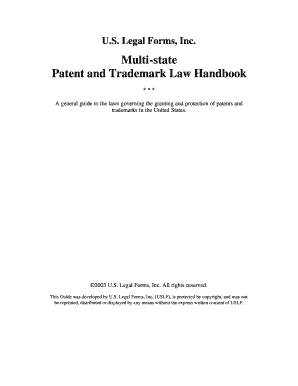
Patent and Trademark Law Handbook

This template is fully customizable. Edit the text, fill out the fields, and send it for signature. Give it a try!
Patent and Trademark Law Handbook

What the Patent and Trademark Law Handbook Covers

The Patent and Trademark Law Handbook is a practical reference and working template that collects the standard forms, checklists, and explanatory notes used to prepare, file, and manage U.S. patent and trademark matters. It explains the information typically needed for provisional and nonprovisional patent filings, trademark applications and specimen collection, assignment and licensing records, office-action responses, and docketing requirements. The handbook is designed to be used by in-house counsel, outside counsel, patent agents, paralegals, and business owners to standardize intake, reduce avoidable errors, and create an auditable record of decisions and authorizations.

Why a Structured Handbook Matters for IP Workflows

A centralized handbook reduces administrative errors, supports consistent legal reasoning, and establishes a single source of truth for inventor declarations, assignment language, priority claims, and specimen evidence.

Why a Structured Handbook Matters for IP Workflows

Typical Users and Teams That Rely on the Handbook

The handbook is used by a mix of legal and business roles that participate in intellectual property creation, prosecution, and portfolio management.

  • In-house IP counsel and corporate legal teams coordinating filings, assignments, and licensing negotiations across business units.
  • Patent agents, outside IP counsel, and paralegals preparing provisional filings, office-action responses, and inventor declarations.
  • Product managers and R&D leads who supply disclosure materials, specimens, and chain-of-title documentation.

When properly completed, the handbook helps these stakeholders maintain consistent records and reduces downstream disputes over inventorship, ownership, and filing priorities.

Step-by-Step Completion Checklist

Follow this sequence when preparing a new patent or trademark submission to ensure all required items are captured before filing.

  • 01
    Record Intake: Collect invention disclosure, dates, and supporting files.
  • 02
    Identify Inventors: Confirm legal names and contributions for inventorship.
  • 03
    Prepare Assignment: Draft assignment language and chain-of-title evidence.
  • 04
    Signature & Retention: Obtain signatures and store executed records in the docket.

How to Configure an Online Handbook Workflow

Map fields, reviewer roles, and signers before deploying the handbook in an eSignature platform to prevent routing errors.

Field Configuration
Intake Form Conditional fields show based on 'Patent' or 'Trademark' selection
Reviewer Roles Assign Patent Counsel, Corporate Counsel, and Paralegal reviewers
Signature Order Set sequential signing (inventor → assignee → counsel)
Retention Rule Auto-save signed PDF to secure storage with audit trail

Typical eSubmission Sequence

Online completion and eSubmission follow a predictable path; documenting each step ensures chain-of-title and consent are preserved.

  • Upload Documents: Add disclosures, drawings, and specimens to the package.
  • Place Fields: Insert signature, date, and initials where required.
  • Authorize Signers: Provide signer emails and authentication method.
  • Collect Audit Trail: Save signed PDF and metadata for records.

Technical Considerations for Digital Completion

Confirm platform capabilities before digitizing the handbook to meet compliance and workflow needs.

  • Authentication: Use email, SMS, or stronger methods for signer identity
  • Audit Trail: Platform must capture timestamps, IP, and action logs
  • Storage: Encrypted at rest with access controls

Ensure integrations with document repositories and docketing systems are configured so signed records flow to matter folders securely.

Core Sections to Include in the Handbook

A professional handbook bundles intake, assignment, prosecution history, specimen evidence, signatures, and retention rules so teams can operate consistently and defensibly.

Intake Checklist

Inventor disclosure, development timeline, and priority material to document the invention's origin and supporting facts.
Assignment Records

Executed assignment wording, employer relationship details, and evidence of consideration or contractual obligation.

Filing Package

Complete set of application documents, claims, drawings, and required declarations for USPTO submission.

Specimens & Evidence

For trademarks: specimen images, dates of first use, and sales or marketing proof.

Prosecution Log

Accepted office-action responses, examiner communications, and amendment history with dates.

Signatures & Auth

Signature blocks, power-of-attorney entries, and authentication method for each signatory.

Supporting Documents Commonly Attached

Certain companion documents are routinely attached to patent and trademark files to establish ownership, priority, and use.

Employment Agreements

Contracts showing assignment obligations and inventor duties when inventions arise during employment.

License Agreements

Signed licenses showing rights granted or retained for specific technologies or marks.

Chain-of-Title Docs

Previous assignments, mergers, or equity transfers affecting ownership of IP assets.

Specimen Archive

Screenshots, packaging, or marketing material evidencing trademark use in commerce.

Common Deadlines and Timing Considerations

Track statutory and administrative deadlines carefully; missed dates can affect priority and create filing bars or penalties.

Priority Claims:

File nonprovisional within 12 months of a U.S. provisional to preserve priority

Trademark Use Deadlines:

Respond to USPTO office actions within 6 months unless otherwise specified

Patent Response Time:

Typical office-action response windows are 3 months with two-month extensions available

Document Retention:

Keep executed assignments and authorizations for the life of the asset

Tax Filings:

Preserve records needed for 3–6 years to meet IRS audit windows

Key Milestones in an Application Lifecycle

This numbered sequence highlights the primary stages from disclosure through registration and maintenance.

01

Disclosure and Review

Document invention and conduct clearance prior to filing.

02

Initial Filing

Submit provisional or trademark filing to secure a filing date.

03

Office Actions

Prepare and file responses to USPTO examiner communications.

04

Maintenance and Renewal

File maintenance documents and renewal fees on schedule.

Consequences of Incomplete or Incorrect Records

Lost Priority: Missing provisional deadlines can forfeit an earlier effective filing date
Invalid Assignment: Defective assignment language may leave ownership unclear
Tax Penalties: Incorrect reporting can trigger IRS penalties under IRC §6721
I-9 / Employment Risk: Employment record failures may incur fines under 8 CFR §274a.2
Evidence Gaps: Lack of specimens weakens trademark use claims
Litigation Exposure: Poor records increase costs and risk in disputes

Common Preparation Pitfalls to Avoid

  • Using informal assignment language that fails to convey all rights and consider consideration
  • Mismatched signer names between assignment and application records
  • Missing or low-quality specimens or drawings that fail USPTO standards
  • Relying on unsigned or incomplete inventor declarations at filing

Security and Compliance Considerations

In Transit: TLS 1.2/1.3
At Rest: AES-256 encryption
Audit Trail: Detailed timestamps and IP logs
HIPAA: BAA available
21 CFR Part 11: Support for compliance
Certifications: SOC 2 Type II and ISO 27001

eSignature Pricing and Feature Snapshot

Compare basic pricing and commonly evaluated features among popular eSignature vendors; signNow is listed first per the vendor ordering convention.

signNow DocuSign Adobe Sign PandaDoc HelloSign
Starting Price $8/user/mo $15/user/mo $14/user/mo $19/user/mo $15/user/mo
Free Trial 7-day free trial Varies Varies Varies Varies
Bulk Send Yes Yes Yes Yes No
Audit Trail Yes Yes Yes Yes Yes
HIPAA Compliant Yes Yes Yes No No

Real-World Use Examples

Two representative use cases show how a handbook supports filings and recordkeeping in practice.

Optica Ventures

Optica standardized inventor intake to reduce filing errors and speed reviews.

  • The team used templates to unify assignment language.
  • The result was fewer office-action clarifications and a clearer chain of title for subsequent licensing negotiations.

Martin Properties

A small IP team processed patent and trademark assignments online for property-related innovations.

  • They captured signatures via eSign and retained audit trails.
  • This created a defensible record that reduced turnaround time and eased due diligence in property transactions.

Practical Tips for Efficient, Accurate Completion

Adopt these practical habits to make the handbook reliable and defensible.

Use Standardized Language
Adopt consistent assignment and declaration wording across matters to avoid ambiguity and simplify review.
Validate Names and Titles
Confirm legal names and corporate titles against formation documents to prevent mismatches.
Capture Evidence Early
Preserve specimen evidence and development logs contemporaneously to strengthen priority and use claims.
Record Authentication
Document the authentication method and retain the audit trail with the signed PDF for future verification.

Frequently Asked Questions and Troubleshooting

Answers to common questions about completing the handbook, e-signatures, and recordkeeping for patent and trademark matters.


Need help? Contact support

be ready to get more
Join over 28 million airSlate SignNow users