Establishing secure connection…Loading editor…Preparing document…

Demand Letter for Payment of Insurance Premiums

This template is fully customizable. Edit the text, fill out the fields, and send it for signature. Give it a try!
Demand Letter for Payment of Insurance Premiums

What a Demand Letter for Payment of Insurance Premiums Is

A Demand Letter for Payment of Insurance Premiums is a formal written notice from an insurer, agent, or billing administrator to a policyholder or responsible party asking for past-due premium payment. It identifies the policy, states the outstanding amount, sets a payment deadline, and explains consequences for nonpayment such as policy cancellation, late fees, or referral to collections. The document can serve as evidence in later administrative or legal proceedings and is often used before pursuing formal cancellation or collection steps.

Why a Clear Demand Letter Matters

A well-drafted demand letter creates a clear payment record, reduces disputes, and can shorten collections timelines while preserving contractual and regulatory options. It documents notice, supports compliance with insurer notice requirements, and can improve recovery rates without immediate litigation.

Why a Clear Demand Letter Matters

Who Prepares and Receives These Letters

Typical senders and recipients vary by role and organizational function; the following list highlights the most common participants.

  • Insurance company billing departments and premium collections teams responsible for managing overdue accounts and policy status
  • Independent insurance agents and brokers acting on behalf of insurers to notify clients about missed payments and next steps
  • Policyholders, named insureds, and listed premium payers who receive the notice and must respond to avoid cancellation

Use clear contact details, policy identifiers, and a stated deadline so the recipient understands next steps and escalation paths.

Primary Signers and Roles

Billing Manager

Billing Manager — Insurance company or third-party administrator with authority to issue notices and place accounts into collections. This person coordinates internal approval, ensures regulatory compliance with notice timing, and retains proof of service for dispute resolution or audits.

Named Insured

Named Insured — The individual or entity contractually responsible for premium payments. The named insured receives the demand, can cure the default by paying, and may appeal or dispute billing errors through formal channels.

Essential Information to Include

Policy Number: Unique policy identifier
Insured Name: Full legal name of insured
Amount Due: Principal and any fees
Due Date: Original payment due date
Billing Address: Street, city, state, ZIP
Contact Info: Phone and email for questions

Key Components of a Professional Demand Letter

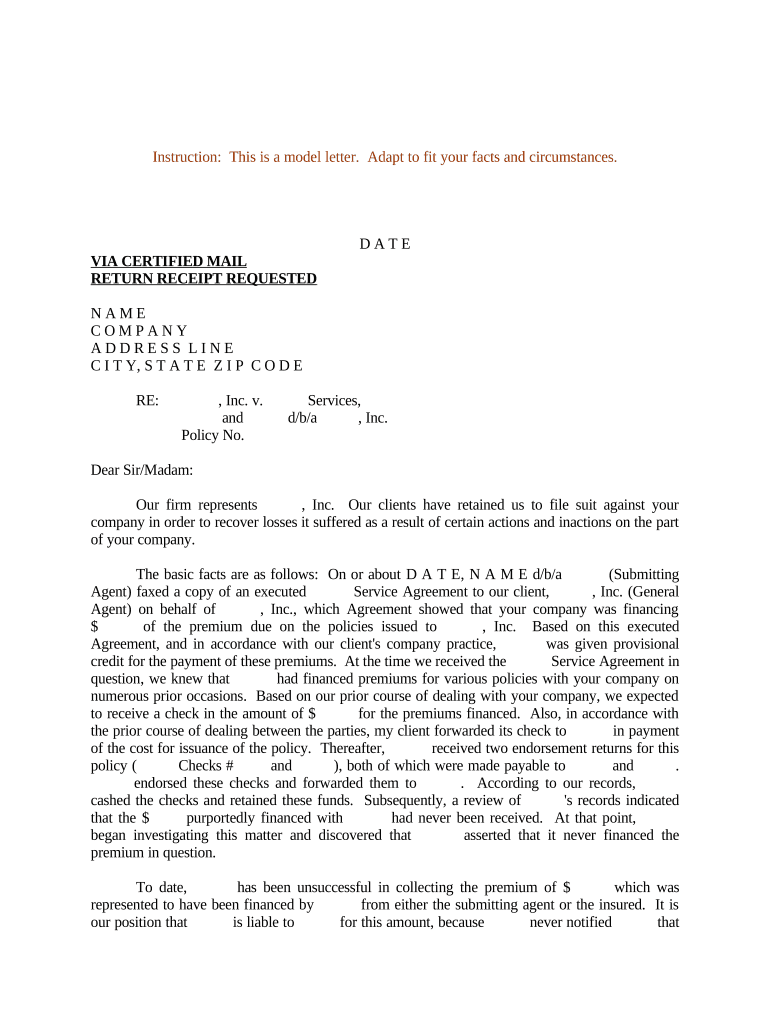
A professional demand letter follows a predictable structure to reduce ambiguity: heading, account details, payment demand, deadline, consequences, and signature. Each element supports enforceability and administrative efficiency.

Letter Heading

Include sender name, company, mailing address, and the date to establish origin and create a clear record for retention and later proof of notice.
Account Details

Provide policy number, insured name, coverage period, and billing reference so the recipient can immediately identify the account and verify accuracy before responding.

Statement of Balance

List the outstanding premium, itemize late charges or adjustments, and show the total owed to avoid future disputes about amounts.

Demand and Deadline

State the exact dollar amount requested and a firm deadline (for example, 30 days from the letter date) for payment or cure of the default.

Consequences

Describe potential outcomes for nonpayment, such as policy cancellation, loss of coverage, late fees, credit reporting, or referral to collection agencies.

Signature Block

Include the printed name, job title, direct contact information, and signature of the authorized representative to show who authorized the demand.

Step-by-Step: Preparing and Sending the Demand Letter

Follow a concise sequence to prepare, approve, send, and document the demand letter to ensure enforceability and record integrity.

  • 01
    Prepare Content: Gather policy details, compute outstanding balance, and draft the letter text.
  • 02
    Internal Approval: Obtain required sign-off from the billing or legal team prior to sending.
  • 03
    Send with Proof: Deliver by certified mail, RON-notarized copy, or tracked e-delivery to establish receipt.
  • 04
    Retain Records: Store signed copy, delivery receipt, and audit trail for compliance.

Where to Send or File the Demand Letter

Choose delivery channels that provide verifiable receipts and meet any contractual or state-specific notice requirements.

  • Primary Recipient: Named insured at the policy mailing address on file for the insurer
  • Agent or Broker: Copy the agent of record when applicable to keep all parties informed
  • Certified Mail: Use USPS Certified Mail with return receipt for proof of delivery
  • E-Delivery: Use tracked email or an eSignature platform to capture timestamps and audit trails

Digital Delivery and Signing Considerations

Selecting a delivery and signing method should balance verifiability, compliance, and recipient accessibility.

  • Document Types: PDF, DOCX supported
  • Authentication: Email link, SMS code, or stronger KBA
  • Integrations: Salesforce, Google Workspace, NetSuite

Typical Timelines and Response Expectations

Timeframes vary by policy terms and state rules; a standard internal schedule improves consistency and legal defensibility.

Initial Demand Window:

Commonly 30 days to cure the missed premium

Grace Period:

Often 10–30 days if policy language provides one

Cancellation Effective Date:

Specified in policy after nonpayment deadline

Collections Referral:

Typically 60–90 days after sustained nonpayment

Litigation Consideration:

Statute of limitations varies by state and claim

Common Preparation Mistakes to Avoid

  • Failing to include the exact policy number and insured name, which leads to misapplied payments and disputes.
  • Sending to an outdated address or email, leaving no verifiable proof of delivery or receipt for later enforcement.
  • Using vague or aggressive language that obscures the cure terms and invites regulatory scrutiny or consumer complaints.
  • Neglecting to document internal approvals and retention steps, weakening the letter's evidentiary value in disputes.

Consequences of an Incorrect or Missing Demand Letter

Policy Lapse: Risk of unintended cancellation
Late Fees: Additional charges may accrue
Collection Referral: Account may be sent to collections
Regulatory Complaint: State insurance department inquiries possible
Legal Costs: Attorney fees or litigation expenses
Credit Impact: Possible reporting to credit bureaus

Basic Workflow Settings for Online Demand Letters

Configure workflows to capture identity, preserve audit trails, and enforce retention rules before sending demand letters.

Field Configuration
Authentication Level Email link or SMS code; use KBA for higher risk
Delivery Method Certified mail, tracked email, or e-sign platform
Template Saving Save approved templates to reduce drafting errors
Retention Policy Auto-archive signed copies and delivery receipts

eSignature Vendor Pricing and Feature Snapshot

A concise vendor comparison shows starting prices and feature differences relevant to sending and signing demand letters; signNow appears first per platform rules.

signNow DocuSign Adobe Sign PandaDoc HelloSign
Starting Price $8/user/mo $15/user/mo $14/user/mo $19/user/mo $15/user/mo
Free Trial 7-day free trial Varies by vendor Varies by vendor Varies by vendor Varies by vendor
Bulk Send Yes Yes Yes Yes No
Audit Trail Yes Yes Yes Yes Yes
HIPAA Compliant Yes Yes Yes No No
Envelope Cap No cap 100 envelopes/user/year Varies Varies Varies

Frequently Asked Questions about Demand Letters for Premiums

Answers to common operational and legal questions about drafting, delivering, and enforcing demand letters for insurance premiums.


Need help? Contact support

be ready to get more
Join over 28 million airSlate SignNow users