Establishing secure connection…Loading editor…Preparing document…

Personal Representative Form

This template is fully customizable. Edit the text, fill out the fields, and send it for signature. Give it a try!
Personal Representative Form

What the Personal Representative Form Is and When It’s Used

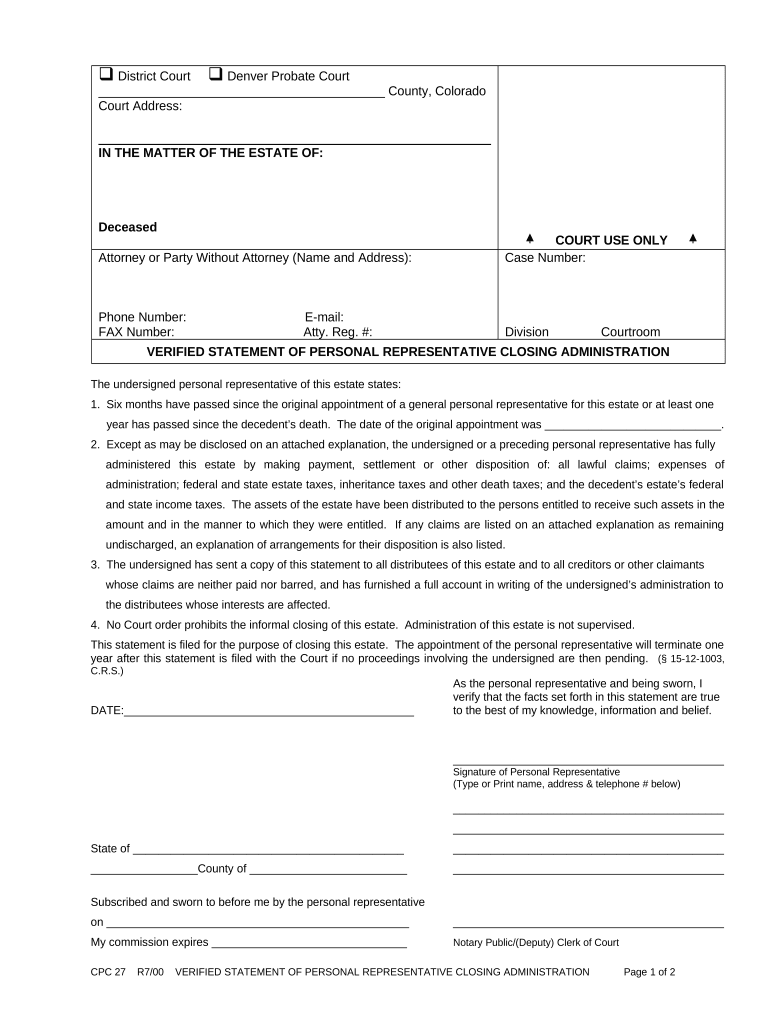
The Personal Representative Form documents the person authorized to manage a decedent’s estate, handle probate tasks, and act on behalf of the estate in dealings with courts, creditors, banks, and government agencies. It commonly accompanies a petition for appointment or a court-issued letters testamentary/letters of administration. The form identifies the personal representative, defines the scope of authority, and provides dates and signatures required by the probate court or receiving institution. State rules vary for format, notarization, witnesses, and probate filing procedures.

Why a Clear Personal Representative Form Matters

A properly completed Personal Representative Form clarifies legal authority, speeds estate administration, reduces disputes, and provides institutions with the documentation they require to release assets or information.

Why a Clear Personal Representative Form Matters

Who Typically Completes and Accepts This Form

The form is completed by an appointed or nominated personal representative and submitted to the probate court or shared with financial institutions and other custodians of estate assets.

  • Estate executors and administrators who need court recognition and asset access
  • Probate attorneys preparing appointment paperwork and supporting affidavits
  • Banks, title companies, and benefits administrators verifying authority to act

Step-by-step: Completing a Personal Representative Form

Follow these core steps to complete and deliver the form correctly.

  • 01
    Collect details: Gather decedent name, date of death, and probate case number.
  • 02
    Name representative: Enter full legal name and contact information for the representative.
  • 03
    Define authority: Specify powers granted (assets, transactions, litigation) and limitations.
  • 04
    Authenticate: Sign, date, notarize or follow state RON rules before filing.

Typical Filing and Distribution Flow

A common workflow moves the completed form from preparer to court and to custodial institutions.

  • Prepare form: Populate fields and attach supporting documents.
  • Authenticate: Sign in-person, notarize, or use approved RON process.
  • File with court: Submit petition or supporting paperwork to the probate clerk.
  • Share with custodians: Send certified copies to banks, title companies, and agencies.

Digital Workflow Settings to Consider

Configure e-sign and routing settings to match court and custodian acceptance criteria.

Field Configuration
Authentication Method Email link, SMS code, or identity proofing for stronger verification
Signature Order Sequential or parallel signing based on who must sign first
Notary Workflow Include notarization step or RON session prior to filing
Storage & Audit Retain signed copies plus audit trail for court or bank review

Distribution Channels and Platform Requirements

Choose delivery methods the receiving party accepts and ensure files are stored securely during transfer.

  • Integrations: Salesforce, NetSuite, Microsoft 365, Google Workspace support
  • File formats: PDF, Word DOCX and exported signed PDF
  • Device support: Desktop and mobile browser compatibility required

Key Timelines and Filing Expectations

Timing affects estate administration, creditor notice deadlines, and tax reporting; act promptly once appointed.

File with court:

Submit appointment papers as soon as practicable after nomination or death.

Notice to creditors:

State deadlines vary; many require notice within months after appointment.

Inventory deadline:

Courts often set a schedule for filing inventories and accountings.

Final tax returns:

File decedent’s final Form 1040 by the usual April 15 deadline.

Estate tax return:

Form 706 generally due nine months after date of death, with possible extension

Milestones in the Personal Representative Process

A sequential view of the main stages helps track progress from appointment to distribution.

01

Preparation

Collect documents, decedent records, and identify heirs or beneficiaries.

02

Court filing

File petition for appointment and supporting affidavits with probate court.

03

Letters issued

Court issues letters testamentary or administration conferring authority.

04

Asset distribution

Settle debts, file tax returns, and distribute estate per will or statute.

Common Preparation Mistakes to Avoid

  • Using nicknames or initials that don’t match identification files; banks may refuse access or demand corrected paperwork.
  • Skipping notarization when required by state law or by the receiving institution, causing rejection or delay of acceptance.
  • Failing to attach required supporting documents such as death certificate or letters from the court, which prolongs administration.
  • Leaving scope vague; broad, undefined authority invites disputes and possible court intervention to clarify powers.

Security and Compliance Considerations

Encryption: TLS 1.2/1.3 in transit; AES-256 at rest
Audit Trail: Detailed signing log and timestamps
HIPAA: BAA required for protected health information
Regulatory: ESIGN, UETA, and 21 CFR Part 11 supported
Certifications: SOC 2 Type II and ISO 27001 available
Accessibility: WCAG 2.0 Level AA conformance

Consequences of Incorrect or Incomplete Forms

Appointment delay: Probate will not proceed
Contested appointment: Increases litigation risk and costs
Rejected by bank: Access to accounts delayed
Tax penalties: Late filings can incur IRS fines
Privacy breaches: Improper disclosures risk HIPAA violations
Invalid signatures: Court may require reexecution or hearing

Real-World Examples of Personal Representative Forms in Use

Two practical scenarios show common use and outcomes when the form is completed correctly.

Estate Administration — Small Estate

A nominated family member files for appointment to manage a modest estate

  • The court issues letters within weeks after correct filing
  • With properly completed form and supporting death certificate, banks released account funds and the estate closed within months, minimizing administration costs.

Medical Record Access

A personal representative needs medical records to settle claims

  • Provider required a signed authorization plus proof of appointment
  • Providing the notarized form and court letter enabled timely access while meeting HIPAA documentation standards.

Practical Tips for Accurate and Efficient Completion

Follow these best practices to avoid delays and ensure institutions accept the document.

Verify identity records
Compare the representative’s legal name against government ID and use that exact name across all forms and filings; inconsistent names often trigger holds or rejection at banks and title companies.
Confirm court requirements
Before filing or sharing, check the local probate court’s checklist for required attachments, signature blocks, and whether a self-proving affidavit or certified copy of the will is necessary to expedite issuance of letters.
Notarize or use RON where accepted
If notarization is required, complete it in accordance with state rules; where permanent Remote Online Notarization is allowed, follow identity-proofing and audio-video retention rules to ensure validity.
Maintain an audit trail
Retain signed copies, timestamps, signing IPs, and any transmission receipts; this documentation supports acceptance by institutions and evidence in contested proceedings.

Typical Signers and Their Roles

Executor — Personal Representative

An executor named in a will or a court-appointed administrator acts to collect assets, pay debts, and distribute property. The executor must present authenticated appointment documentation to banks, title holders, and agencies to act on behalf of the estate.

Probate Attorney

An attorney files petitions, prepares the Personal Representative Form for signature, and advises on local practice. Counsel may also obtain court letters and represent the estate in disputes or creditor matters.

eSignature Vendor Comparison for Completing the Personal Representative Form

Common capability and pricing differences across eSignature vendors; signNow is listed first per comparison format.

signNow DocuSign Adobe Sign PandaDoc HelloSign
Starting Price $8/user/mo $15/user/mo $14/user/mo $19/user/mo $15/user/mo
Free Trial 7-day free trial Free trial available Free trial available Free trial available Free trial available
Bulk Send Yes (Business Premium) Yes Yes Yes No
Audit Trail Yes Yes Yes Yes Yes
HIPAA Compliant Yes Yes Yes No No

Frequently Asked Questions About the Personal Representative Form

Answers to common questions about authority, notarization, e-signing, and corrections.


Need help? Contact support

be ready to get more
Join over 28 million airSlate SignNow users