Establishing secure connection…Loading editor…Preparing document…

Privacy Policy Form

This template is fully customizable. Edit the text, fill out the fields, and send it for signature. Give it a try!
Privacy Policy Form

What the Privacy Policy Form Is and Why It Matters

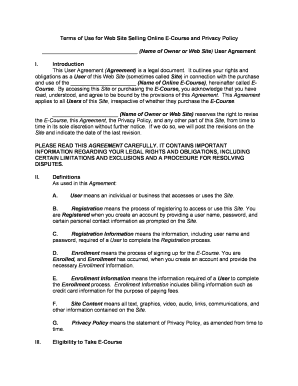
A Privacy Policy Form is a written statement that explains how an organization collects, uses, shares, stores, and protects personal information. It identifies the categories of personal data processed, the purposes for processing, retention practices, and the contact point for privacy inquiries. For online use, the form is commonly published on a website or delivered to consumers at first data collection. Accurate, clear policies help meet legal obligations and establish expectations for data subjects and partners.

Why a Clear Privacy Policy Form Protects Your Organization

A properly drafted Privacy Policy Form reduces legal and operational risk by documenting lawful bases for processing, demonstrating notice to data subjects, and supporting responses to consumer requests under state and federal privacy laws.

Why a Clear Privacy Policy Form Protects Your Organization

Who Typically Prepares and Relies on a Privacy Policy Form

The Privacy Policy Form is prepared by in-house legal, compliance, or privacy teams and used by product managers, customer support, and external partners to explain data handling practices.

  • Small businesses: Use a concise policy that matches actual data collection and vendor-sharing practices.
  • Enterprises: Central legal and privacy teams maintain global policies plus localized addenda for state laws.
  • Website/mobile operators: Publish effective date and conspicuous access; keep change logs for transparency.

Step-by-Step: How to Complete a Privacy Policy Form

Follow a consistent sequence to gather facts, draft accurate text, and publish a final policy that aligns with operations and law.

  • 01
    Gather Data Inventory: Catalog data sources, categories, sharing partners, and downstream uses.
  • 02
    Draft Policy Text: Translate inventory into plain-language disclosures and legal clauses.
  • 03
    Legal and Stakeholder Review: Have legal, security, and product teams verify accuracy and compliance.
  • 04
    Publish and Record: Post on-site, note effective date, and retain archived versions for records.

Where to Publish, Send, and Store the Privacy Policy Form

Decide on distribution channels and archival locations before publication to ensure consistent access and auditable retention.

  • Website Publication: Post a prominent link and landing page for the active policy.
  • Customer Notifications: Email or in-app notice for material changes; record delivery where required.
  • Partner Distribution: Share policy with vendors and processors and document contractual obligations.
  • Internal Records: Store archived versions in a secure, access-controlled repository.

Technical Requirements for Completing and Distributing the Form Electronically

Choose platforms that support secure hosting, access control, and an auditable change history before publishing a privacy policy.

  • Integrations: Salesforce, NetSuite, Google Workspace supported
  • File formats: PDF, DOCX, HTML accepted
  • Authentication: Email/SMS/SSO and advanced options

Online Setup Checklist for a Digital Privacy Policy Form

Configure your online workflow to capture consent, maintain versioning, and handle consumer requests.

Field Configuration
Magic Fields Automatic detection of names, dates, and emails
Conditional Fields Show or hide items based on user responses
Advanced Auth SMS codes, KBA, or 2FA for higher assurance
Retention Settings Enable audit logs and archived versions

Core Sections Every Professional Privacy Policy Form Should Include

A complete Privacy Policy Form balances legal precision and plain-language explanations so consumers and regulators can understand data practices.

Scope

Describe which products, services, subsidiaries, and jurisdictions the policy covers so readers understand applicability and exclusions.
Data Categories

List each category of personal data collected, including examples, sources, and whether data is provided by users or third parties.

Processing Purposes

Explain each purpose for data use, such as service delivery, analytics, fraud prevention, and marketing, with lawful bases where required.

Sharing and Transfers

Disclose categories of third parties, international transfers, and safeguards like standard contractual clauses or adequacy mechanisms.

Individual Rights

Detail access, correction, deletion, portability, and objection rights plus how to submit requests and expected timelines.

Security and Retention

Summarize technical and organizational measures, retention periods, and procedures for breach notification and mitigation.

Security and Compliance Details to Record on the Form

Encryption in Transit: TLS 1.2/1.3
Encryption at Rest: AES-256
Certifications: SOC 2 Type II
HIPAA: BAA required
Regulatory Support: ESIGN and UETA compliant
Audit Trail: Tamper-evident logs

Principal Penalties and Legal Risks of an Incorrect Privacy Policy Form

HIPAA Fines: Civil monetary penalties possible
CCPA/CPRA Penalties: Civil penalties and statutory damages
FTC Enforcement: Deceptive practice actions
Class Actions: Monetary settlements risk
Regulator Investigations: Remediation orders and audits
Reputational Harm: Customer trust erosion

Common Mistakes When Preparing a Privacy Policy Form

  • Using vague data categories such as 'other information' without examples, which prevents consumers and auditors from understanding actual processing.
  • Failing to include an effective date or version history, making it difficult to determine which policy applied to prior processing events.
  • Not specifying how consumers submit rights requests or the timeframe to respond, which can trigger statutory penalties or enforcement actions.
  • Omitting third-party sharing and international transfer details, leaving the organization exposed to cross-border compliance failures.

eSignature Vendor Pricing and Feature Comparison for Publishing a Privacy Policy Form

Compare basic pricing and common capabilities when choosing an eSignature provider for electronic distribution and signature capture. Pricing reflects typical starting plans and common compliance features.

signNow DocuSign Adobe Sign PandaDoc HelloSign
Starting Price $8/user/mo $15/user/mo $14/user/mo $19/user/mo $15/user/mo
Free Trial 7-day free trial Varies by plan Varies by plan Varies by plan Varies by plan
Bulk Send Yes Yes Yes Yes No
Audit Trail Yes Yes Yes Yes Yes
HIPAA Compliant Yes Yes Yes No No
Envelope Cap No envelope cap 100 envelopes/user/year Varies by plan Varies by plan Varies by plan

How Organizations Use a Privacy Policy Form in Practice

Real-world examples show how a clear privacy policy supports operations, compliance, and customer trust.

Fertility Centers of Illinois — John Butler

A health-provider adapted a policy for patient intake and digital records

  • Implemented BAA and clear notice
  • "The airSlate SignNow team has been exceptional, responsive, the API has been great, and we're extremely happy that we chose airSlate SignNow as a company."

Martin Properties — Tim Martin

A real estate firm published a tenant-facing policy and an internal data-handling addendum

  • Posted policy on lease applications and portal
  • "I can process and execute all of these documents online with 100% compliance and built-in security."

Timeframes to Observe When Publishing or Updating a Privacy Policy Form

Track key dates from effective publication to review cycles and consumer-request response times to remain compliant and transparent.

Effective Date:

Date policy takes effect; include in published policy

Periodic Review:

Conduct reviews at least annually or when processes change

Material Change Notice:

Provide conspicuous notice for material updates; timing varies by law and risk

Consumer Request Response:

Respond within state-specified timelines (commonly up to 45 days)

Recordkeeping:

Archive prior versions and request logs for auditability

Frequently Asked Questions About the Privacy Policy Form

Answers to common questions about enforceability, e-signing, and state differences to help you finalize and distribute the policy correctly.


Need help? Contact support

be ready to get more
Join over 28 million airSlate SignNow users