Decedent Details
Full legal name, date and place of death, last residence, and identifying numbers. Accurate identification prevents misfiling and aids clerk verification during case opening and record linkage.
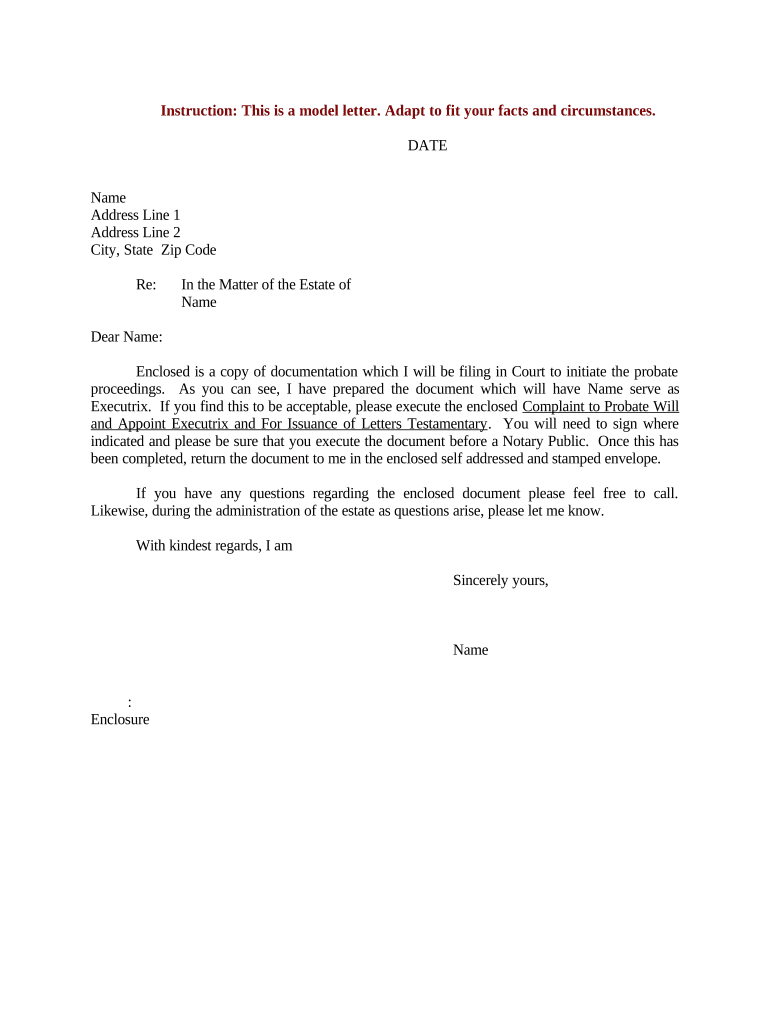
Filing an accurate Probate Estate Form starts the legal process to settle a decedent’s affairs, protects the executor from personal liability, and documents creditor notice and heirship. Timely, correct filings reduce court delays, minimize contested claims, and help ensure assets are transferred according to the will or state intestacy rules.

Typical parties who prepare or review a Probate Estate Form include executors, probate attorneys, and court staff.
An individual appointed by the will or court to collect assets, pay debts and taxes, and distribute property to heirs. The executor signs filings, provides truthful inventory, and follows court orders; errors can cause personal liability or delay distributions.
A licensed attorney who prepares the Probate Estate Form, advises on state probate procedure and deadlines, represents the estate in hearings, and helps resolve creditor claims or will contests. Legal counsel reduces procedural risk and ensures compliance with local court rules.
Full legal name, date and place of death, last residence, and identifying numbers. Accurate identification prevents misfiling and aids clerk verification during case opening and record linkage.
Name, contact, and residence of the proposed personal representative or executor, plus their relationship to the decedent and any bond requests or waivers the court should note.
A categorized list of real property, bank and brokerage accounts, retirement plans, and tangible personal property with values and account identifiers to enable creditor notice and valuation.
Known debts, mortgages, and anticipated tax liabilities with creditor names and amounts; this helps the court prioritize creditor claims and tax reporting obligations.
Summary of will provisions or intestacy allocations, naming beneficiaries and shares; identify disputed assets or contingent bequests requiring court guidance.
Death certificate, original will or copy, consents, and proof of service documents. Properly labeled exhibits limit clerk follow-ups and support a smooth probate calendar.
File promptly after death; state statutes set variations.
Most states require creditor notice within months of appointment.
Court often requires inventory within a specified period after appointment.
Periodic accountings may be due per court schedule.
Occurs after debts and taxes are resolved and court approval obtained.
| Criteria | Probate Estate Form | Small Estate Affidavit |
|---|---|---|
| Use Case | full probate | small-value estates |
| Notarization | ||
| Court Hearing | usually | usually not |
| Typical Timing | months–years | weeks–months |
| signNow | DocuSign | Adobe Sign | PandaDoc | HelloSign | |
|---|---|---|---|---|---|
| Starting Price | $8/user/mo | $15/user/mo | $14/user/mo | $19/user/mo | $15/user/mo |
| Free Trial | 7-day free trial | No | No | Yes | Yes |
| Bulk Send | Yes | Yes | Yes | Yes | No |
| Audit Trail | Yes | Yes | Yes | Yes | Yes |
| HIPAA Compliant | Yes | Yes | Yes | No | No |
| Field | Configuration |
|---|---|
| Signer Roles | Assign executor, witness, and clerk roles. |
| Authentication | Use email link, SMS code, or stronger ID. |
| Notary Integration | Enable RON where state permits. |
| Retention Policy | Set immutable storage and audit logs. |
Confirm platform compatibility with file formats, integrations, and authentication required for probate workflows.
An executor files the form with the original will attached to request appointment
No will exists; an heir files to open probate and request appointment
Submit initial Probate Estate Form and attachments to open the case.
Publish or mail notices to known creditors per state rules.
File an inventory and periodic accountings with the court as ordered.
Obtain court approval and distribute assets to beneficiaries.