Establishing secure connection…Loading editor…Preparing document…

Shareholders Resolution

This template is fully customizable. Edit the text, fill out the fields, and send it for signature. Give it a try!
Shareholders Resolution

What a Shareholders Resolution Is and When it’s Used

A Shareholders Resolution is a formal written decision adopted by a corporation’s shareholders to authorize, approve, or record actions affecting corporate governance, major transactions, or policy. Resolutions range from routine approvals—such as election of directors, dividend declarations, or officer appointments—to significant corporate acts like mergers, amendments to the charter, or authorization of issuance of shares. Although typically an internal corporate record kept in the corporate minute book, some resolutions support filings with regulators or transfer agents and may be relied on by banks, auditors, and third parties as evidence of corporate authority.

Why a Clear Resolution Matters for Corporate Records

A well-drafted Shareholders Resolution provides legal clarity about who authorized an action, reduces dispute risk, and documents compliance with corporate bylaws and state corporation law. It preserves evidence for audits, bank transactions, and regulatory reviews while improving internal governance and operational continuity.

Why a Clear Resolution Matters for Corporate Records

Who Typically Prepares and Relies on Shareholders Resolutions

Shareholders resolutions are prepared and used by a range of corporate participants to document collective decisions and preserve corporate authority.

  • Corporate Secretary: Drafts and records resolutions in the corporate minute book; ensures statutory and bylaw compliance.
  • Board of Directors: Recommends action to shareholders or records board-consented shareholder matters.
  • Majority and Minority Shareholders: Approve or contest actions; use resolutions as evidence in disputes or transfers.

Essential Elements of a Professional Shareholders Resolution

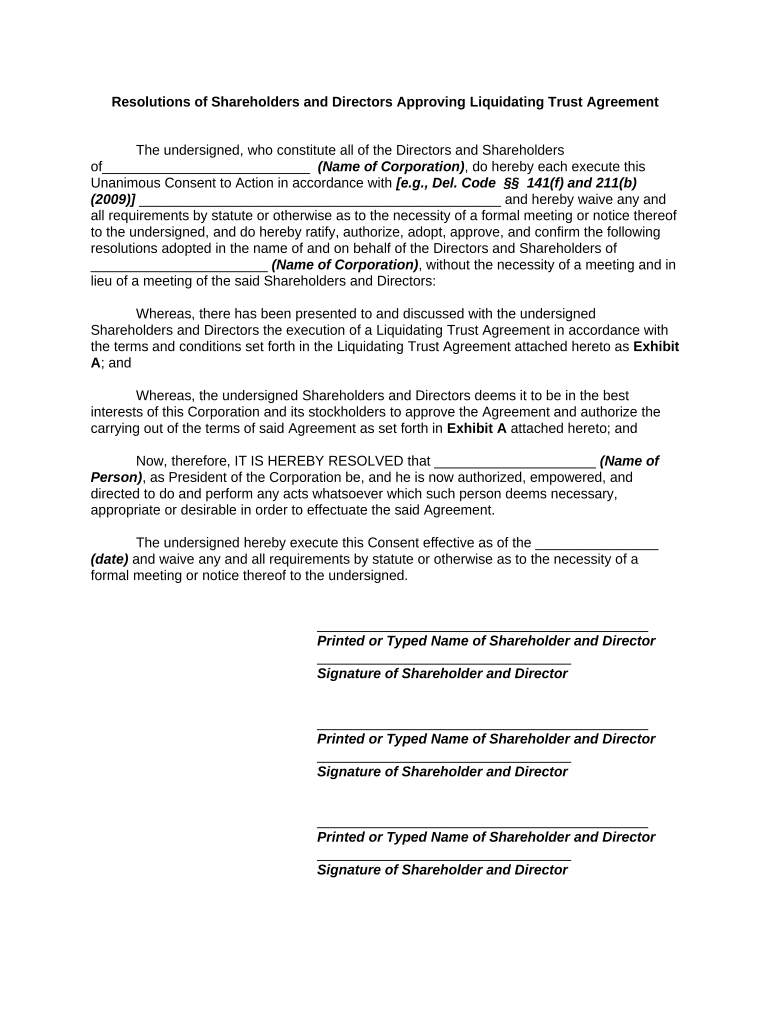
A clear resolution organizes key facts so third parties can quickly confirm authority and timing. Include structured headings, precise recital language, and explicit operative clauses.

Title

A concise title identifying the resolution type, company name, and meeting or written consent context; aids indexing in the minute book.
Recitals

Brief background facts explaining why the resolution is being adopted, referencing bylaws, board recommendations, or statutory authority where relevant.

Operative Clause

Clear directive language stating the action authorized, including numeric limits, effective dates, and any conditional language tied to other events.

Voting Record

Statement of votes cast or written consents received, with percentages or share counts to demonstrate adoption under applicable law.

Signature Block

Dedicated signature lines for the corporate secretary and required signatories, with printed names, titles, and dates to confirm execution.

Attachments

Referenced exhibits, shareholder lists, board minutes, or filings that the resolution adopts or authorizes; attach for completeness.

Required Information to Include at a Glance

Company Name: Full legal entity
Date: Execution date
Meeting Type: Board or shareholders
Action: Authorised act
Vote Record: Shares for/against
Signatures: Authorized signers

Step-by-Step: Completing a Shareholders Resolution

Follow a consistent order when drafting and executing a resolution to ensure enforceability and clear records.

  • 01
    Prepare Draft: Describe action, recitals, and operative language.
  • 02
    Determine Approval: Confirm required majority or written consent per bylaws.
  • 03
    Record Vote: Note vote counts or attach written consents.
  • 04
    Execute and File: Signed by officers and retained in minute book.

Where to Send or File the Final Resolution

After execution, distribute and store the resolution with parties and systems that rely on proof of corporate action.

  • Minute Book: Primary corporate record; retain original signed copy.
  • Registered Agent: Provide if required for state filings or corporate recordkeeping.
  • Banks and Lenders: Send certified copies when opening accounts or securing financing.
  • Transfer Agent: Share if the resolution affects share issuance or transfers.

Digital Execution and eSubmission Basics

Electronic completion and eSignature reduce turnaround time but must meet legal validity tests under ESIGN and applicable state law.

  • Access: PDF, DOCX supported
  • Authentication: Email, SMS, or advanced methods
  • Audit Trail: Time, IP, and action log

How to Configure an Online Resolution Workflow

Set up fields and signer order to match the company’s approval process before sending for signature.

Field Configuration
Title Field Pre-fill company name and resolution title
Date Field MM/DD/YYYY auto-fill option
Signature Fields Assign to each signer in order
Attachment Add exhibits or shareholder lists

Risks and Consequences of an Incorrect or Incomplete Resolution

Invalid Corporate Action: May result in unenforceable transactions
Third-Party Rejection: Banks or registrars may refuse uncertified copies
Shareholder Disputes: Can lead to litigation or rescission
Regulatory Scrutiny: Improper filings risk penalties
Tax Exposure: Incorrect authorizations may trigger reporting issues
Recordkeeping Gaps: Loss of evidence for audits or transfers

Common Mistakes to Avoid When Preparing a Resolution

  • Using vague operative language that fails to specify limits, amounts, or effective dates; ambiguous phrasing creates enforcement risk and third-party rejection.
  • Failing to confirm voting thresholds under bylaws and state corporate law, resulting in defective adoption or later challenges to validity.
  • Neglecting to attach necessary exhibits such as shareholder lists or board approvals, which can delay bank or transfer agent acceptance.
  • Omitting signature details (printed name, title, date) or relying on initials when full signatures are required for proof of authority.

How Organizations Use Shareholders Resolutions in Practice

These concise examples show how corporate teams document approvals and use digital tools to manage execution and retention.

Optica Ventures LLC

The team needed to approve officer appointments efficiently

  • Efficiency need required remote signatures
  • Brian Fitzgibbons noted the interface is simple and easy-to-use; executed resolutions were stored in the minute book and shared with counsel to expedite bank and investor requests.

Tech Data

A large distributor required standardized approvals across divisions

  • Standardized template reduced review time
  • Bob Dutkowsky reported using the platform to improve internal and external processes while shortening the time to revenue and simplifying audit preparation.

Who Can Sign and Authenticate a Shareholders Resolution

Corporate Secretary

The corporate secretary typically prepares, certifies, and signs resolutions for recordkeeping. They attest to the vote counts, retain originals in the minute book, and provide certified copies upon request by banks or regulators.

Majority Shareholder

Where shareholder approval is required, authorized shareholder signatories or their agents execute the resolution. Written consents signed by shareholders serve as equivalent evidence when bylaws and state law permit.

Practical Tips for Accurate and Efficient Resolutions

Use standard templates and an execution checklist to reduce errors, maintain consistency, and speed downstream acceptance.

Use a Standard Template
Create a company-approved template that includes title, recitals, operative clauses, vote record, and signature blocks to ensure consistent, auditable resolutions.
Pre-Validate Voting Requirements
Confirm quorum and majority thresholds from bylaws before distributing a resolution to avoid defective approvals and redoing the process.
Attach Supporting Documents
Include board minutes, shareholder lists, and exhibits referenced in the resolution so recipients can verify authority without further requests.
Retain Certified Copies
Keep both a signed original in the minute book and certified digital copies with audit trails for easy production to banks or auditors.

Frequently Asked Questions About Shareholders Resolutions

Answers address common execution, validity, and recordkeeping questions to reduce confusion and support correct adoption.


Need help? Contact support

be ready to get more
Join over 28 million airSlate SignNow users