Establishing secure connection…Loading editor…Preparing document…

Letter of Congratulations on Graduation

This template is fully customizable. Edit the text, fill out the fields, and send it for signature. Give it a try!
Letter of Congratulations on Graduation

What a Letter of Congratulations on Graduation Is and When it’s Used

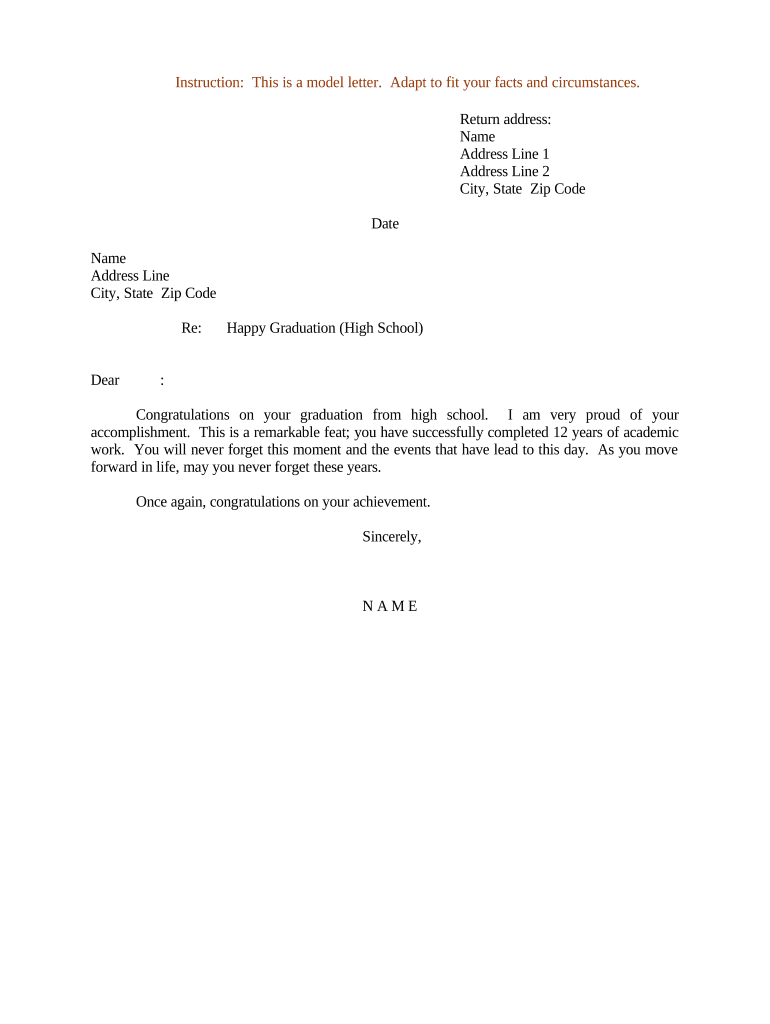
A Letter of Congratulations on Graduation is a short, formal or semi-formal written message that acknowledges a recipient’s academic milestone and offers best wishes. Organizations, employers, alumni offices, teachers, mentors, friends and family use it to record achievement, reinforce relationships, and provide a keepsake. The letter typically names the graduate, the degree or program, the conferring institution, the graduation date, and a personalized note or mention of honors. It can be delivered on paper, as a PDF, or electronically; when signed electronically the transaction should meet ESIGN and UETA standards for legal validity.

Why Sending a Clear Graduation Letter Matters

A concise, accurate letter affirms accomplishment, preserves a formal record, and supports alumni or HR processes. Proper formatting and correct names reduce confusion and maintain professional standards.

Why Sending a Clear Graduation Letter Matters

Who Typically Sends or Receives These Letters

Typical senders include educational institutions, employers, program directors, mentors, and family members.

  • University alumni offices and registrars sending official congratulations and preservation copies for alumni records.
  • Employers notifying an employee or new hire of achievement and noting any credential-related changes.
  • Individuals (mentors, family) sending a personal note that may be kept as a memento.

Step-by-Step: Create and Send a Graduation Letter

Follow these simple steps to prepare a clear, accurate Letter of Congratulations on Graduation.

  • 01
    Draft the content: Write a brief salutation, achievement details, and a personalized message.
  • 02
    Confirm facts: Verify name, degree, institution, and date against official records.
  • 03
    Add signature block: Include sender name, title, organization, and date.
  • 04
    Deliver the letter: Choose print, PDF, or e-delivery and send to recipient and records.

How Electronic Completion Works for Graduation Letters

Electronic workflows let you prepare a template, collect a signature, and store a final PDF with an audit trail.

  • Upload template: Start with a Word or PDF version of the letter.
  • Place fields: Add name, date, and signature fields where required.
  • Select signing method: Choose email link, SMS code, or authenticated signer.
  • Send and record: Deliver to the recipient and capture the audit trail.

Typical Field Configuration for an Electronic Letter

Standard field settings reduce errors and speed completion when using a signing platform.

Field Configuration
Recipient Name Required text field, validate against records
Graduation Date Date field, format MM/DD/YYYY
Degree/Program Short text field, official program name
Signature Required signature field, capture timestamp

Delivery Methods and File Formats to Consider

Choose a delivery method that balances recipient convenience with your records policy and any privacy obligations.

  • File formats: PDF or DOCX recommended
  • Integrations: Works with common cloud storage and CRMs
  • Authentication: Email, SMS, or stronger methods

Core Elements to Include in a Professional Graduation Letter

Including the correct components ensures the letter is useful, verifiable, and appropriate for institutional or personal records.

Formal salutation

Begin with an appropriate greeting that uses the recipient’s correct name and any honorifics, setting a professional tone for the letter.
Clear identification

State the graduate’s name, the degree earned, the program, and the awarding institution using official terminology for accuracy.

Graduation details

Include the precise graduation or conferral date and any honors or distinctions awarded at that time for completeness.

Personal message

Add a concise personalized sentence or two recognizing effort or future prospects while keeping the tone appropriate for the sender.

Signature block

Provide sender name, title, organization, printed name, and a dated signature; for electronic versions capture authentication details.

Record notice

Note whether a copy will be retained in personnel or alumni records and provide contact information for questions.

Download Options and Supporting Document Recommendations

Provide recipients with common download formats and attach relevant documents to support verification or archival.

PDF copy

Offer a high-resolution PDF for printing or secure archiving; PDFs preserve formatting and are widely accepted.

Printable version

Provide a printer-friendly layout without extra metadata for recipients who prefer a physical keepsake.

Attachments

Include certificate images, program transcripts, or verification letters if appropriate and permitted by privacy rules.

Archive export

Store a signed PDF and an audit certificate in your records management system for future reference.

Practical Tips for an Accurate and Respectful Letter

Follow these practices to ensure the letter is accurate, appropriate, and useful to recipients and record-keepers.

Verify names and credentials
Cross-check the graduate’s legal and display names and degree titles against institutional records to avoid errors and verification issues.
Keep the message concise
Limit the body to a few well-chosen sentences that acknowledge achievement without including sensitive personal details.
Respect privacy rules
Avoid disclosing student records or protected information absent consent; follow FERPA or other privacy rules when applicable.
Retain a copy
Store a dated, signed copy in your organization’s records for compliance and alumni tracking purposes.

Common Mistakes to Avoid When Preparing the Letter

  • Using informal nicknames that do not match institutional records and create verification confusion.
  • Listing an incorrect degree name or honors designation that contradicts official transcripts.
  • Including unnecessary personal or medical details that may violate privacy regulations such as FERPA or HIPAA.
  • Failing to date or sign the letter, which undermines its usefulness as a dated record.

Potential Risks and Consequences of Errors

Reputational risk: Embarrassment or loss of credibility
Verification failure: Problems confirming credentials
Privacy violation: Breach of FERPA or HIPAA rules
Record inconsistency: Misalignment with official files
Tax impact: Not typically applicable
Legal claim: Rare for a congratulatory letter

Real-World Use Examples for a Graduation Letter

Practical examples show how organizations and individuals adapt the letter for different audiences and record needs.

University Alumni Office

A regional alumni office sends a personalized PDF to each graduate acknowledging the degree conferral and alumni benefits.

  • They attach a signed confirmation for the alumni file.
  • The archived PDF and a short metadata record support future verification requests and outreach.

Employer HR Notice

An employer issues a congratulatory letter confirming completion of a degree that affects job title or salary.

  • HR updates the employee record after verification.
  • The signed letter becomes part of the personnel file and informs compensation or promotion processes.

FAQs and Troubleshooting for Graduation Letters

Answers to common questions about drafting, delivering, and storing a Letter of Congratulations on Graduation.


Need help? Contact support

be ready to get more
Join over 28 million airSlate SignNow users