Establishing secure connection…Loading editor…Preparing document…

Letter to Godparent(s)

This template is fully customizable. Edit the text, fill out the fields, and send it for signature. Give it a try!
Letter to Godparent(s)

What a Letter to Godparent(s) Is and When It’s Used

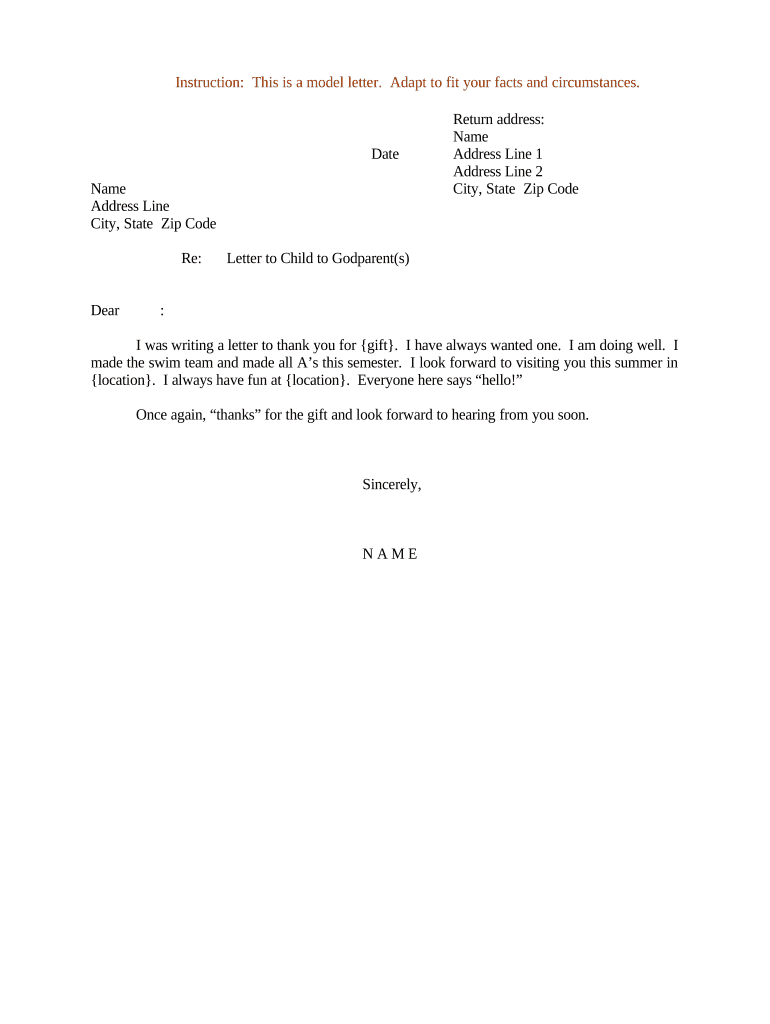
A Letter to Godparent(s) is a personal, written communication from a child’s parent(s) or legal guardian naming one or more individuals as godparents and describing expectations, hopes, or informal requests related to the child’s spiritual guidance, mentorship, or care. The letter is typically nonbinding and complements—but does not replace—formal legal documents such as wills, guardianship appointments, or power of attorney. Families use this letter to record intentions, memorialize special relationships, and provide background information that may be helpful to the named godparents and future caregivers.

Why Families Draft a Letter to Godparent(s)

A clear letter documents parental intent, communicates expectations, and creates a durable personal record of the relationship and wishes for the child’s spiritual or moral upbringing. It provides context that can be helpful to relatives, clergy, or future caregivers.

Why Families Draft a Letter to Godparent(s)

Who Typically Prepares and Receives This Letter

The letter is a personal document; when formal authority is required, consult an attorney to prepare or update legal instruments.

  • Parent or Legal Guardian — Writes the letter to document wishes and provide context about family values and expectations.
  • Designated Godparent(s) — Receives the letter as a statement of intent and guidance about the role being requested.
  • Extended Family or Clergy — May receive a copy to coordinate ceremonies or caregiving plans.

Step-by-Step: Drafting and Finalizing the Letter

Follow these steps to produce a clear, useful Letter to Godparent(s) that complements family legal documents.

  • 01
    Draft Content: Write the purpose, expectations, and any special instructions in plain language.
  • 02
    Confirm Names: Verify legal names and contact details for the child, parents, and godparents.
  • 03
    Sign and Date: All parents or legal guardians sign and date the letter using MM/DD/YYYY.
  • 04
    Distribute Copies: Provide copies to godparents, retain originals, and add to family records.

Essential Elements to Include in a Professional Letter

Include core items that make the letter clear, durable, and useful for both the named godparent(s) and any family members who may need to consult it later.

Statement of Intent

A short paragraph explaining why the godparent role is being requested, the nature of the relationship, and whether the letter is advisory rather than legal.
Duties and Expectations

Describe the types of support expected (spiritual guidance, mentorship, emergency contact), noting this is not a legal guardianship appointment.

Background Information

Provide relevant family context, religious affiliation, and any guidance about ceremonies, traditions, or the child’s needs.

Emergency Contacts

List primary and alternate emergency contacts with phone numbers and addresses for quick reference.

Authorization Clarification

State explicitly that the letter does not transfer legal custody or substitute for court-authorized guardianship, unless accompanied by legal documentation.

Signatures and Dates

Include printed names, signatures, and dates for all parents or legal guardians; consider witness or notary if you want added formality.

Required Information to Make the Letter Clear

Child Name: Full legal name
Child DOB: MM/DD/YYYY
Parent Names: Full legal names
Godparent Names: Full legal names
Contact Details: Phone, email, address
Effective Date: MM/DD/YYYY

How the Letter Is Typically Prepared and Shared

A simple workflow covers drafting, optional witnessing, and distribution to relevant parties.

  • Prepare Draft: Write the letter with clear names, dates, and expectations.
  • Optional Witnessing: Have an impartial witness or notary sign if added formality is desired.
  • Signatures: Parent(s) sign and date; consider keeping a signed original.
  • Distribute Copies: Provide copies to godparents, clergy, and family records.

Digital Formats and Platform Considerations

Choose a platform that preserves a tamper-evident copy, an audit trail, and supports secure export and long-term storage.

  • File Formats: PDF or DOCX recommended
  • Integrations: Works with Google Workspace and Microsoft 365
  • Authentication: Use email, SMS, or stronger methods

Configuring an Online Letter Workflow

Set up fields and routing to collect signatures, contact information, and timestamps in a reproducible workflow.

Field Configuration
Child Name Field Required text field
DOB Field Date field MM/DD/YYYY
Godparent Block Repeatable contact group
Signature Field Signer signature + date

Timing Considerations and When to Issue the Letter

Consider timing for drafting, updates, and distribution so the letter reflects current intentions and contacts.

Initial Draft Timing:

Draft ahead of a naming or baptism ceremony

When to Update:

Update after major life events or contact changes

Signature Date:

Date with MM/DD/YYYY to record intent

When to Share:

Share with godparents and close family promptly

Recordkeeping:

Retain an original signed copy in family records

Key Milestones from Draft to Long-Term Storage

Track these sequential milestones to ensure the letter remains current and accessible when needed.

01

Draft Completed

Finalize content and verify names and dates.

02

Signatures Collected

Parents sign and date; get witness if desired.

03

Copies Distributed

Provide copies to godparents and record keepers.

04

Long-Term Storage

Store original in family safe or digital archive.

Common Errors to Avoid When Preparing the Letter

  • Using informal or nicknames without including the legal name can cause confusion if the letter is relied upon later.
  • Stating the letter confers legal guardianship when it does not can mislead family and third parties.
  • Failing to update contact information leaves godparents unreachable during emergencies and undermines the letter’s usefulness.
  • Attaching legal expectations without corresponding court-approved documents creates ambiguity and potential family disputes.

Risks and Legal Limits of a Letter to Godparent(s)

Not Legally Binding: Cannot substitute for guardianship
Misleading Language: May cause family disputes
Emergency Confusion: Wrong contacts can delay care
Privacy Exposure: Sensitive data should be protected
Tax Implications: Gifts or transfers may have tax rules
Probate Misuse: Not a substitute for estate planning

Examples of When Families Use a Letter to Godparent(s)

Two practical scenarios show how the letter functions alongside other family documents.

Religious Sponsorship

Parents prepare a letter describing the role for a baptism

  • Godparents agree to mentorship and spiritual support
  • The letter accompanies ceremony planning and is kept in family records for future reference.

Emergency Contact Clarification

Parents provide a letter to named godparents outlining emergency contact expectations

  • The letter lists medical and school contacts
  • It helps first responders and family locate key contacts quickly.

Practical Tips for a Clear and Useful Letter

Follow these best practices to ensure the letter is accurate, respectful, and easy to rely upon by family and designated godparents.

Use Clear, Legal Names and Dates
Always include full legal names and MM/DD/YYYY dates to avoid ambiguity. This facilitates cross-referencing with birth certificates, school records, or later legal documents.
State the Letter’s Nonlegal Status When Appropriate
If the intent is not to create legal guardianship, state that explicitly to avoid misinterpretation; indicate which documents would be needed for legal authority.
Keep Contact Information Up to Date
Provide current phone numbers, emails, and addresses and update the letter when contacts change to ensure responsiveness in emergencies.
Store Originals Securely and Share Copies
Keep a signed original in a secure location and distribute certified copies to godparents and a trusted family member or attorney for redundancy.

Typical eSignature Pricing for Preparing and Signing Documents

Comparing common eSignature providers can help choose a platform for preparing, signing, and storing family letters; signNow is shown first for consistency with vendor comparisons.

signNow DocuSign Adobe Sign PandaDoc HelloSign
Starting Price $8/user/mo $15/user/mo $14/user/mo $19/user/mo $15/user/mo
Free Trial 7-day free trial Varies Varies Varies Varies
Bulk Send Yes (premium) Yes Yes Yes No
Audit Trail Yes Yes Yes Yes Yes
HIPAA Compliant Yes Yes Yes No No

Frequently Asked Questions About Letters to Godparent(s)

Answers to common questions about the letter’s purpose, legal effect, signing, and storage.


Need help? Contact support

be ready to get more
Join over 28 million airSlate SignNow users