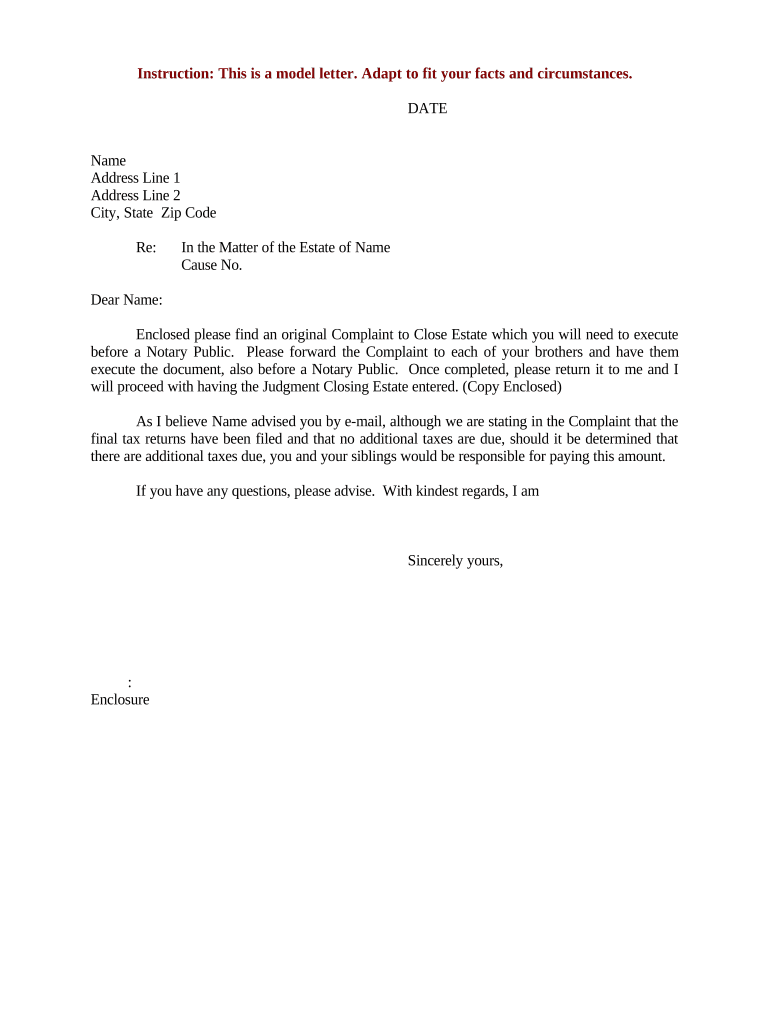
Letter Regarding Complaint to Close Estate
What the Letter Regarding Complaint to Close Estate Is and When it Applies
Why a Clear Closing Complaint Matters in Probate
A concise Letter Regarding Complaint to Close Estate documents final distributions, notifies interested parties, and helps the court determine whether a final decree is appropriate. Proper preparation reduces post-closing disputes, clarifies the estate accounting, and limits exposure for the personal representative by creating a definitive record of completed actions.
Who Typically Prepares and Receives This Letter
The court docket, known creditors, and heirs or beneficiaries are typically served or notified with the closing complaint and supporting documents to establish formal notice.
- Executor or personal representative prepares and signs the closing complaint, provides accounting and supporting receipts for the court.
- Probate attorney drafts and reviews the complaint, ensures compliance with local rules, and files the packet with the clerk.
- Beneficiaries and creditors receive notice and supporting exhibits so they can consent or timely object under court deadlines.
Step-by-Step: Prepare and File the Closing Complaint
-
01Gather Records: Assemble asset inventories, receipts, creditor notices, and tax clearance documents.
-
02Prepare Accounting: Summarize distributions, debts paid, and residual balance with dates.
-
03Draft Letter: State parties, distributions, attachments, and request for final decree.
-
04File & Serve: File with probate court and serve interested parties per local rules.
Designing a Digital Workflow for Drafting and Filing
| Field | Configuration |
|---|---|
| Document Template | Create a template with required clauses and numbered exhibits. |
| Signer Roles | Assign Executor, Attorney, and Witness signer roles. |
| Authentication | Select email link or SMS code; use stronger ID for contested matters. |
| Record Retention | Retain signed PDF and audit trail for required retention period. |
Typical Routing from Draft to Court Submission
-
Draft: Author prepares letter and attaches accounting exhibits.
-
Review: Attorney or co-executors review and approve content.
-
Sign: Executor signs; witnesses or notary added if required.
-
File: Submit to clerk and serve interested parties per local rules.
File Formats, Integrations, and Authentication to Check Upfront
Ensure recipients can open PDFs and that chosen eSignature/authentication meets any court rules or local clerk preferences before e-submission.
- File Formats: PDF, PDF/A, and DOCX are commonly accepted by courts and recipients.
- Integrations: Supports Salesforce, NetSuite, Google Workspace, Microsoft 365, Box, and other repositories for document management.
- Authentication: Email link, SMS code, or stronger identity proofing where required by court or local rules.
Typical Timelines, Deadlines, and Court Processing Expectations
Notice Periods:
Provide notice to creditors and heirs per state rules, typically 30–90 days.
Objection Deadline:
Heirs or creditors usually have a limited period to object after service.
Hearing Scheduling:
Court may schedule a hearing within weeks to months depending on docket.
Final Accounting Due:
Submit detailed accounting by the date ordered by the court.
Record Update:
Update the probate docket and distribute certified copies after decree entry.
Key Milestones from Distribution to Court Decree
Final Distributions
Complete transfers and obtain receipts from beneficiaries.
Prepare Closing Packet
Assemble accounting, receipts, creditor releases, and proposed order.
File Complaint to Close
File the letter and exhibits with the probate clerk for review.
Court Decree
Judge issues a final decree after review or hearing.
Common Mistakes That Cause Delays or Rejection
- Incomplete accounting causes clerk rejection or delays; provide dates, amounts, and supporting receipts for every transaction to avoid follow-ups.
- Failing to serve all interested parties can result in reopened claims later; confirm service list and method per local court rules before filing.
- Mismatched names between documents and court records lead to identity disputes; match spellings to the death certificate and letters testamentary.
- Missing tax clearances or unpaid creditor notices can block closing; obtain tax clearance or include a court-acceptable plan to resolve liabilities.
Penalties and Practical Risks of an Incorrect or Incomplete Letter
eSignature Pricing and Feature Snapshot for Closing Complaints
| signNow | DocuSign | Adobe Sign | PandaDoc | HelloSign | |
|---|---|---|---|---|---|
| Starting Price | $8/user/mo | $15/user/mo | $14/user/mo | $19/user/mo | $15/user/mo |
| Free Trial | 7-day free trial | Varies by plan | Varies by plan | Varies by plan | Varies by plan |
| Bulk Send | Yes | Yes | Yes | Yes | Varies by plan |
| Audit Trail | Yes | Yes | Yes | Yes | Yes |
| HIPAA Compliant | Yes | Yes | Yes | No | No |
| Envelope Cap | No cap | 100 envelopes/user/year | Varies by plan | Varies by plan | Varies by plan |
Frequently Asked Questions About Closing Complaints and Electronic Submission
-
Who should sign the closing complaint?
The personal representative or executor appointed by the court typically signs the complaint. Co-executors should follow the court's instruction on multiple signatures. An attorney may sign with an appropriate authority; file any power of attorney or representation documents with the clerk if required.
-
Is notarization required for the closing letter?
Notarization depends on jurisdiction and document type. Some courts require notarized affidavits or acknowledgment of signatures. Check local probate rules; where accepted, remote online notarization may be used subject to state RON standards and retention of the audio-video record.
-
Can the letter be executed electronically?
Yes in most jurisdictions. ESIGN (15 U.S.C. ch. 96) and UETA authorize electronic signatures when intent, consent, attribution, and reliable retention exist. Confirm the local probate court accepts e-signed filings or requires original signatures for particular exhibits.
-
How should interested parties be served?
Service must follow state probate rules: personal service, certified mail, or court-approved electronic service. Always file proof of service or a certificate of mailing with the clerk to document that creditors and beneficiaries received notice.
-
What supporting documents should I attach?
Include the final accounting, asset inventory, receipts or deeds, creditor releases or affidavit of no claims, and a proposed order to close. Attach tax clearance letters when required by statute or local practice to expedite court approval.
-
How long must I keep the estate records?
Retain estate records at least three years for tax purposes (IRC §6501(a)); retain HIPAA-regulated medical records six years (45 CFR §164.530(j)). State rules can require longer retention; consult counsel for jurisdiction-specific mandates.