Establishing secure connection…Loading editor…Preparing document…

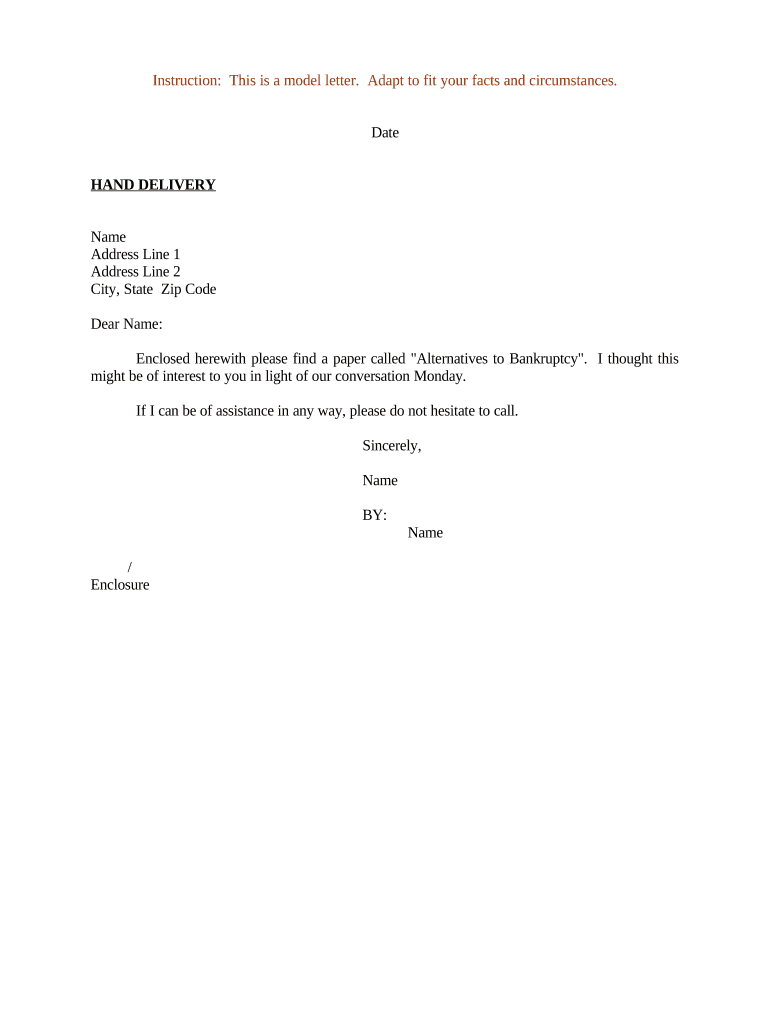
Letter Offering Alternatives to Bankruptcy

This template is fully customizable. Edit the text, fill out the fields, and send it for signature. Give it a try!
Letter Offering Alternatives to Bankruptcy

What the Letter Offering Alternatives to Bankruptcy Is

A Letter Offering Alternatives to Bankruptcy is a formal creditor communication that presents one or more out-of-court options to a debtor to avoid filing bankruptcy. Typical alternatives include repayment plans, temporary forbearance, debt settlement offers, or referrals to credit counseling. The letter sets specific terms, deadlines, and contact instructions and creates a documented record of the creditor’s proposal. Properly drafted letters balance clarity with legal disclosures, preserve evidentiary value, and help both parties evaluate resolution paths before a bankruptcy petition is filed.

Why This Letter Matters for Creditors and Debtors

Providing clear alternatives can reduce litigation and administrative costs, preserve recovery options, and offer debtors a structured pathway to satisfy obligations while avoiding bankruptcy. Under ESIGN (15 U.S.C. §7001) and UETA, electronic versions and e-signatures can produce legally enforceable records when requirements are met.

Why This Letter Matters for Creditors and Debtors

Who Typically Prepares and Receives This Letter

Lenders, collection departments, credit servicers, and attorneys commonly prepare these letters when a borrower is delinquent but not yet in bankruptcy.

  • Commercial lenders and credit unions sending structured repayment proposals for past-due accounts.
  • Debt collection agencies proposing settlements or staged repayment plans to avoid court proceedings.
  • Bankruptcy and consumer attorneys offering pre-filing alternatives or negotiating client exit strategies.

Essential Parts of a Professional Alternatives Letter

A complete letter clearly identifies parties, explains the alternatives offered, sets specific monetary and timing terms, outlines consequences, and includes signature and consent language for acceptance.

Debtor Identification

Full legal name, contact details, and any account or reference numbers so the offer unambiguously applies to the correct consumer.
Account Details

Current balance, last payment date, interest or fees applied, and a clear breakdown that explains how the offer affects principal and interest.

Alternative Options

Specific proposals such as negotiated lump-sum settlement, installment plan with amounts and frequency, or temporary forbearance with resumption date.

Deadlines & Next Steps

Exact dates for acceptance, effective dates for plans, and instructions for how the debtor may accept or request changes.

Legal Notices

Required consumer disclosures, any rescission or withdrawal rights, and reference to applicable laws governing electronic consent when used.

Signature & Consent

Signature block with printed name, title (if applicable), date, and space for debtor signature and method of consent (electronic or wet signature).

Step-by-Step: Prepare, Send, and Track the Letter

Follow a structured sequence to reduce errors and preserve evidence of offer and acceptance.

  • 01
    Gather Data: Compile account history, balances, and contact information.
  • 02
    Draft Options: Write clear alternatives with exact amounts and timelines.
  • 03
    Legal Review: Confirm disclosures and consumer-consent language are present.
  • 04
    Deliver & Record: Send via tracked channel and retain signed acceptance and audit trail.

How to Configure an Online Letter Workflow

Set digital fields and authentication to match the document’s legal sensitivity and your internal policies.

Field Configuration
Authentication Email link or SMS OTP for signer verification
Expiration Set automatic expiration after the acceptance deadline
Reminders Schedule automated reminder emails or texts before deadlines
Audit Trail Enable IP, timestamp, and action logging for evidentiary records

Where to Send and How the Recipient Responds

Route the letter to the debtor using secure, trackable channels and document every interaction to preserve proof of offer and acceptance.

  • Choose Delivery: Use tracked email, certified mail, or secure portal delivery.
  • Provide Options: List acceptance methods: e-signature, signed scanned copy, or in-person execution.
  • Authenticate Signer: Verify identity via OTP, KBA, or in-person ID check.
  • Record Outcome: Capture signed copy, audit trail, and any communications.

Technical Requirements for Digital Delivery and Signing

Choose a platform that supports secure e-signatures, audit trails, and flexible authentication appropriate to the document’s legal risk.

  • Authentication: Email, SMS OTP, or KBA as required
  • Integrations: CRM and document storage integrations supported
  • File Formats: PDF and DOCX with preserved audit metadata

Typical Timelines and Deadlines to Include

Specify clear response and implementation dates to avoid ambiguity and to document whether the debtor timely accepted an alternative.

Response Deadline:

Suggest a firm acceptance date, commonly 30 days from delivery

Plan Start Date:

State when payments under the alternative must begin

Interim Forbearance Period:

If applicable, list forbearance start and end dates

Follow-Up Reminders:

Schedule reminders at 7- and 14-day intervals before deadline

Dispute Window:

Provide a short period for debtor questions before acceptance

Common Preparation Mistakes to Avoid

  • Omitting clear acceptance mechanics and deadlines, which creates ambiguity about whether an agreement was reached.
  • Using vague monetary terms or undefined payment schedules that hinder enforceability and collection tracking.
  • Failing to include required consumer disclosures for electronic records, risking claim of inadequate consent.
  • Not preserving an audit trail or signed copy, which weakens proof of offer and acceptance in disputes.

Consequences of Errors or Missing Disclosures

Civil Liability: Statutory or contract claims may arise from improper communications
Consumer-Consent Risk: Failure to obtain ESIGN-compliant consent can affect enforceability
Regulatory Complaint: Missteps can trigger FDCPA or state collection law complaints
Tax Reporting: Incorrect settlement reporting may cause IRS information issues
Privacy Breach: Exposed personal data risks HIPAA or state privacy scrutiny
Invalid Signature: Weak authentication may undermine signature attribution

Required Data Elements and Security Notes

Debtor Full Name: Use verified legal name
Account Identifier: Exact account or invoice number
Contact Details: Mailing address, email, and primary phone
Proposed Payment Terms: Amounts, due dates, frequency
Signature Method: eSign or wet signature noted
Record Retention: Store signed record and audit trail

Real-World Examples of Alternatives Letters in Use

Two concise examples show how creditors document offers and achieve clear evidence of acceptance.

Creditor Repayment Offer

A mid-size lender proposed a 12-month repayment plan with fixed monthly payments

  • Debtor accepted via e-signature within 10 days
  • The signed, timestamped record and audit trail preserved proof of consent and avoided a contested collection action.

Pre-Filing Settlement Offer

A debt settlement firm offered a 60% lump-sum settlement to resolve accounts

  • Debtor negotiated a 50% deposit, balance in 30 days
  • The firm recorded the offer, acceptance, and payment schedule electronically; the process reduced backlog and documented terms for counsel review.

Comparing eSignature Providers for Executing Alternatives Letters

Choose a provider that supports secure e-signature, audit trails, HIPAA (if needed), and the delivery features required for legal validity and recordkeeping.

signNow DocuSign Adobe Sign PandaDoc HelloSign
Starting Price $8/user/mo $15/user/mo $14/user/mo $19/user/mo $15/user/mo
Free Trial 7-day trial no credit card Varies Varies Varies Varies
Bulk Send Yes Yes Yes Yes No
Audit Trail Yes Yes Yes Yes Yes
HIPAA Compliant Yes Yes Yes No No

Frequently Asked Questions About the Letter Offering Alternatives to Bankruptcy

Common practitioner questions focus on legal effect, e-signature validity, notarization, and how to evidence acceptance; concise answers follow.


Need help? Contact support

be ready to get more
Join over 28 million airSlate SignNow users