Establishing secure connection…Loading editor…Preparing document…

Sample Retirement Letter

This template is fully customizable. Edit the text, fill out the fields, and send it for signature. Give it a try!
Sample Retirement Letter

What a Sample Retirement Letter Is and When to Use It

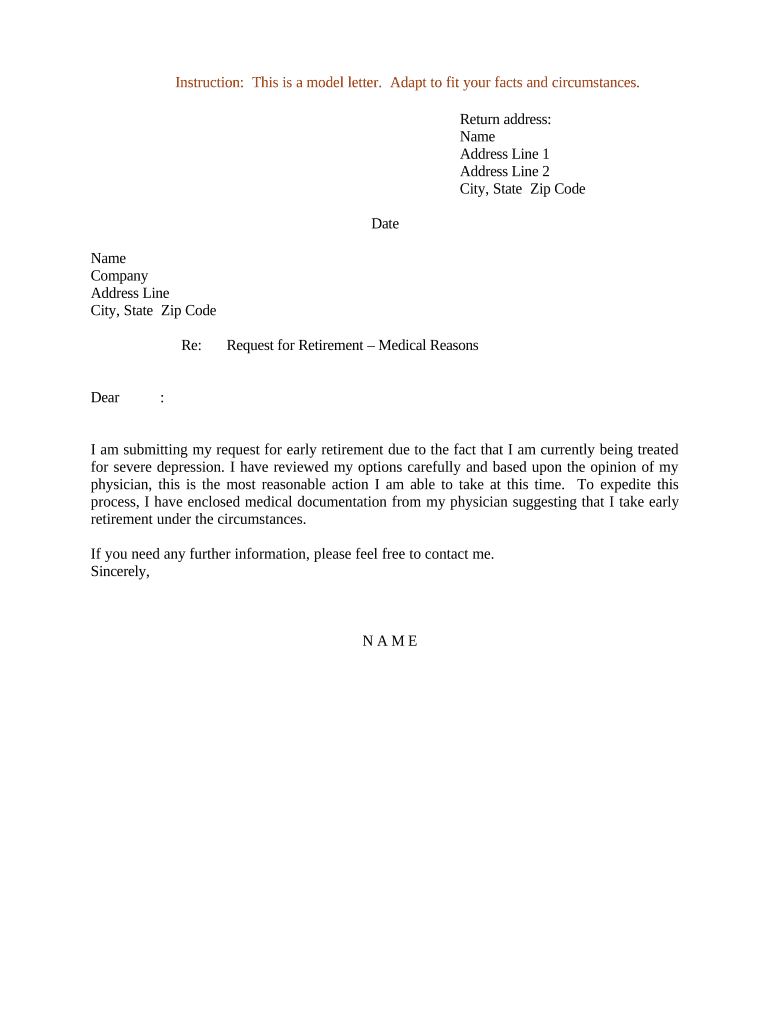
A Sample Retirement Letter is a formal written notice submitted by an employee to their employer stating the employee's intent to retire and specifying the planned last day of employment. It documents the effective date of retirement, requests benefit or final paycheck processing, and may instruct the employer about accrued leave payout, retirement plan distributions, or continuation of benefits. Organizations use this letter to begin HR and payroll workflows, trigger benefits enrollment changes, and establish an official record for personnel and pension administrators.

Why a Clear Retirement Letter Matters

A well‑prepared Sample Retirement Letter provides a clear record of intent and timing, reduces administrative ambiguity, and helps ensure accurate final pay, benefits transition, and retirement plan processing.

Why a Clear Retirement Letter Matters

Who Prepares and Receives a Retirement Letter

Typical senders and recipients vary across workplaces; the letter is usually written by the retiring employee and routed to HR and the employee's manager.

  • Employees preparing to leave: Provide notice, specify last day, and request benefit actions.
  • Human resources teams: Use the letter to update records, calculate final compensation, and coordinate benefit continuation.
  • Payroll and plan administrators: Use the letter to process final pay, distributions, and required tax reporting.

Step-by-Step: Writing and Submitting Your Retirement Letter

Follow these steps to produce a clear, complete retirement notice that supports payroll and benefits processing.

  • 01
    Draft: State intent, effective retirement date, and employer name.
  • 02
    Include details: Add employee ID, contact info, and benefit instructions.
  • 03
    Sign: Sign and date; use electronic signature if permitted.
  • 04
    Deliver: Send to HR and manager per company policy.

Where the Retirement Letter Goes and What Happens Next

Routing a retirement letter properly ensures that HR, payroll, and benefits administrators can act on the request without delay.

  • HR Submission: HR records the notice and initiates offboarding steps.
  • Payroll Processing: Payroll calculates final wages, accrued leave payments, and tax withholding.
  • Benefits Update: Benefits teams update coverage, COBRA notices, and retirement plan elections.
  • Plan Administrator: Pension or 401(k) administrators process distributions or rollovers.

Configuring an Electronic Workflow for a Retirement Letter

If submitting electronically, set up fields and route rules to match your employer's approval process and data requirements.

Field Configuration
Employee Name Required text field
Effective Date Date field MM/DD/YYYY
Signature Signature field: signer required
Routing Order HR → Manager → Payroll

Digital Signing and Delivery Considerations

Confirm your employer accepts electronic submissions and which authentication level they require before signing digitally.

  • Authentication: Email or SMS code
  • File Formats: PDF and DOCX supported
  • Audit Trail: Timestamp and IP

eSignature Provider Comparison for Submitting a Retirement Letter

Comparing common eSignature vendors helps organizations choose a compliant platform for collecting retirement notices and maintaining records.

signNow DocuSign Adobe Sign PandaDoc HelloSign
Starting Price $8/user/mo $15/user/mo $14/user/mo $19/user/mo $15/user/mo
Free Trial 7‑day trial No No Yes, limited Yes, limited
Bulk Send Yes Yes Yes Yes No
Audit Trail Yes Yes Yes Yes Yes
HIPAA Compliant Yes Yes Yes No No

Essential Information to Include on the Letter

Employee Name: Full legal name
Employee ID: Payroll or personnel number
Position Title: Current job title
Effective Date: MM/DD/YYYY format
Benefit Elections: Pension, rollover, COBRA choices
Signature and Date: Signed and dated by employee

Consequences of an Incomplete or Incorrect Retirement Letter

Payment Delays: Final wages or pension payments delayed
Tax Withholding Errors: Incorrect withholding or reporting
Loss of Benefits: Missed enrollment windows for retiree benefits
Administrative Rework: Additional HR time and corrections required
Disputed Dates: Disagreements over last day of employment
Recordkeeping Gaps: Missing audit trail for future claims

Practical Tips to Prepare an Effective Retirement Letter

These practices reduce follow-up questions and speed benefits and payroll processing.

Give Adequate Notice
Provide written notice per employer policy, typically 30–90 days, to allow time for recruitment and benefits processing and to ensure your payroll and pension elections are handled correctly.
Be Specific About Dates
Specify your final work date in MM/DD/YYYY format and confirm whether it is inclusive; vagueness can cause payroll or benefits processing to use incorrect cutoff dates.
Document Benefit Choices
State clear instructions for pension distribution or 401(k) rollover to prevent default actions and to ensure plan administrators have accurate election records.
Retain a Signed Copy
Keep a signed digital or paper copy of the letter and any acknowledgement from HR for your records and for potential future verification.

Industry Examples: How a Retirement Letter Is Used

Real-world scenarios illustrate how the letter triggers different administrative actions depending on employer type.

Public School Educator

A long‑service teacher submits a retirement letter to HR and the school district superintendent to set a retirement date and request pension information.

  • The HR office processes final paycheck and pension election.
  • The signed letter becomes the official record used to schedule pension payouts, enroll the retiree in post‑employment benefits, and calculate accrued sick leave payout under district policy.

Private Sector Manager

A manager notifies their employer with a retirement letter to begin succession planning and benefits transition.

  • Payroll and benefits teams calculate final compensation and COBRA options.
  • The document is routed to payroll, benefits administrator, and the company 401(k) provider to process distributions, confirm tax withholding, and ensure accurate year-end reporting.

How to Update or Revise a Submitted Retirement Letter

If plans change after submitting notice, follow a documented amendment process to avoid disputes and ensure accurate records.

01

Notify HR:

Send amended notice in writing
02

Explain Reason:

Briefly state why date changed
03

Provide New Date:

Enter MM/DD/YYYY format
04

Sign Amendment:

Sign and date the revised letter
05

Request Acknowledgement:

Ask HR for written confirmation
06

Retain Copies:

Save both original and amendment

Frequently Asked Questions About a Sample Retirement Letter

Answers to common questions about format, timing, signatures, and digital submission to help avoid processing issues.


Need help? Contact support

be ready to get more
Join over 28 million airSlate SignNow users