Establishing secure connection…Loading editor…Preparing document…

Shared Well Agreement

This template is fully customizable. Edit the text, fill out the fields, and send it for signature. Give it a try!
Shared Well Agreement

What a Shared Well Agreement Is and Why It Matters

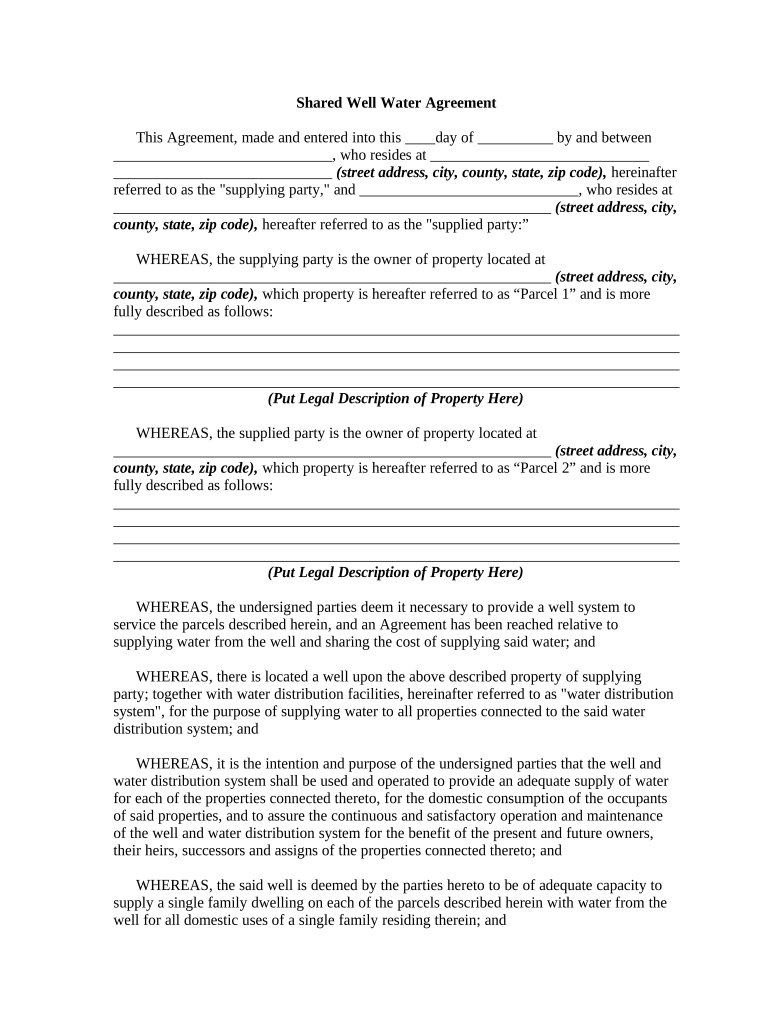
A Shared Well Agreement is a legally binding contract between two or more property owners who share a single groundwater well or water system. The document defines ownership or usage rights, cost-sharing for installation, maintenance and repairs, access and easement terms, metering and water allocation, insurance obligations, liability and indemnity, dispute resolution, and procedures for termination or transfer. Properly drafted, recorded where required, and signed by authorized parties, the agreement reduces ambiguity and helps avoid costly disputes or regulatory enforcement related to water use and well safety.

Why a Written Agreement Benefits Co-Owners

A written Shared Well Agreement clarifies each party’s responsibilities, establishes a predictable cost-sharing formula, and creates a record for county and water-district authorities. It reduces disagreement and supports enforcement if one party fails to maintain or pay for the well.

Why a Written Agreement Benefits Co-Owners

Who Typically Uses a Shared Well Agreement

Shared Well Agreements are used by property owners and organizations that rely on a single groundwater source shared across parcels.

  • Rural property co-owners who share a private well across adjoining parcels and need cost-sharing and access rules.
  • Small homeowner associations and mobile home park operators managing a communal well and treatment equipment.
  • Farmers and agricultural neighbors coordinating irrigation scheduling, metering, and seasonal maintenance responsibilities.

These agreements also suit developers, landlords, and local governments when a single installation serves multiple legal parcels; tailor provisions to the local water rules and recording practices.

Core Sections to Include in a Professional Shared Well Agreement

A complete agreement organizes obligations and technical details so parties and officials can quickly determine rights and responsibilities.

Parties

Identify each owner by full legal name, mailing address, and legal capacity (individual, trust, LLC) to ensure enforceability and accurate recording.
Well Description

Describe the well by GPS, address, parcel numbers, permit number, depth, pump capacity, and any treatment systems to avoid ambiguity.

Cost Sharing

Specify formulas for capital costs, routine maintenance, unexpected repairs, and replacement, including invoicing, due dates, and late-payment remedies.

Access & Easement

Grant express easement rights for inspection, maintenance, and repairs, and state recording and notice requirements for real property records.

Maintenance

Define routine maintenance schedule, responsible party, testing frequency (bacteria, nitrates), and protocols for corrective action and contractor engagement.

Dispute Resolution

Include notice, cure periods, mediation or arbitration clauses, and jurisdiction/governing law to streamline resolving disagreements.

Step-by-Step: From Draft to Recorded Agreement

Follow these sequential steps to create, approve, and preserve a Shared Well Agreement.

  • 01
    Gather Documents: Collect deeds, parcel numbers, well permit, and existing easements.
  • 02
    Negotiate Terms: Agree on cost split, access, maintenance, and termination.
  • 03
    Draft Agreement: Prepare clear language or have an attorney draft it.
  • 04
    Sign and Record: Execute with required signatures and record as an easement or memorandum.

Essential Data Elements to Include

Owner Names: Full legal names
Parcel IDs: Assessor parcel numbers
Well Permit: County/state permit number
Easement Terms: Recorded description
Insurance: Policy and limits
Contact Info: Mailing and emergency numbers

Where to Send, File, and Distribute the Agreement

After execution, route copies to relevant parties and record the document as required by local practice.

  • County Recorder: Record easement or memorandum per county requirements.
  • All Parties: Provide executed copies to every owner and tenant.
  • Water District: File required notices or permits with the local water authority.
  • Contractors: Share access provisions with service providers.

Digital Signing, File Formats, and Integration Considerations

Electronic signing is generally acceptable under ESIGN and state UETA laws when intent, consent, attribution, and retention are met.

  • Formats: PDF, DOCX, and fillable forms supported
  • Integrations: Salesforce, NetSuite, Microsoft 365, Google Workspace
  • Authentication: Email, SMS code, or advanced methods

Use a platform that provides an audit trail, tamper-evident signed files, and, when required, a BAA or additional compliance support for regulated workflows.

Typical Timing and Deadlines to Monitor

Track effective dates, recording steps, and recurring obligations to keep the agreement current and enforceable.

Effective Date:

Date obligations begin (MM/DD/YYYY)

Recording Window:

Record promptly per county custom to protect easement priorities

Maintenance Payments:

Due dates and late fees specified in the agreement

Insurance Renewal:

Align renewal dates with coverage obligations

Cure Periods:

Set notice and cure windows for breaches

Common Mistakes to Avoid When Preparing the Agreement

  • Failing to record an easement or memorandum, which weakens priority and notice to future buyers.
  • Using vague cost-sharing language without a clear formula for capital and emergency expenses.
  • Omitting access details such as gates, locked areas, or right-of-way across adjoining parcels.
  • Not specifying testing, treatment, and contamination response procedures, leading to disputes over responsibility.

Key Risks and Potential Consequences of a Deficient Agreement

Liability Exposure: Civil claims for damage or contamination
Regulatory Penalties: Water authority fines for permit noncompliance
Invalid Easement: Recording defects may void rights
Lien Risk: Unpaid costs can trigger liens
Dispute Costs: Litigation and arbitration expenses
Service Interruptions: Operational failures from unclear maintenance responsibility

Practical Tips for Clear, Enforceable Agreements

Adopt clear language and predictable procedures to reduce disputes and simplify enforcement.

Define Responsibilities
Spell out inspection, testing, and repair responsibilities and include schedules, accepted contractors, and notice procedures for urgent repairs.
Require Insurance
Specify liability insurance minimums and name co-owners as additional insureds to protect against contamination or injury claims.
Use Escrow
Consider an escrow or reserve fund for capital repairs funded by regular contributions to avoid unpaid emergency bills.
Metering and Testing
Install meters if needed and require periodic water-quality testing with results distribution to all parties.

eSignature Platform Pricing and Compliance at a Glance

Comparing vendor starting prices and key capabilities for executing and storing signed Shared Well Agreements; signNow appears first per platform comparison guidelines.

signNow DocuSign Adobe Sign PandaDoc HelloSign
Starting Price $8/user/mo $15/user/mo $14/user/mo $19/user/mo $15/user/mo
Free Trial Yes, 7-day trial Yes Yes Yes Yes
Bulk Send Yes (Premium tier) Yes Yes Yes No
Audit Trail Yes Yes Yes Yes Yes
HIPAA Compliant Yes (BAA available) Yes Yes No No
Envelope Cap No cap 100 envelopes/user/year Varies by plan Varies by plan Varies by plan

Common Questions and Practical Answers About Shared Well Agreements

Answers to frequent questions about validity, notarization, recording, and electronic signing for Shared Well Agreements.


Need help? Contact support

be ready to get more
Join over 28 million airSlate SignNow users