Establishing secure connection…Loading editor…Preparing document…

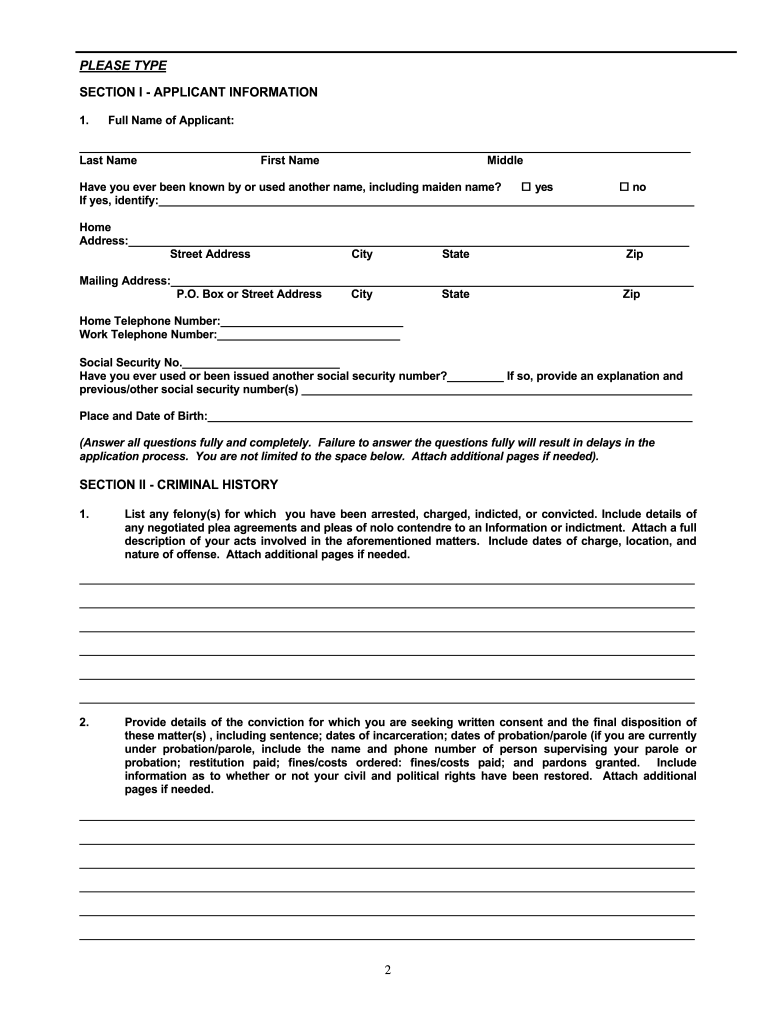
Short Form Application for Written Consent to Engage in the Insurance Market

This template is fully customizable. Edit the text, fill out the fields, and send it for signature. Give it a try!
Short Form Application for Written Consent to Engage in the Insurance Market

What the Short Form Application is and when it’s used

The Short Form Application for Written Consent to Engage in the Insurance Market is a condensed regulatory application used to document an entity’s or representative’s consent and qualifications to conduct specified insurance activities within a U.S. jurisdiction. It captures essential party details, scope of activity, effective dates, and attestations that regulators or carriers require before market entry or certain transactions. The form is designed for faster processing than full applications while preserving legal sufficiency when completed accurately and accompanied by required supporting documents. Electronic completion and retention are permissible where ESIGN and state UETA/ESRA rules apply.

Why this short form matters for licensing and compliance

A concise written-consent application reduces preparation time and clarifies the exact permissions requested, helping regulators and counterparties evaluate eligibility quickly. It minimizes back-and-forth when core information is complete and supports consistent recordkeeping for audits and future renewals.

Why this short form matters for licensing and compliance

Who completes the Short Form Application

Typical filers include regulated entities, brokers, producers, third-party administrators, and in-house compliance teams preparing an expedited written consent.

  • Licensed insurance carriers seeking to add distribution channels or new product permissions within a state
  • Brokers, agents, and producers applying for limited or temporary permissions to transact business
  • Compliance officers or authorized representatives submitting on behalf of corporate filers

Who signs and certifies the form

Authorized Officer

An officer or executive with corporate authority must sign for insurers and licensees. The signer should be able to bind the entity and attest to the accuracy of statements under penalty of law.

Designated Agent

An appointed agent, broker, or compliance representative may sign when expressly authorized by a written agency or power-of-attorney; include documentation showing signatory authority to avoid processing delays.

Required core data elements on the short form

Entity Name: Full legal name
NAIC/License No.: Regulator or NAIC identifier
Scope of Activity: Products and services requested
Effective Date: MM/DD/YYYY format
Authorized Signer: Name and title
Supporting Docs: Power of attorney or appointment

Consequences of incorrect or incomplete submissions

Application Rejection: Processing delays and resubmission
Fines and Sanctions: Civil penalties under state insurance code
Licensing Risk: Denial or suspension of authority
Contract Invalidity: Agreements entered without proper consent may be void
Tax Consequences: Incorrect filings may trigger penalties (see IRC §6501(a))
I‑9 / Employment Risks: Paperwork penalties if personnel records are inadequate (8 CFR §274a.2)

Common preparation pitfalls to avoid

  • Using an unofficial or outdated short form version that omits required attestations causing a return for corrections
  • Submitting inconsistent party names between the application and supporting documents, which raises authentication flags
  • Failing to include evidence of signer authority such as a corporate resolution or power of attorney
  • Neglecting to confirm whether the receiving regulator accepts electronic submissions or requires notarization

Step-by-step: completing the short form

Follow these sequential steps to prepare a compliant Short Form Application for Written Consent to Engage in the Insurance Market.

  • 01
    Gather documents: Collect license numbers, corporate resolution, and identity documents.
  • 02
    Complete fields: Enter names, scope, and effective dates exactly as shown on records.
  • 03
    Attach proofs: Upload supporting authorizations and prior approvals.
  • 04
    Sign and submit: Execute signature block and route to regulator or carrier.

Configuring an online workflow for the short form

Set up a clear eSubmission workflow to capture required data and record audit evidence when filing digitally.

Field Configuration
Signer Authentication Email + SMS code for recipient identity
Attachment Requirement Make power of attorney mandatory upload
Conditional Fields Show additional questions when selecting out-of-state operations
Audit Trail Capture IP, timestamp, and signer actions

Where to submit the completed short form

Routing depends on the regulator or counterparty; common destinations are state insurance departments, carrier compliance teams, or NAIC filing channels.

  • State Insurance Regulator: Submit to the department that issues licenses in the jurisdiction of intended activity.
  • Carrier Compliance Team: If the consent is internal, send to the carrier’s legal or licensing group for review.
  • NAIC Filings: Where applicable, include NAIC identifiers for central indexing and transparency.
  • Authorized Agent Portal: Use agent or producer portals when regulators or carriers offer electronic submission channels.

Digital signing and eSubmission considerations

Confirm platform capabilities and legal requirements before using electronic signatures for the application.

  • Authentication: Email, SMS OTP, or stronger KBA
  • Audit Trail: Timestamp, IP, and action log
  • Document Formats: PDF, DOCX supported

Typical timelines and processing expectations

Processing times vary by regulator; use these general timing benchmarks when planning submissions and follow-ups.

Preparation Time:

1–5 business days to compile accurate information

Regulator Acknowledgement:

Often within 3–10 business days depending on intake method

Substantive Review:

Commonly 15–60 calendar days for review and requests

Expedited Requests:

Some states offer expedited review for an additional fee

Notification of Outcome:

Approval or request for more information typically issued in writing

eSignature vendor comparison for handling short applications

Compare core price and feature dimensions for common eSignature platforms. signNow is listed first in the table per platform-specific guidance.

signNow DocuSign Adobe Sign PandaDoc HelloSign
Starting Price $8/user/mo $15/user/mo $14/user/mo $19/user/mo $15/user/mo
Free Trial 7-day free trial Varies Varies Varies Varies
Bulk Send Yes Yes Yes Yes No
Audit Trail Yes Yes Yes Yes Yes
HIPAA Compliant Yes Yes Yes No No
Envelope Cap No cap 100 envelopes/user/year Varies Varies Varies

Accuracy and efficiency tips for faster approvals

Apply these best practices to minimize review cycles and ensure regulatory acceptance of the short form submission.

Use consistent legal names and identifiers
Match the entity name and license number to the regulator’s records exactly; inconsistencies are a leading cause of processing delays and manual verification steps.
Attach verifiable signer authority
Include a corporate resolution, power of attorney, or agent appointment to demonstrate the signer’s authority and avoid requests for additional documentation.
Confirm digital signing legality
Ensure the jurisdiction accepts electronic signatures for this application (ESIGN and state UETA/ESRA rules apply) and provide a consumer disclosure where required.
Keep a clear audit trail
Record signatory identity, timestamps, IP addresses, and any authentication method used to strengthen evidentiary weight in audits.

Practical examples of short-form use

These illustrative scenarios show how organizations use the short form to secure written consent quickly.

Regional Broker Application

A mid-sized broker submitted the short form to add a new product line in three neighboring states, reducing paperwork by focusing on core attestations

  • The broker included power-of-attorney attachments to validate the signer
  • The result was a single consolidated review across states and approval within the regulator’s standard review window.

Out-of-State Producer Permission

An out-of-state producer used the short form to obtain temporary authority to solicit business in a second state during a special program

  • The submission emphasized limited scope and effective dates to speed assessment
  • The limited, clearly defined request resulted in faster written consent without a full licensing packet.

Key milestones from preparation to regulator decision

Track these numbered stages to coordinate internal review, submission, and follow-up communications with regulators or carriers.

01

Application Prepared

Complete fields, attach authorizations, and validate signer authority before routing.

02

Electronic Submission

Send via regulator portal or carrier channel; ensure required authentication is applied.

03

Regulatory Review

Regulator reviews scope, verifies records, and may request clarifications.

04

Decision Issued

Approval, conditional approval, or denial communicated in writing with next-step instructions.

Frequently asked questions and troubleshooting

Answers to common questions about completing, signing, and submitting the short form to reduce delays and ensure compliance.


Need help? Contact support

be ready to get more
Join over 28 million airSlate SignNow users