Establishing secure connection…Loading editor…Preparing document…

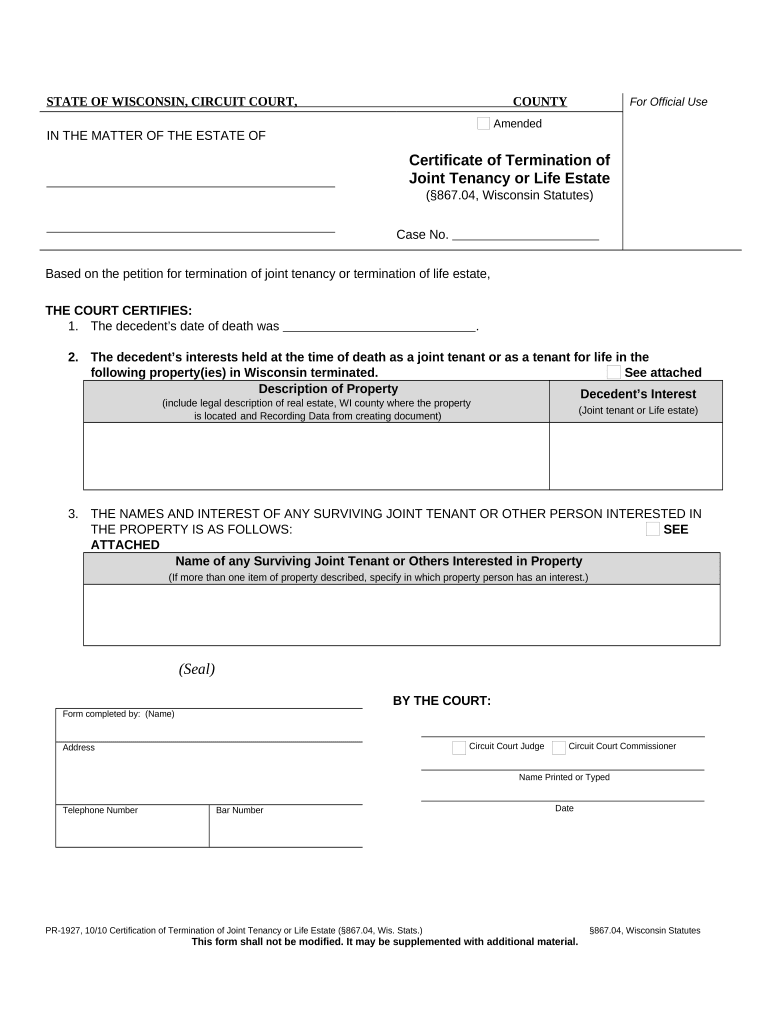
Termination of Life Estate Form

This template is fully customizable. Edit the text, fill out the fields, and send it for signature. Give it a try!
Termination of Life Estate Form

What the Termination of Life Estate Form Is

A Termination of Life Estate Form is a legal instrument used to end a life estate interest in real property and transfer full ownership to the remainderman or another designated party. It records the grantor's decision to terminate the life estate, identifies the property, and documents the effective date and consideration, if any. The form is typically notarized and recorded in the county land records where the property is located to update title and remove the life estate encumbrance from public records.

Why a Clear Termination Form Matters

A properly prepared termination form ensures the property title reflects current ownership, prevents future disputes, and enables the remainderman to sell or refinance the property without the life estate encumbrance.

Why a Clear Termination Form Matters

Who Typically Prepares and Uses This Form

Common users include property owners, remaindermen, title companies, and attorneys handling estate and real estate matters.

  • Title companies and record clerks often request a clear termination document to update public records and close title exceptions.
  • Attorneys prepare and review terminations when coordinating estate administration, resolving competing claims, or advising heirs on transfer consequences.
  • Homeowners or remaindermen initiate the form when the life tenant dies, voluntarily terminates the life interest, or when a court order requires termination.

Having the right parties involved reduces errors and speeds recording with the county recorder or register of deeds.

Representative Signers

Life Tenant

The individual who held the life estate may sign to voluntarily relinquish rights; if deceased, the termination is often executed by the personal representative or by operation of law through a death certificate and recorder entry.

Remainderman / Owner

The person or entity entitled to full ownership signs or is identified as the transferee; title companies and lenders will rely on accurate identification and supporting documents when accepting the termination for recording.

Essential Components of a Professional Termination Form

A complete form balances clarity and legal sufficiency to ensure acceptance by county recorders and third parties.

Property Description

Full legal description or recorded deed reference to precisely identify the parcel being released from the life estate.
Parties Identified

Names and capacities of the life tenant, remainderman, and any personal representative or trustee involved in the termination.

Statement of Termination

Clear language stating the life estate is terminated and the rights are transferred to the remainderman or specified transferee.

Effective Date

The date when the termination takes effect, which determines title vesting and recording priority.

Consideration

Any payment or exchange involved, if applicable, or a statement that termination is voluntary without consideration.

Execution and Notary

Signatures, date, notarization block, and any witness lines required by the recording jurisdiction.

Required Data Elements at a Glance

Grantor Name: Legal name
Grantee Name: Remainderman
Parcel ID: Tax or parcel number
Legal Description: Metes and bounds or recorded plat
Recording Reference: Original deed book/page
Notary Block: State-specific acknowledgment

Step-by-Step: Completing the Termination Form

Follow these sequential steps to prepare a form suitable for recording.

  • 01
    Gather Documents: Retrieve the original deed and any trust or probate orders.
  • 02
    Complete Form: Enter parties, legal description, and effective date.
  • 03
    Sign and Notarize: Have required parties sign before a notary or follow RON procedures if permitted.
  • 04
    Record: Submit to county recorder with required fees and attachments.

Configuring an Online Termination Workflow

Set up an electronic workflow that matches signer order and authentication needs.

Field Configuration
Signer Order Specify life tenant then remainderman
Authentication Email + SMS code or KBA if required
Notarization Enable RON or in-person notary step
Attachments Attach deed and death certificate as PDF

Where to File and How the Record Is Updated

Understanding the filing path helps ensure the recorder accepts and indexes the termination correctly.

  • County Recorder: Submit form and attachments to the recorder in the county where the property is located.
  • Title Company: Provide form to title insurer to clear exceptions and update title abstract.
  • Probate Court: If termination follows a probate order, file the court order or letters of administration as required.
  • Lender Notification: Notify mortgagee if mortgage or release language affects lien priority.

Digital Signing and Submission Considerations

Use an eSignature platform that supports the required authentication, notarization workflow, and PDF/A output for recording.

  • File Formats: PDF/A, DOCX accepted
  • Notary Support: RON or standard acknowledgment
  • Integrations: CRM and document storage connections

Ensure the chosen platform can produce a tamper-evident signed PDF, generate an audit trail, and export attachments required by the county recorder.

Typical Timelines and Recording Expectations

Timelines depend on local recorder processing and whether additional documents (death certificate, probate orders) are required.

Preparation Time:

Same-day to several days depending on document availability

Notarization Appointment:

1–7 days depending on scheduling

Recorder Processing:

1–10 business days typical; expedited options may exist

Title Update:

Title company clearance may add 3–14 days

Mortgage / Lien Notification:

Time varies by lender for lien release or pay-off processing

Common Mistakes to Avoid

  • Using an incomplete legal description that does not match recorded deed leading to rejection by the recorder.
  • Mismatched names or capacities (individual vs. trustee) that create title exceptions or require corrective documents.
  • Failing to attach required supporting documents such as the original life estate instrument or death certificate.
  • Skipping notarization or using an uncertified notary process where the county requires an in-person acknowledgment.

Risks and Consequences of Incorrect Termination

Title Defect: Clouded title
Recording Rejection: Delayed transfer
Litigation: Quiet title risk
Mortgage Issues: Loan acceleration risk
Tax Implications: Potential transfer tax
Notary Invalidity: Document may be voided

Practical Tips for Smooth Completion

Simple checks prevent common delays at recording offices and with title insurers.

Verify Legal Description
Copy the legal description verbatim from the recorded deed to avoid mismatches and ensure proper parcel identification.
Confirm Signer Capacity
Record the capacity (individual, trustee, executor) and attach proof of authority such as letters testamentary if signing for an estate.
Use Correct Notary Format
Follow your state recorder's required acknowledgment language and use an official notary seal to prevent rejection.
Attach Supporting Docs
Include the original life estate instrument, death certificate, or probate order as required by the recorder or title company.

Real-World Scenarios

Sample situations illustrate how and when a termination is used.

Estate Closing

A remainderman files a termination after the life tenant dies to clear title

  • The title company requires the death certificate
  • The recorded termination allows the remainderman to sell without a cloud on title, streamlining closing and lender underwriting.

Voluntary Relinquishment

A life tenant chooses to surrender the life estate to the remainderman

  • Parties execute a termination with consideration noted
  • Recording the form updates public records, enabling the remainderman to refinance and consolidates ownership for estate planning.

eSignature Vendor Comparison for Termination Workflows

When choosing an eSignature provider for executing and notarizing termination forms, consider price, notarization support, HIPAA compliance if health data is attached, and envelope or usage limits.

signNow DocuSign Adobe Sign PandaDoc HelloSign
Starting Price $8/user/mo $15/user/mo $14/user/mo $19/user/mo $15/user/mo
Free Trial 7-day free trial Varies by plan Varies by plan Varies by plan Varies by plan
Bulk Send Yes Yes Varies by plan Varies by plan Varies by plan
Audit Trail Yes Yes Yes Yes Yes
HIPAA Compliant Yes Yes Yes No No
Envelope Cap No envelope cap 100 envelopes/user/year Varies by plan Varies by plan Varies by plan

FAQs and Common Troubleshooting

Answers to frequent questions about completing, executing, and recording a Termination of Life Estate Form.


Need help? Contact support

be ready to get more
Join over 28 million airSlate SignNow users