Grant of Rights
Define exactly which marks, classes of goods/services, and permitted uses are licensed. Limit implicit rights and avoid open-ended language that could expand the license unintentionally.
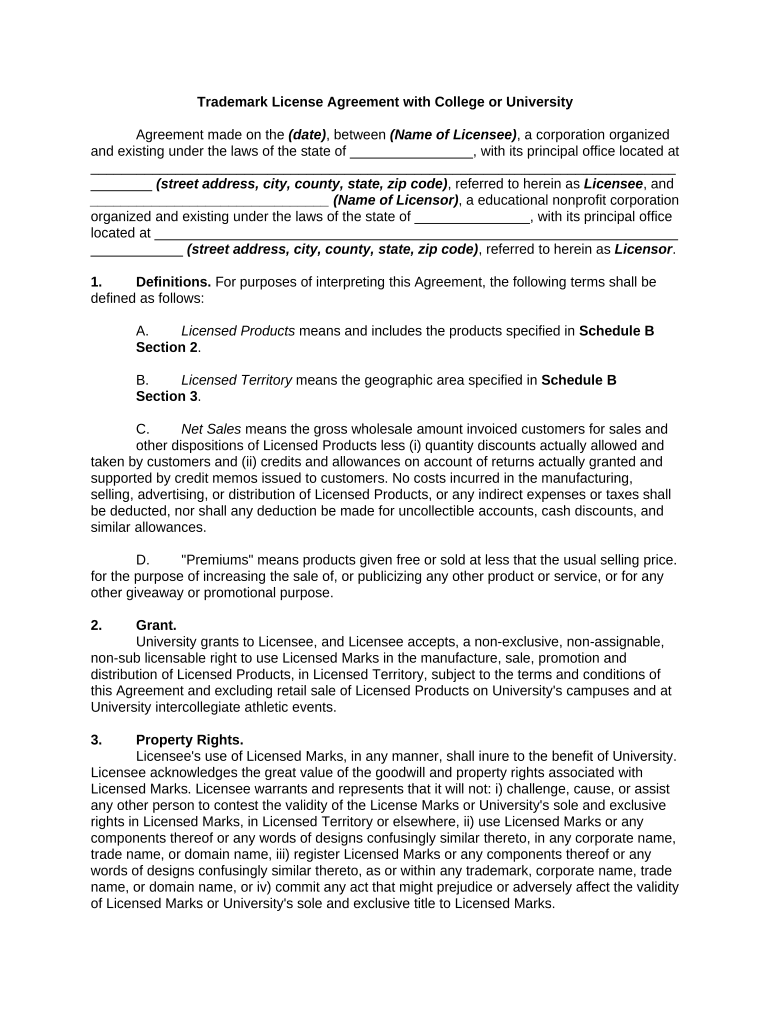
A precise Trademark License Agreement protects trademark owners from misuse and helps licensees avoid infringement. It enables enforceability of quality-control provisions, clarifies financial terms, and preserves the owner’s exclusive rights under trademark law. Properly drafted and signed, the agreement reduces litigation risk and supports recordation where required for third-party notice.

Define exactly which marks, classes of goods/services, and permitted uses are licensed. Limit implicit rights and avoid open-ended language that could expand the license unintentionally.
Specify geographic territory, channels of trade, and exclusivity (exclusive, sole, or non-exclusive). Narrow definitions reduce cross-border enforcement issues and consumer confusion.
State the effective date, term length, renewal mechanics, and conditions for termination for cause or convenience to avoid disputes about continuing obligations.
Detail royalty basis (sales percentage, flat fee), reporting cadence, audit rights, and late-payment remedies so financial expectations are clear and enforceable.
Require licensee to meet specified quality standards, permit owner inspections, and allow termination for failure to maintain acceptable standards to protect mark validity.
Address whether the license will be recorded with the USPTO or other registers, conditions for assignment, and how sublicensing is handled to preserve priority and public notice.
| Field | Configuration |
|---|---|
| Signature fields | Place signature, printed name, and date fields for each party. |
| Authentication | Choose email verification, SMS code, or stronger signer ID as needed. |
| Signer order | Specify sequential or parallel signing order to match approval flow. |
| Retention location | Select secure storage and retention policy for executed files. |
Verify encryption and retention settings align with legal and internal recordkeeping policies before finalizing execution.
| signNow | DocuSign | Adobe Sign | PandaDoc | HelloSign | |
|---|---|---|---|---|---|
| Starting Price | $8/user/mo | $15/user/mo | $14/user/mo | $19/user/mo | $15/user/mo |
| Free Trial | 7-day trial | Yes | Yes | Yes | Yes |
| Bulk Send | Yes | Yes | Yes | Yes | No |
| Audit Trail | Yes | Yes | Yes | Yes | Yes |
| HIPAA Compliant | Yes | Yes | Yes | No | No |
For high-value or cross-border licenses, involve legal, finance, and executive approvals to align commercial and IP risk management.
An IP counsel will verify ownership, confirm permitted scope, negotiate quality-control language, and approve recordation steps. They ensure the license preserves enforceability of the trademark and aligns with the owner's portfolio strategy.
A brand manager ensures operational compliance with quality and usage standards, implements labeling and marketing approvals, and coordinates royalty reporting and audit responses on behalf of the licensee.
A manufacturing licensor grants a non-exclusive license for a single product line
A franchisor licenses branding to regional operators with strict quality control standards
Enter the effective date as MM/DD/YYYY; this triggers term, payment, and renewal schedules.
Specify reporting cadence—monthly or quarterly—and due dates for payments and reports.
Include notice windows for renewal or non-renewal, commonly 30–90 days before expiry.
Set reasonable advance notice for audits, typically 10–30 days, and limits on frequency.
Define cure periods and written notice requirements before termination for breach.
Finalize terms, exhibits, and definitions before circulating for signature.
All parties sign and date; ensure required witnesses or notarizations are completed.
Record license with appropriate office if public notice is needed; timing varies by jurisdiction.
Implement quality-control reviews, reporting, and audits according to the agreement timetable.