Establishing secure connection…Loading editor…Preparing document…

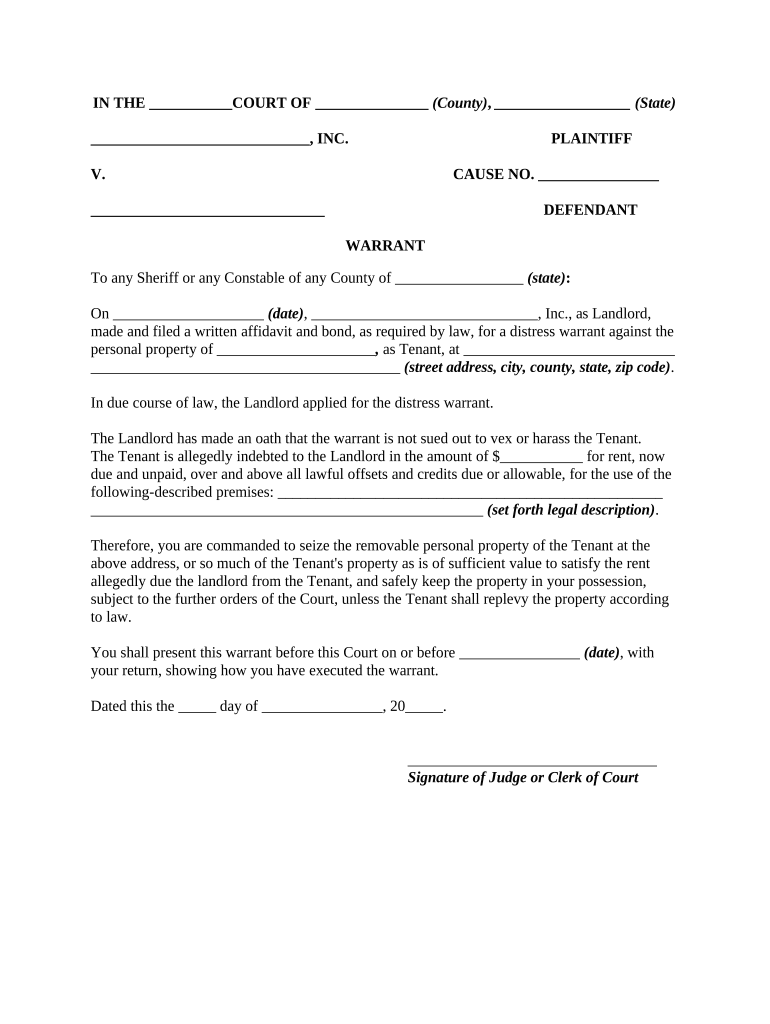
Warrant of Distraint

This template is fully customizable. Edit the text, fill out the fields, and send it for signature. Give it a try!
Warrant of Distraint

What a Warrant of Distraint Is and When it Applies

A Warrant of Distraint is a legal instrument authorizing seizure of a debtor's personal property to satisfy unpaid obligations, commonly used for unpaid rent or municipal debts. The warrant typically names the claimant, identifies the property subject to distraint, states the amount due, and instructs an enforcement officer on seizure procedures. Its enforceability depends on state statute and procedural notice requirements; interstate electronic handling is governed by the ESIGN Act (15 U.S.C. ch. 96) while intrastate e-signature rules follow UETA where adopted.

Why a Proper Warrant of Distraint Matters

A correctly completed warrant provides clear authority to seize listed assets, reduces procedural delays, and documents legal basis for enforcement actions.

Why a Proper Warrant of Distraint Matters

Who Commonly Prepares and Uses a Warrant of Distraint

Each user must follow the applicable state statute and local enforcement practice to ensure seizures are lawful and defensible.

  • Landlords and property managers enforcing unpaid rent and lease defaults.
  • Municipal tax or parking authorities collecting unpaid fees or fines.
  • Legal counsel or collection agents preparing warrants for judicial or statutory seizure.

Essential Elements to Include in a Professional Warrant of Distraint

A complete warrant clearly documents parties, debt, and execution instructions so enforcement officers and courts can act without ambiguity.

Claimant

Full legal name and contact information of the party seeking distraint, including business entity type and mailing address for notices.
Debtor

Full legal name and last known address of the person or entity whose property may be seized; include aliases when known.

Amount Owed

Specify principal, interest, fees, and statutory costs with a clear calculation period and supporting reference to invoices or tax notices.

Property Description

Describe specific personal property to be distrained with sufficient detail to allow identification during execution, avoiding vague categories.

Authority Cited

Reference the statutory provision or court order authorizing distraint so the officer can verify legal power to seize.

Execution Instructions

State where, when, and how to execute the seizure, contact for claimant, and directions for inventory and return procedures.

Required Data Fields at a Glance

Claimant Name: Full legal name
Debtor Name: Full legal name
Debt Amount: Itemized total
Property Details: Clear description
Statutory Basis: Citation or order
Execution Agent: Officer name/agency

Step-by-Step: Filling Out a Warrant of Distraint

Follow these steps to prepare a legally sufficient warrant that enforcement officers and courts can accept.

  • 01
    1. Identify Parties: Enter claimant and debtor legal names and addresses.
  • 02
    2. Calculate Debt: List principal, interest, and statutory fees with dates.
  • 03
    3. Describe Property: Provide specific, locatable property descriptions.
  • 04
    4. Add Authority: Reference statute or attach the court order.

Where to File or Deliver a Warrant of Distraint

Filing and delivery depend on the local enforcement chain; follow statute and local sheriff or county office procedures.

  • Local Sheriff: Deliver to county sheriff for execution.
  • Municipal Collector: Submit to city or town collection office.
  • Court Clerk: File if required by a court order.
  • Enforcement Agency: Provide directly to authorized private process servers where allowed.

Digital Preparation and eSubmission Considerations

Keep originals and maintain a verifiable audit trail; confirm acceptance of e-signed documents with the executing authority before relying on electronic delivery.

  • File Formats: PDF, DOCX supported
  • Integrations: Salesforce, NetSuite, MS 365
  • Audit Trail: Timestamp and IP capture

Typical Timelines and Notice Periods to Expect

Timeframes vary by statute and local process; verify specific cure periods, execution windows, and appeal deadlines before proceeding.

Notice to Debtor:

Often 7–30 days; varies by state

Right to Cure:

Statutory cure period may apply

Execution Window:

Officers schedule seizures within statutory timeframe

Inventory Filing:

Officer files inventory after seizure

Appeal Period:

Short statutory window to contest

Key Milestones in the Warrant of Distraint Process

A sequential view of core stages clarifies when actions and notices must occur during distraint enforcement.

01

Prepare Warrant

Draft with full parties, debt detail, and statutory citation.

02

Serve Notice

Provide required notice to debtor before physical seizure when law requires.

03

Execute Seizure

Officer seizes identified property and prepares inventory and receipt.

04

Disposition or Sale

Property sold or returned per statute; proceeds applied to debt.

Common Preparation Errors to Avoid

  • Failing to cite the correct statute or court order can cause immediate rejection and legal exposure for unlawful seizure.
  • Using incomplete or vague property descriptions delays officers and may prevent effective identification and seizure of assets.
  • Omitting signatures, dates, or precise debt calculations often triggers administrative refusal or demands for corrected paperwork.
  • Delivering electronic copies without confirming agency acceptance of e-signed documents may result in process delays or nullified actions.

Legal Risks and Potential Penalties

Civil Damages: Liability for wrongful seizure
Criminal Exposure: Possible in intentional misconduct
Warrant Rejection: Administrative denial of execution
Fee Liability: County or officer fees apply
Confiscation Return: Court may order return
Statute Violation: Penalties under state law

eSignature Vendor Comparison for Signing and Delivering Warrants

Comparison of common eSignature criteria and starting pricing for contract review; signNow is listed first per vendor positioning rules.

signNow DocuSign Adobe Sign PandaDoc HelloSign
Starting Price $8/user/mo $15/user/mo $14/user/mo $19/user/mo $15/user/mo
Free Trial 7-day trial Varies Varies Varies Varies
Bulk Send Yes Yes Yes Yes No
Audit Trail Yes Yes Yes Yes Yes
HIPAA Compliant Yes Yes Yes No No

Frequently Asked Questions About Warrant of Distraint and eSigning

Answers to common legal and technical questions about preparing, signing, and delivering a Warrant of Distraint.


Need help? Contact support

be ready to get more
Join over 28 million airSlate SignNow users