Establishing secure connection…Loading editor…Preparing document…

Wisconsin Eastern Bankruptcy

This template is fully customizable. Edit the text, fill out the fields, and send it for signature. Give it a try!
Wisconsin Eastern Bankruptcy

Overview of Wisconsin Eastern Bankruptcy proceedings

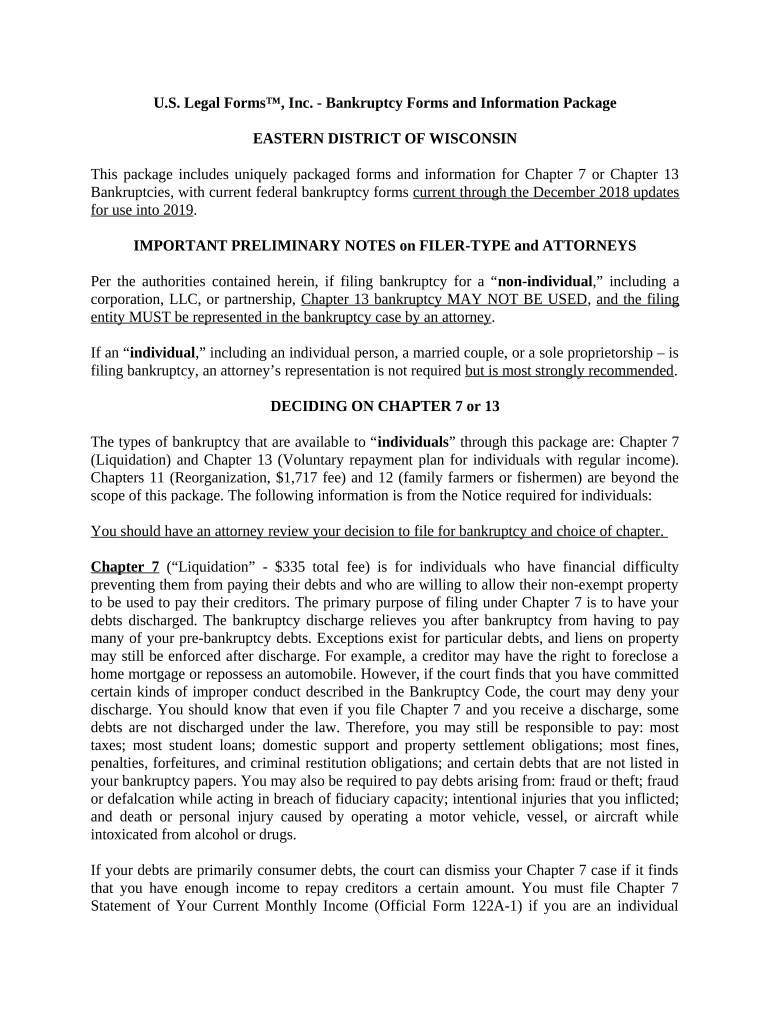
The Wisconsin Eastern Bankruptcy refers to filings and proceedings in the United States Bankruptcy Court for the Eastern District of Wisconsin. This federal court handles consumer and business cases under Title 11 of the United States Code, including Chapter 7 liquidations, Chapter 13 wage-earner plans, and Chapter 11 reorganizations. Cases are initiated by filing a petition, official schedules, and required attachments; the court assigns a trustee for many consumer matters and schedules a 341 meeting of creditors. Local rules and the Federal Rules of Bankruptcy Procedure govern timing, required forms, and e-filing via the court's CM/ECF system.

Why understanding the Eastern District process matters

Familiarity with local procedures reduces filing errors, prevents unnecessary delays, and protects statutory rights like discharge eligibility. Knowing required forms and timing also helps coordinate creditor notifications and trustee interactions.

Why understanding the Eastern District process matters

Who typically interacts with Wisconsin Eastern Bankruptcy filings

Multiple roles must prepare or review filings, each with different responsibilities and evidence needs.

  • Debtors and representatives who gather financial statements, complete schedules, and sign petitions before filing.
  • Bankruptcy attorneys who prepare pleadings, represent debtors or creditors, and ensure compliance with local rules.
  • Trustees and creditors who review schedules, attend the 341 meeting, and assess claims and plan feasibility.

Clear role delineation improves accuracy, reduces risk of dismissal, and helps preserve legal remedies.

Step-by-step: filing a petition in the Eastern District

Follow a consistent sequence to prepare and submit a bankruptcy case in the Eastern District of Wisconsin.

  • 01
    Prepare Forms: Complete Official Forms B101, schedules, and Statement of Financial Affairs accurately.
  • 02
    Obtain Counseling: Complete pre-filing credit counseling if required and include the certificate with the petition.
  • 03
    File Petition: Submit the petition and schedules through the court's CM/ECF e-filing system or as the clerk directs.
  • 04
    Attend 341 Meeting: Appear for the meeting of creditors to answer trustee and creditor questions under oath.

How electronic submission and case processing typically flow

The court's intake and post-filing processes move documents from submission through trustee review to disposition.

  • E-Filing: Petition and attachments uploaded via CM/ECF by the filer or counsel.
  • Clerk Review: Clerk assigns case number, posts filing, and schedules initial dates.
  • Trustee Assignment: Trustee reviews schedules, assets, and claims for administration or recommendation of discharge.
  • Adjudication: Court resolves motions, confirmation, or objections leading to discharge or dismissal.

Key settings and practices for an efficient e-filing workflow

Standardize form templates, naming conventions, and authentication to reduce rework and clerk inquiries.

Field Configuration
E-Filing Method CM/ECF electronic upload required for represented filers
Document Names Use consistent labels: Petition, Schedules, SOFA, Certificate
Authentication Use attorney PACER accounts or authorized filing credentials
Redaction Redact sensitive numbers not required for public docketing

Technical and integration considerations for electronic filings

Ensure your file formats, signatures, and storage align with court rules and secure standards.

  • Document Formats: PDF/A preferred; searchable text reduces clerk questions.
  • Authentication: Two-factor or court-approved credentials protect access and attribution.
  • Integrations: Use supported integrations (e.g., document management, case tools) to automate uploads.

Aligning formats and authentication with court expectations reduces rejection rates and speeds case progression.

Core elements every professional Eastern District petition includes

A complete filing bundles the petition, required schedules, certificates, and supporting documentation in court-ready format.

Official Petition

A completed petition form initiating the case with accurate debtor identifiers, chapter selection, and signature; this is the controlling filing that triggers court jurisdiction and trustee assignment.
Schedules

Schedules A–J listing assets, secured and unsecured liabilities, income, and expenses; these documents inform trustee valuation and creditor assertion decisions.

Statement of Affairs

The Statement of Financial Affairs discloses transactions and transfers, which the trustee reviews for potential preference or fraud issues.

Means Test

When applicable, the means test forms determine chapter 7 eligibility or require conversion to a chapter 13 plan for disposable income repayment.

Credit Counseling

Pre-filing credit counseling certificate and post-filing debtor education certificate are required for individual debtors seeking discharge in many cases.

Proofs & Notices

Proofs of service, creditor matrices, and notices to interested parties must be accurate to preserve due process and prevent claims being overlooked.

Security and compliance features to protect filings and sensitive data

Encryption in Transit: TLS 1.2/1.3
Encryption at Rest: AES-256 encryption
Audit Trail: Comprehensive action logs
HIPAA Support: BAA available where required
ESIGN/UETA Compliance: Legal e-sign framework
21 CFR Part 11: Support for regulated records

Consequences of incorrect or incomplete bankruptcy filings

Case Dismissal: Court may dismiss for major defects
Loss of Discharge: Nondisclosure can void discharge
Sanctions: Clerical or procedural sanctions possible
Fraud Charges: Intentional misstatements risk criminal referral
Trustee Claims: Preferences or avoidance actions may follow
Creditor Remedies: Creditors may file objections or lift-stay motions

Common preparation errors to avoid

  • Incomplete schedules or missing creditor addresses leading to delayed notices and contested claims.
  • Failing to attach required certificates (credit counseling or debtor education) results in deficient filings or delayed discharge.
  • Using inconsistent debtor names or inaccurate SSNs/EINs causes trustee follow-up and potential jurisdictional complications.
  • Incorrectly redacting documents or filing non-searchable PDFs that prevent clerk review and cause rejections.

Typical timing expectations after filing in the Eastern District

Timing varies by case type and court calendar; these are common benchmarks filers should expect and track.

341 Meeting Window:

Usually scheduled about 21–50 days after filing; exact date set by the clerk.

Chapter 7 Discharge:

Discharge often enters within 3–6 months absent objections or asset administration.

Chapter 13 Plan Deadline:

Confirmation typically occurs within 90–180 days after plan filing depending on objections.

Claims Bar Date:

Bankruptcy court sets the bar date; timely claims must be filed by that deadline.

Appeal Period:

Time to appeal a final order is governed by federal rules and notice requirements.

Key case milestones from filing to resolution

Track major milestones to keep deadlines and required actions on schedule throughout the case lifecycle.

01

File Petition

Initiate the case by docketing the petition and schedules with the clerk.

02

341 Meeting

Attend the meeting of creditors and answer trustee inquiries under oath.

03

Plan or Objections

File repayment plan (Chapter 13) or respond to objections to discharge or exemptions.

04

Resolution

Court issues confirmation, discharge, or dismissal following hearings and motions.

Typical eSignature vendor comparison for bankruptcy document workflows

Comparison focuses on starting price, trial availability, bulk sending, audit trails, and HIPAA suitability for document workflows.

signNow DocuSign Adobe Sign PandaDoc HelloSign
Starting Price $8/user/mo $15/user/mo $14/user/mo $19/user/mo $15/user/mo
Free Trial 7-day free trial, no credit card Varies by vendor Varies by vendor Varies by vendor Varies by vendor
Bulk Send Yes Yes Yes Yes No
Audit Trail Yes Yes Yes Yes Yes
HIPAA Compliant Yes Yes Yes No No

Frequently asked questions about filing in the Eastern District

Answers to common procedural and technical questions about petitions, required documents, and electronic submission practices.


Need help? Contact support

be ready to get more
Join over 28 million airSlate SignNow users