Establishing secure connection…Loading editor…Preparing document…

Writ of Certiorari

This template is fully customizable. Edit the text, fill out the fields, and send it for signature. Give it a try!
Writ of Certiorari

What a Writ of Certiorari Is

The Writ of Certiorari is a formal petition seeking discretionary review by the United States Supreme Court of a lower court judgment. It asks the Court to examine legal errors or conflicts among circuit courts and to resolve significant federal or constitutional questions. A successful writ grants the Court jurisdiction to review the record and issue a decision; most petitions are denied. Preparing a writ requires precise citation to the record, clear presentation of questions presented, and strict compliance with the Supreme Court's procedural rules and filing requirements.

Why the Writ of Certiorari Matters

A Writ of Certiorari provides a mechanism to resolve circuit splits and secure authoritative interpretation of federal law. Although review is discretionary, a narrowly framed petition emphasizing national importance or conflicting precedents can attract the Court's attention and shape binding precedent.

Why the Writ of Certiorari Matters

Who Typically Files or Prepares a Petition

Common filers include appellate attorneys, state solicitors, and litigants seeking Supreme Court review in significant federal or constitutional cases.

  • Appellate lawyers preparing focused legal questions and record citations for Supreme Court consideration
  • State attorneys defending or challenging lower court rulings with statewide policy implications
  • Private litigants with substantial constitutional claims or conflicts among federal circuits

Essential Parts of a Professional Petition

A professional Writ of Certiorari organizes jurisdictional basis, the questions presented, reasons for review, procedural history, supporting appendix, and proof of service to conform with Supreme Court rules.

Cover Sheet

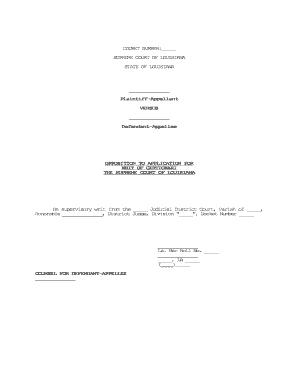
Complete the Court's cover sheet with parties, docket number, lower court, counsel contacts, and required copies to avoid administrative rejection.
Questions Presented

State each legal question in a single, precise paragraph; clarity focuses the Court's review and frames briefing on dispositive issues.

Statement of Case

Summarize procedural posture and material facts with citations to the lower-court opinion and record; omit extraneous factual disputes.

Reasons for Review

Explain circuit splits, conflicts with Supreme Court precedent, or national importance using authoritative citations and practical consequences of divergent outcomes.

Appendix

Include lower-court opinions, pertinent statutes, and key record excerpts; paginate and format the appendix per Court rules.

Certificate

Provide certificate of service and any necessary signatures; certify service methods and dates to demonstrate compliance.

Step-by-Step Filing Checklist

Follow these core steps to prepare and file a petition for a Writ of Certiorari to the Supreme Court.

  • 01
    Assess Reviewability: Confirm final judgment and lack of alternative remedies
  • 02
    Draft Petition: Prepare questions presented, statement of case, and reasons for review
  • 03
    Compile Appendix: Assemble opinions, statutes, and key record excerpts
  • 04
    File & Serve: Submit per Supreme Court rules and certify service

How the Filing Process Typically Works

Typical filing steps describe internal review, petition drafting, appendix assembly, filing with the Court, and service on respondents.

  • Internal Review: Conduct merits analysis and obtain client approval
  • Drafting: Focus on narrow legal questions and supporting citations
  • Filing: File petition with Clerk of the Supreme Court
  • Service: Serve opposing parties and file certificate of service

Electronic Preparation and Court Format Requirements

For e-filing and digital assembly, verify court rules and format requirements before submitting electronically to avoid rejection.

  • File Format: PDF/A preferred; follow court specifications
  • Signature Type: Some courts require original or notarized signatures
  • Service Rules: Electronic service accepted where permitted

Configuring a Digital Workflow for Petition Assembly

Set up a digital workflow to assemble, sign, and track the petition and appendix prior to filing.

Workflow Step and Platform Configuration Action to perform | Recommended platform configuration
Upload Petition Upload final petition file | Use PDF/A and include metadata
Place Signature Add signature field | Require signer authentication
Assemble Appendix Merge documents | Maintain appendix pagination
Track Service Record served parties | Save certificate of service

Timing and Deadlines to Watch

Timing varies by posture; observe final judgment date, any tolling, and procedural limits for post-judgment relief before seeking certiorari.

Final Judgment Date:

Trigger for certiorari timing and filing considerations

Mandate Rule:

Mandate issuance affects timing for further remedies

Service Deadline:

Serve respondents per Court's required methods and timing

Response Period:

Opposing party may respond; observe page and time limits

Extension Requests:

Seek extensions only where authorized and justified

Key Milestones from Judgment to Petition

Track each milestone from final judgment through petition filing, service, and any subsequent motions to ensure procedural rights remain available.

01

Final Judgment Entered

Lower court issues final decision and judgment

02

Mandate Issued

Appellate mandate may alter timing for certiorari

03

Prepare Petition

Draft petition, appendix, and certificate of service

04

File Petition

Submit to Clerk and serve respondents per rules

Common Pitfalls to Avoid When Preparing a Petition

  • Failing to present a clear question presented or scattering multiple issues makes it unlikely the Court will grant review; keep questions singular and sharply focused.
  • Relying on improper citation formats or omitting key lower-court opinions can lead to procedural rejection or prejudice consideration on the merits.
  • Including extensive new factual material rather than citing the record distracts from legal issues and may be disregarded by the Court.
  • Missing service or certification requirements delays processing and can lead to sanctions or dismissal for noncompliance.

Risks and Consequences of Errors

Denial Risk: Petition may be denied without explanation
Sanctions Risk: Court may impose costs or sanctions
Procedural Rejection: Noncompliance can result in return
Statute Bar: Jurisdictional defects bar relief
Attorney Fees: Unrecoverable fees for unsuccessful filings
Timing Loss: Missed deadlines for subsequent remedies

How a Writ of Certiorari Differs from Other Documents

Compare common appellate and post-judgment filings to distinguish cert petitions from other procedural instruments.

Document | Typical Use Document Type Typical Use
Writ of Certiorari discretionary review supreme court
Notice of Appeal appeal as of right appellate court
Petition for Review agency decision review administrative
Motion for Reconsideration post-judgment request lower court

eSignature Vendor Snapshot for Petition Preparation

Common eSignature vendors and plan-level differences for document assembly and signing; signNow is listed first per comparison requirements without dating this snapshot.

signNow DocuSign Adobe Sign PandaDoc HelloSign
Starting Price $8/user/mo $15/user/mo $14/user/mo $19/user/mo $15/user/mo
Free Trial 7-day free trial Varies by vendor Varies by vendor Varies by vendor Varies by vendor
Bulk Send Yes (Business Premium) Varies by plan Varies by plan Varies by plan Varies by plan
Audit Trail Yes Yes Yes Yes Yes
Envelope Cap No envelope cap 100 envelopes/user/year Varies by plan Varies by plan Varies by plan

Frequently Asked Questions About Writs of Certiorari

Answers to common procedural and practical questions about preparing, filing, and authenticating petitions for Supreme Court review.


Need help? Contact support

be ready to get more
Join over 28 million airSlate SignNow users