Child Details
Identifies each child, date of birth, and primary residence to determine who is covered by the support order and which jurisdiction applies.
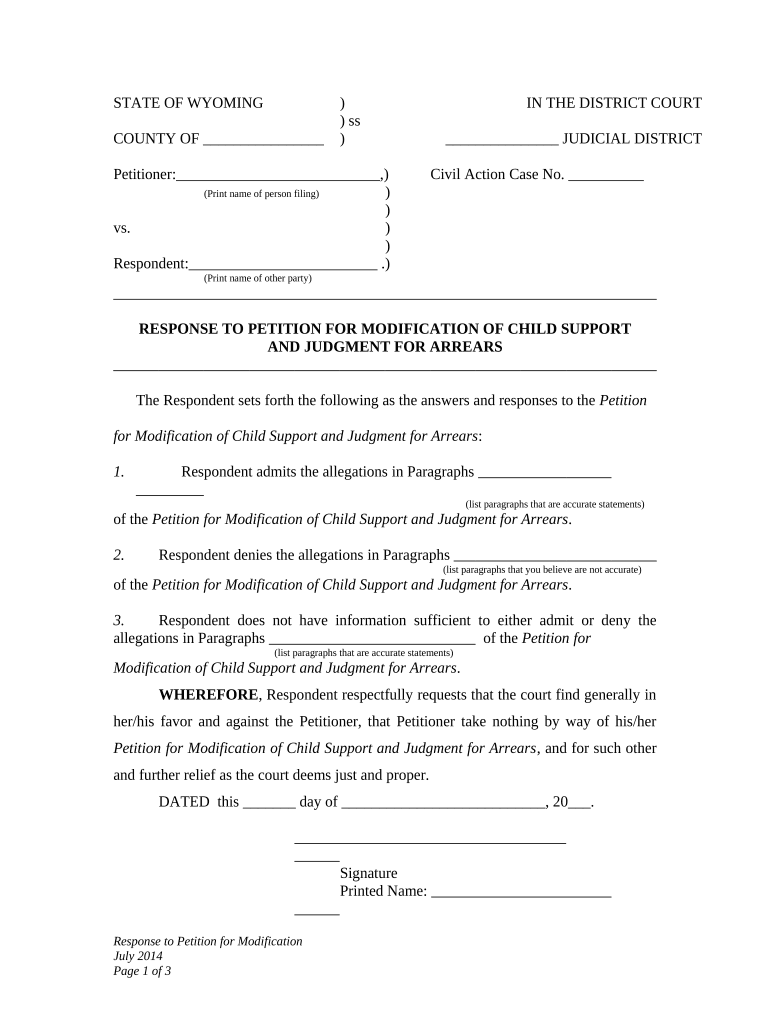
Completing the Wyoming Child Support Form accurately creates a clear record for establishing, modifying, or enforcing child support. The form standardizes income reporting, custody information, and medical obligations so judges and child support agencies can apply state guidelines consistently and protect the child’s financial needs.

The form is completed by parents, legal guardians, attorneys, and child support enforcement officers when opening, changing, or enforcing a support case.
Accurate completion reduces processing delays and supports enforceable orders; agencies rely on complete financial and custody data to apply Wyoming guidelines.
| signNow | DocuSign | Adobe Sign | PandaDoc | HelloSign | |
|---|---|---|---|---|---|
| Starting Price | $8/user/mo | $15/user/mo | $14/user/mo | $19/user/mo | $15/user/mo |
| Free Trial | 7-day free trial | Yes | Yes | Yes | Yes |
| Bulk Send | Yes | Yes | Yes | Yes | Yes |
| Audit Trail | Yes | Yes | Yes | Yes | Yes |
| HIPAA Compliant | Yes | Yes | Yes | No | No |
Use PDF or DOCX files for most court and agency submissions; ensure the eSignature provider supports necessary integrations and security.
Identifies each child, date of birth, and primary residence to determine who is covered by the support order and which jurisdiction applies.
Captures parent names, addresses, employment, and contact details required for service, income verification, and enforcement contact.
Requires gross wages, overtime, bonuses, benefits, and self-employment income with supporting documentation to calculate guideline obligations.
Lists childcare costs, health insurance premiums, extraordinary medical expenses, and other allowable deductions relevant to net income.
Shows the guideline worksheet or calculation inputs used by the court to derive monthly support and any deviations explained by the parties.
Contains attestations, signature blocks, and any notarization or verification statements required for the filing to be accepted.
Recent pay stubs, employer verification letters, or federal tax returns demonstrating reported income and pay frequency.
Health insurance policy summaries and billing statements showing premiums and covered dependents to allocate medical support obligations.
Receipts or invoices for childcare, extraordinary medical care, or other recurring child-related expenses claimed on the form.
Existing custody or visitation orders and parenting schedules that affect support calculations and allocation of days.
The parent or legal guardian filing the petition signs to verify the information under penalty of perjury; if represented, the attorney may also sign where permitted by local rules.
The responding parent signs when acknowledging service, submitting financial information, or agreeing to stipulated orders; signature confirms consent or provides official response to the petition.
Service usually required within 60–90 days after filing, depending on local rules and method of service.
Case intake and completeness check often occur within 7–30 days of filing at the clerk or agency.
A hearing or administrative conference is commonly scheduled within 30–120 days, subject to court backlog.
Once determined, a written order is entered and served on parties; enforcement may begin per order terms.
Appeal or reconsideration timelines vary; parties should verify local court rules for exact filing deadlines.