Agregar campos calculados en signNow permite personalizar sus documentos electrónicos. Esta solución de firma electrónica es segura y cumple con las normativas en EE. UU.
add calculated fields permite insertar campos que calculan valores automáticamente dentro de un documento electrónico, como totales, impuestos o descuentos basados en otros campos. Al usar esta función se reduce el ingreso manual de datos, se minimizan errores aritméticos y se acelera el procesamiento de contratos y facturas. En plataformas compatibles con firmas electrónicas como signNow, los campos calculados pueden integrarse con plantillas y reglas de flujo de trabajo para evaluar resultados en tiempo real antes del envío para firma.
Beneficios clave de emplear add calculated fields
Los campos calculados automatizan operaciones, reducen errores y estandarizan valores en documentos recurrentes, mejorando la consistencia y velocidad del proceso de firma.
Desafíos comunes al implementar add calculated fields
Fórmulas mal definidas que producen resultados incorrectos al combinar tipos de datos incompatibles.
Dependencia de valores que faltan en el formulario provoca errores en cálculos automatizados.
Diferencias de formato numérico y redondeo entre sistemas resultan en inconsistencias finales.
Gestión de versiones de plantillas cuando se actualizan campos calculados en documentos en curso.
Perfiles de usuario típicos que configuran add calculated fields
Gerente de Finanzas
Responsable de definir cálculos de impuestos, totales y retenciones en plantillas de facturación. Configura reglas para garantizar coherencia en informes financieros y revisa resultados antes del envío para firma.
Administrador de Contratos
Encargado de plantillas contractuales con cláusulas dependientes de variables comerciales. Implementa campos calculados para ajustar montos, plazos y penalizaciones según datos de cada transacción.
Quién utiliza add calculated fields en entornos profesionales
Equipos de finanzas, ventas y recursos humanos usan campos calculados para automatizar totales, comisiones y beneficios en documentos contractuales.
Equipos de contabilidad que generan facturas y conciliaciones con totales automáticos.
Departamentos de ventas que calculan comisiones y descuentos en cotizaciones.
Administración de nóminas que aplica fórmulas para deducciones y aportes.
Su uso favorece procesos repetibles y reduce la necesidad de reconciliación manual al finalizar transacciones.
prepárese para obtener más ventajas
Elija una solución mejor
Integraciones y capacidades clave para add calculated fields
Conectar campos calculados a otras herramientas y plantillas extiende su utilidad en flujos de trabajo empresariales y en sistemas de registro y contabilidad.
Google Docs
Permite sincronizar plantillas y transferir datos de campos entre documentos, manteniendo cálculos actualizados al importar valores desde hojas de cálculo.
CRM
Integración con CRM para rellenar precios, descuentos y comisiones automáticamente en propuestas y contratos, basados en datos del cliente.
Dropbox
Almacena versiones de documentos con campos calculados preservando resultados y metadatos para auditoría y recuperación.
Plantillas dinámicas
Soporte para plantillas reutilizables con campos calculados variables que se adaptan a cada transacción o cliente.
Cómo funcionan internamente los add calculated fields
Los campos calculados evalúan expresiones basadas en valores ingresados y reglas definidas, actualizando resultados en tiempo real dentro del documento.
Captura de datos: Entrada desde campos visibles
Evaluación de fórmula: Motor de cálculo aplica reglas
Formato de salida: Aplicación de formato y redondeo
Persistencia: Valor guardado en plantilla
Recoge firmas
24x
más rápido
Reduce los costos en
$30
por documento
Ahorra hasta
40h
por empleado / mes
Guía rápida: crear add calculated fields en un documento
Siga estos pasos básicos para añadir y probar un campo calculado dentro de una plantilla de documento.
01
Paso 1: Insertar campos fuente con nombres únicos
02
Paso 2: Añadir campo calculado con fórmula
03
Paso 3: Definir formato numérico y redondeo
04
Paso 4: Probar con datos y guardar plantilla
prepárese para obtener más ventajas
Por qué elegir airSlate SignNow
Versión de prueba gratuita de 7 días. Elija el plan que necesita y pruébelo sin riesgos.
Precios honestos para planes completos. airSlate SignNow ofrece planes de suscripción sin sobrecargos ni comisiones ocultas al renovar.
Seguridad de grado empresarial. airSlate SignNow le ayuda a cumplir con los estándares de seguridad globales.
Configuración típica de flujo de trabajo para add calculated fields
A continuación se muestra una configuración base de ajustes y valores recomendados para incorporar campos calculados en procesos de firma y aprobación.
Feature
Configuration
Default Calculation Mode
Automatic
Rounding and Precision
Two decimals
Missing Value Handling
Zero fallback
Calculation Trigger
On field change
Controles de seguridad aplicables a add calculated fields
Validación de entrada:Reglas para tipo de dato
Control de versiones:Historial de cambios
Encriptación en tránsito:TLS estándar
Encriptación en reposo:Cifrado de almacenamiento
Acceso basado en roles:Permisos por usuario
Registro de auditoría:Trazabilidad completa
Casos prácticos de add calculated fields en la industria
Ejemplos reales muestran cómo los campos calculados mejoran operaciones en facturación y contratos comerciales.
Facturación automatizada
Una empresa de servicios incorpora campos calculados para sumar partidas y aplicar impuestos automáticamente
Reducción de errores manuales en totales
Aceleración del ciclo de facturación y conciliación
Resulting in procesos de cobro más rápidos y menos disputas.
Contratos de ventas
Un equipo de ventas usa campos que calculan descuentos por volumen según cantidades ingresadas
Configuración de reglas dinámicas por línea de producto
Mejora en precisión de cotizaciones y comisiones calculadas
Leading to decisiones de aprobación más rápidas y menores correcciones posteriores.
Prácticas recomendadas para diseñar add calculated fields seguros y precisos
Adoptar normas claras en la definición y prueba de fórmulas reduce riesgos y facilita mantenimiento de plantillas con campos calculados.
Nombrado consistente de campos
Use convenciones de nombres descriptivas y consistentes para campos fuente y calculados; esto facilita la identificación de dependencias y reduce errores al actualizar plantillas.
Validación y control de errores
Implemente validaciones de entrada y mensajes claros para datos faltantes o inválidos, evitando que cálculos se propaguen con valores incorrectos.
Pruebas con datos reales
Verifique las fórmulas usando escenarios representativos y casos límite, incluyendo pruebas de redondeo y formatos numéricos antes de publicar la plantilla.
Documentación y control de versiones
Mantenga documentación interna sobre fórmulas y cambios de plantilla; registre versiones para poder revertir o auditar decisiones de cálculo.
Defina primero los campos de entrada con nombres claros, inserte un campo calculado y escriba la expresión usando los identificadores de campo. Pruebe con valores de ejemplo y ajuste el formato antes de usar la plantilla en producción.
Verifique tipos de datos y la presencia de valores requeridos; use validaciones para evitar cálculos con campos vacíos y revise el orden de evaluación de la expresión.
Configure la precisión en la definición del campo calculado o aplique funciones de redondeo en la fórmula; asegúrese de que el formato de visualización coincida con los requisitos contables.
Confirme que la plantilla y las reglas sean compatibles con la versión móvil; algunas interacciones avanzadas requieren revisar la experiencia en dispositivos táctiles.
Al sincronizar valores desde sistemas externos, valide mapeos de campos y formatos; utilice la API para enviar y recuperar valores calculados de forma consistente.
Asegure que la plataforma registre cambios y valores finales; mantenga logs de versiones de plantilla y capture el resultado del cálculo para cada transacción con finalidad de auditoría.
Comparativa técnica: add calculated fields — signNow frente a DocuSign
Comparación de capacidades relevantes para campos calculados entre soluciones populares, con signNow listado primero como referencia recomendada.
Riesgos y sanciones por uso inadecuado de add calculated fields
Errores contables:Inexactitudes
Incumplimiento contractual:Demandas
Pérdida de datos:Exposición
Multas regulatorias:Sanciones
Problemas de auditoría:Observaciones
Interrupción operativa:Retrasos
Cómo agregar un campo calculado a un documento con airSlate SignNow
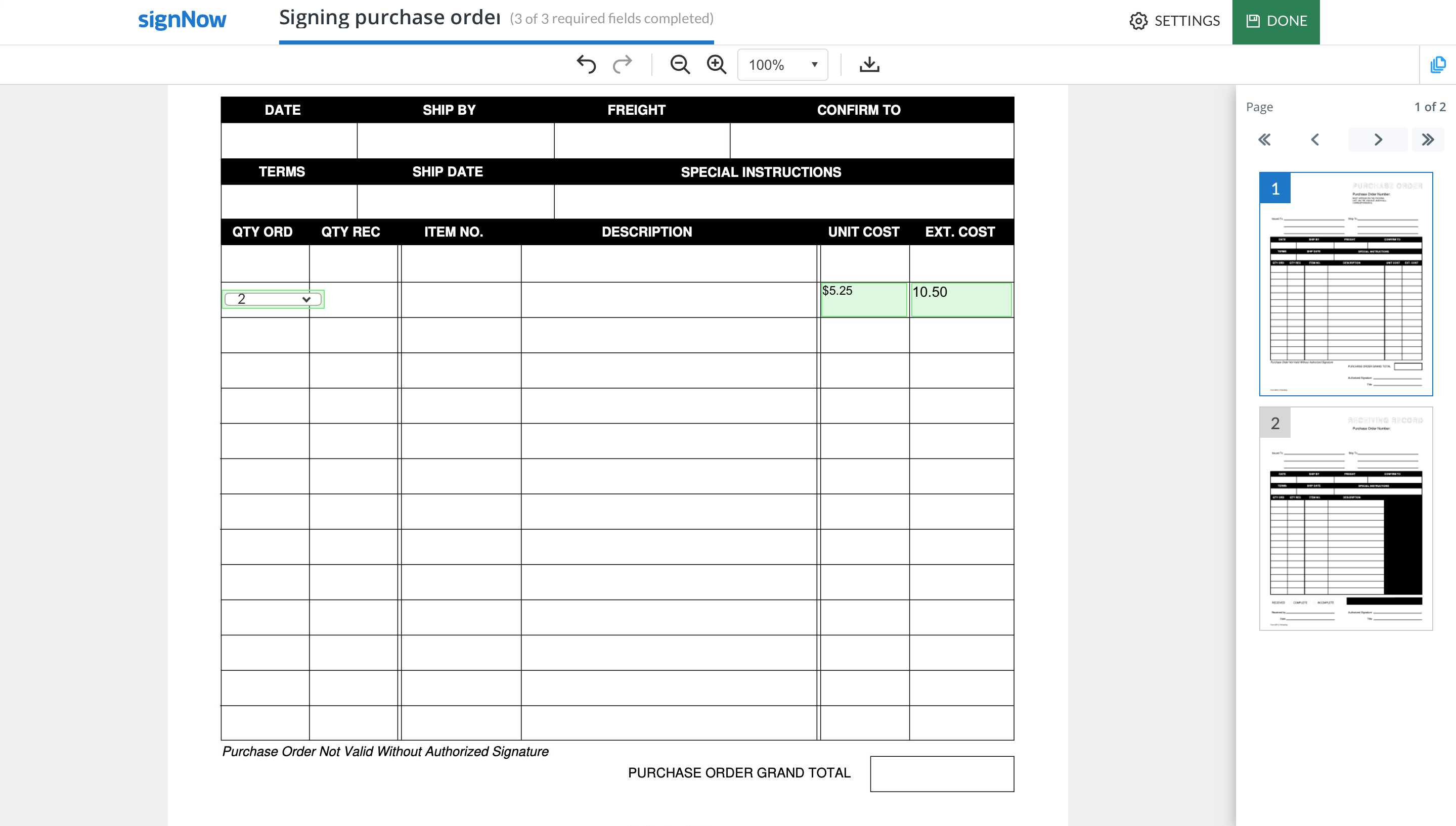
airSlate SignNow te permite calcular automáticamente valores de campos de texto y desplegables basados en fórmulas preestablecidas. Una vez que un usuario complete los campos de entrada, el valor calculado llenará automáticamente el campo de resultado.
Agregar un campo de texto de entrada
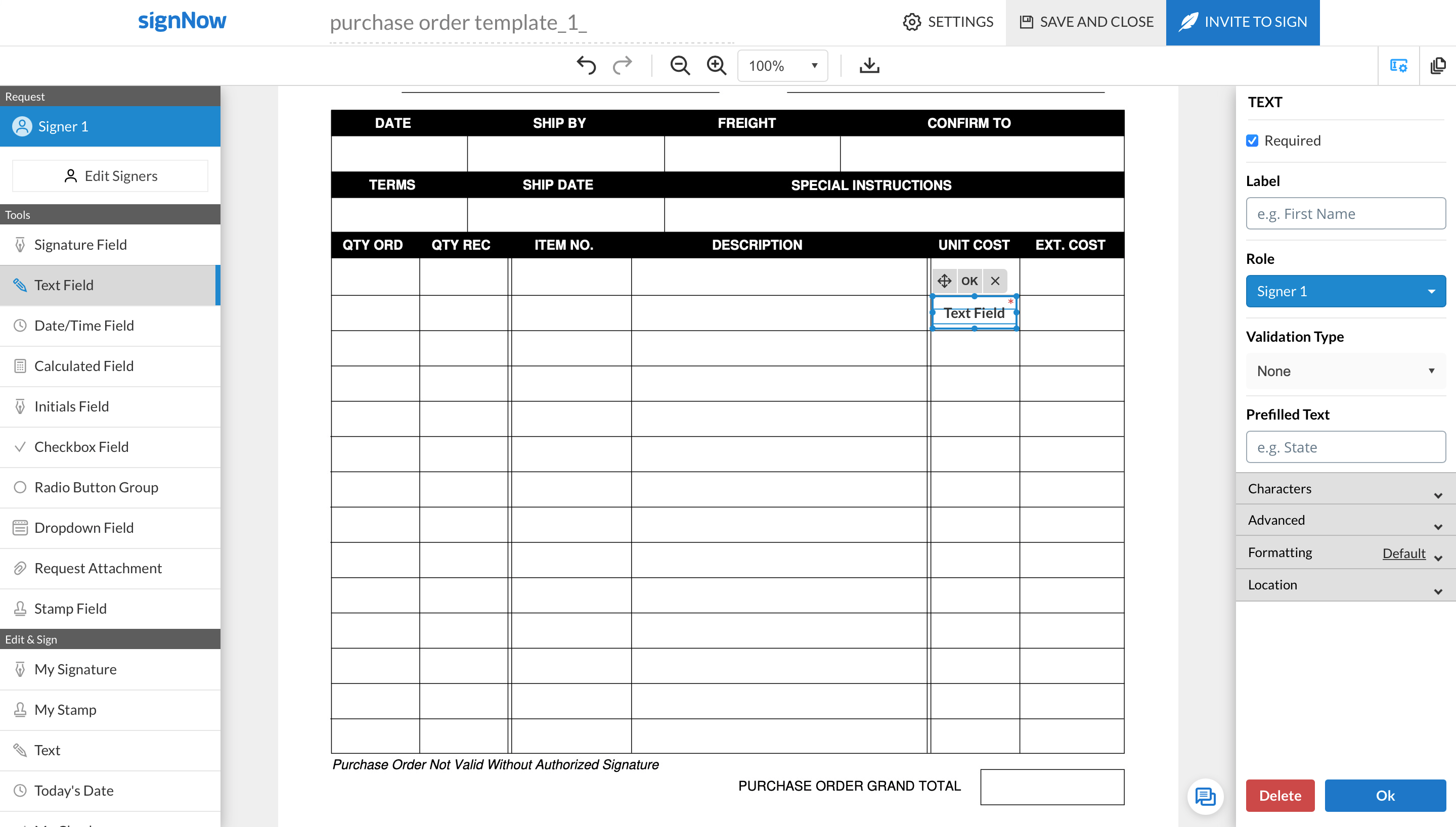
Abre tu documento en el editor de airSlate SignNow y añade campos de texto rellenables donde sea necesario.
Para insertar un campo de texto, selecciona Campo de Texto en la barra de herramientas a la izquierda y haz clic en cualquier lugar del documento para colocar el campo. Luego, ajusta su tamaño y posición y haz clic en OK.
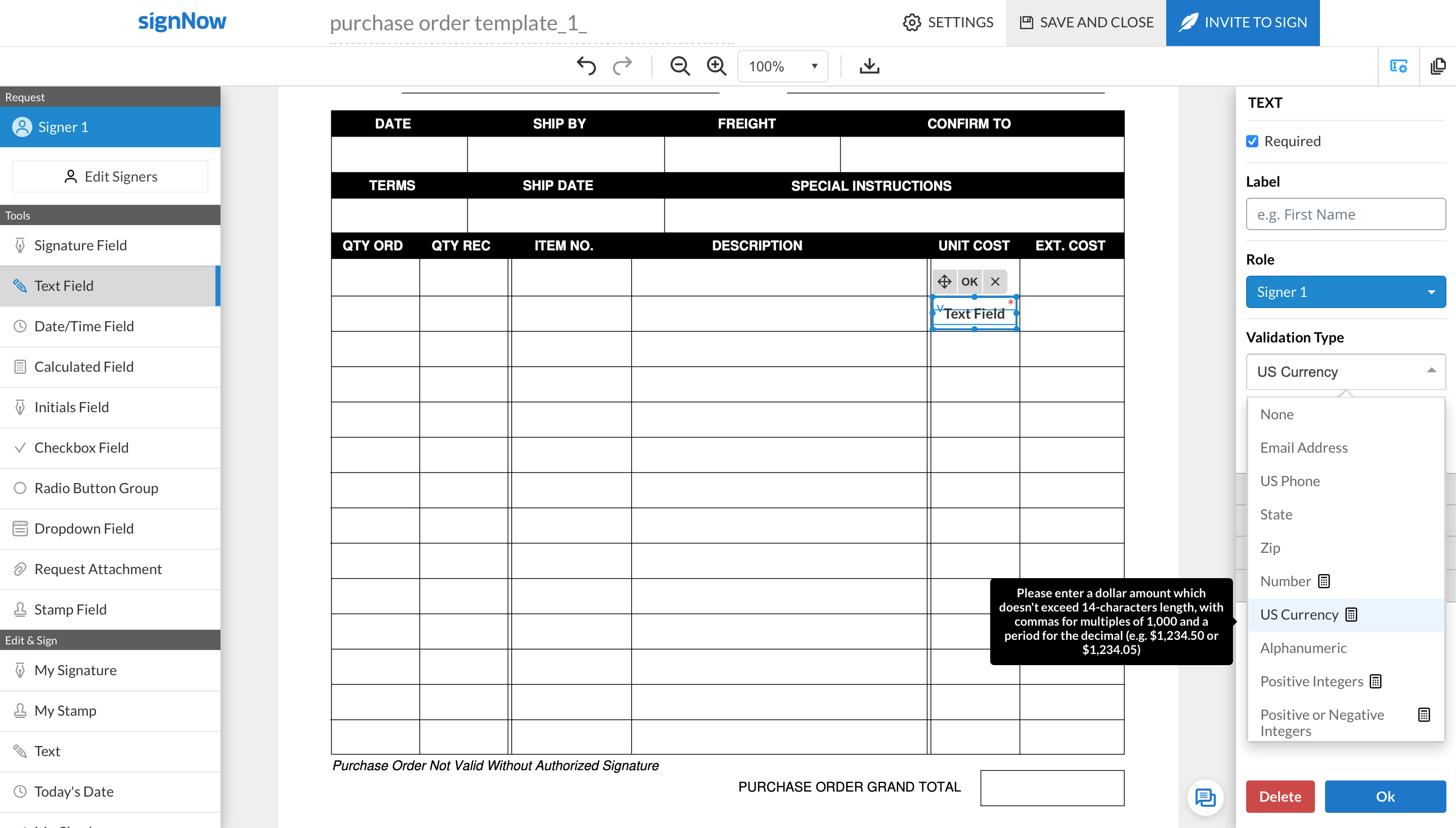
En el desplegable Tipo de Validación, selecciona el formato de datos aplicable a tu campo. Ten en cuenta que solo puedes elegir validadores de formato marcados con un icono de calculadora para tus campos de entrada.
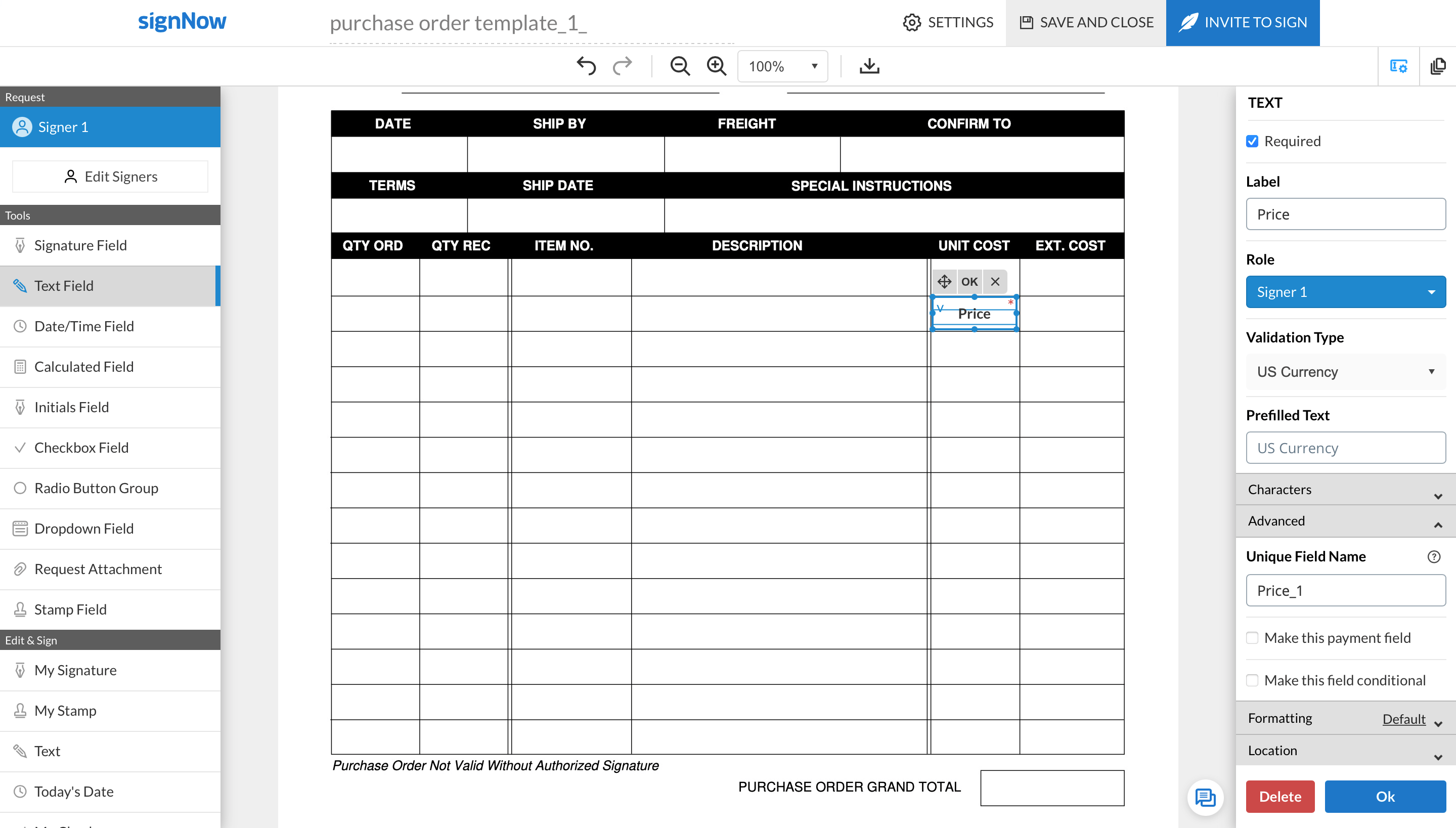
En el cuadro Etiqueta, ingresa el nombre de tu campo de texto. Luego, abre el desplegable Avanzado y escribe un Nombre de Campo Único (este es un ID de campo único que se usará en la fórmula).
Agregar un campo desplegable de entrada
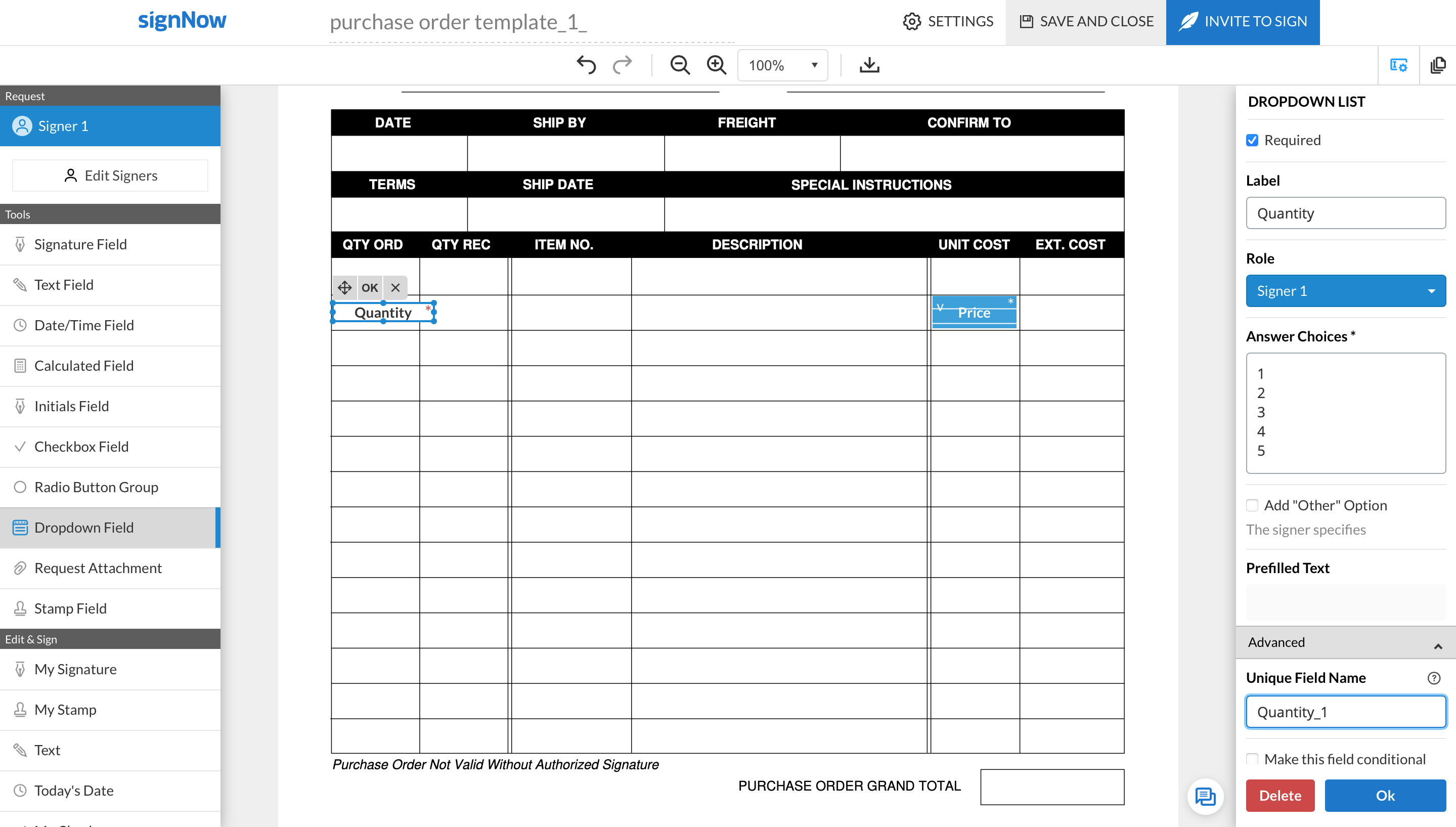
Personaliza tus campos desplegables de la misma manera. Añade los valores que deseas que aparezcan en tu desplegable en el cuadro Opciones de Respuesta (para saltar a la siguiente línea, presiona ENTER). Ten en cuenta que solo puedes agregar números si estás usando un desplegable como campo de entrada.
Además, asegúrate de que la casilla Agregar opción "Otro" permanezca sin marcar.
Ingresa el nombre del desplegable en el campo Etiqueta. Finalmente, ve a Avanzado > Nombre de Campo Único y asigna un ID único a tu desplegable.
Agregar un campo calculado
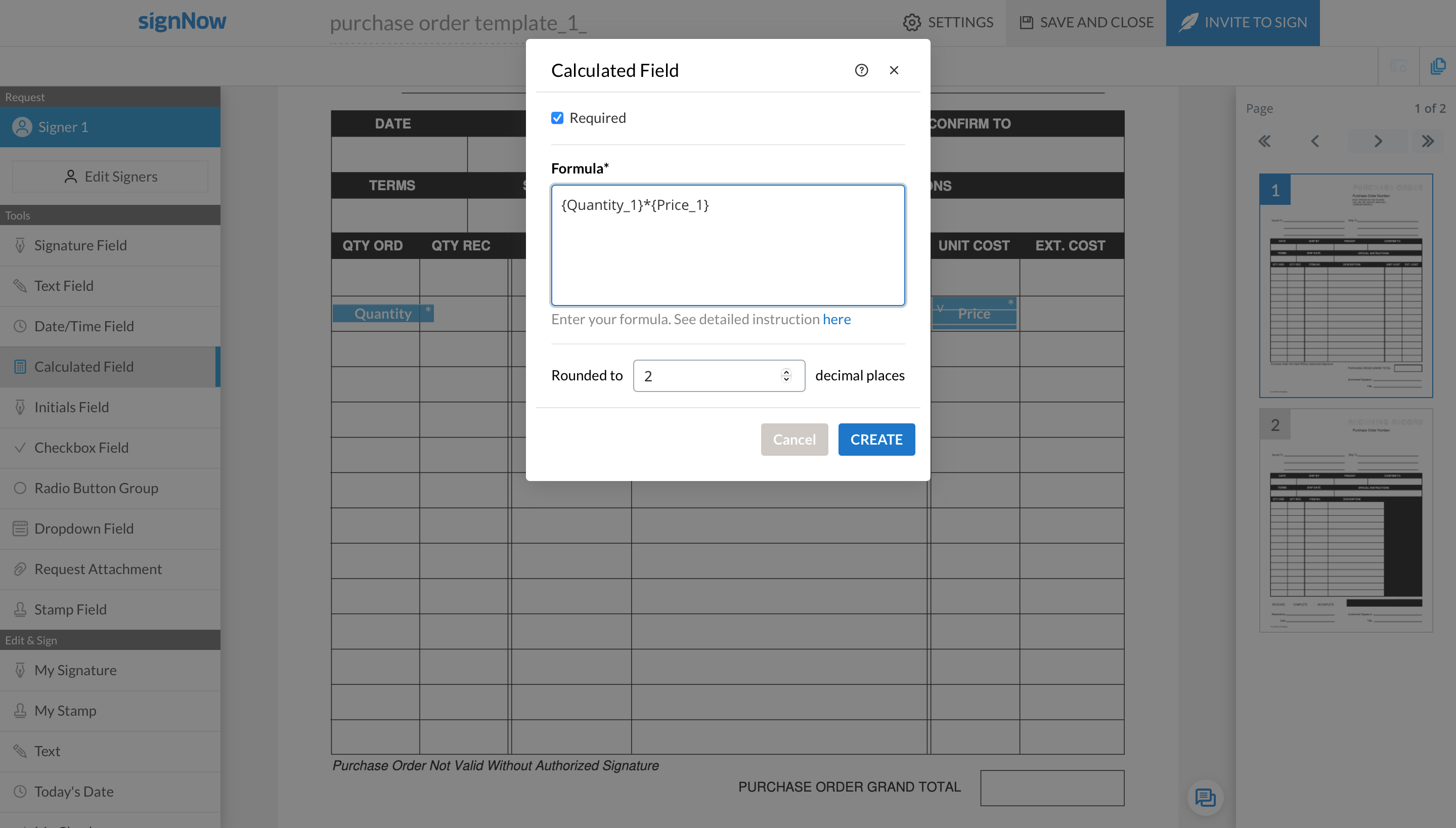
Selecciona Campo Calculado en la barra lateral izquierda y colócalo en cualquier parte de tu documento. Luego, ingresa tu fórmula en la ventana emergente. Comienza a escribir llaves rizadas para ver la lista de nombres de campo únicos sugeridos (IDs que has dado previamente a tus campos de entrada). Selecciona aquellos que necesitan ser calculados e inserta uno de los siguientes símbolos entre ellos:
(+) para sumar
(-) para restar
(*) para multiplicar
(/) para dividir
También puedes redondear el valor de un campo calculado a un número específico de decimales.
Una vez que hayas creado tu fórmula, haz clic en el botón Crear.
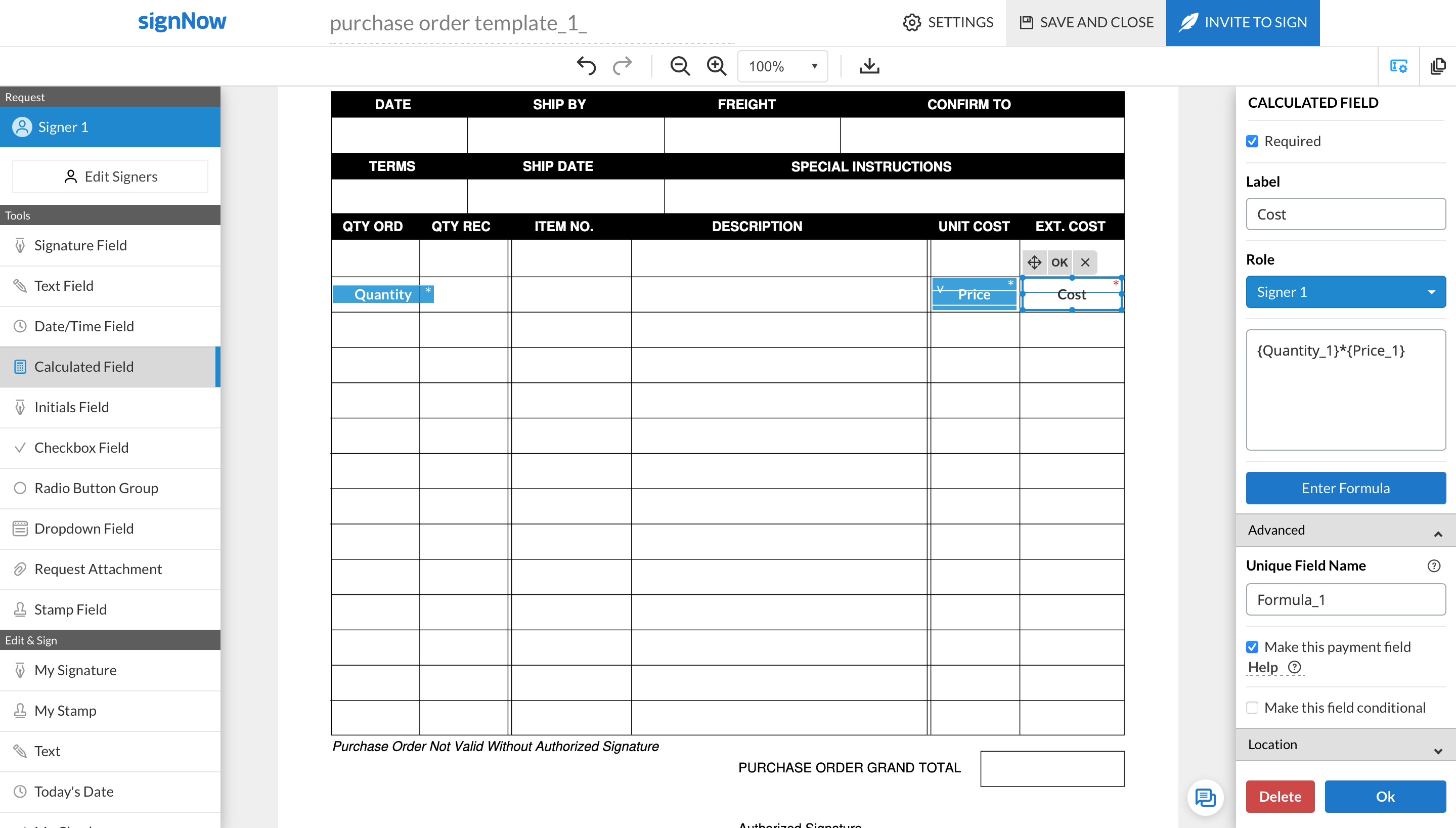
También puedes adjuntar una solicitud de pago a tu campo calculado. Para ello, abre el desplegable Avanzado, marca la casilla Hacer de este campo de pago y luego haz clic en Ok. Tu campo calculado ahora aparecerá en el formulario de solicitud de pago.
Una vez que termines de personalizar tu formulario, haz clic en Guardar y Cerrar.
Tu campo calculado ahora está configurado y mostrará valores calculados basados en tu fórmula y los valores añadidos a los campos de entrada.
Ten en cuenta que la función de Campos Calculados está disponible solo para suscriptores de Enterprise.
Utilizamos cookies para mejorar la seguridad, personalizar la experiencia del usuario, potenciar nuestras actividades de marketing (incluida la colaboración con socios terceros o 3rd\u00a0party) y para otros usos comerciales. Haz clic\u00a0aquí\u00a0para leer nuestra Política\u00a0de cookies. Al hacer clic en “Aceptar“ aceptas el uso de cookies. ... Leer másLeer menos