Explore Your Digital Signature – Questions Answered: compare electronic signature and digital signature





We spread the word about digital transformation
signNow empowers users across every industry to embrace seamless and error-free eSignature workflows for better business outcomes.






Free 7-day trial. Choose the plan you need and try it risk-free.

Honest pricing for full-featured plans. airSlate SignNow offers subscription plans with no overages or hidden fees at renewal.

Enterprise-grade security. airSlate SignNow helps you comply with global security standards.
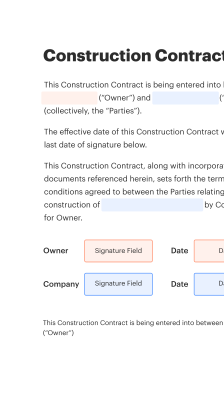

Place electronic signatures and send records in moments instead of hours. Our eSignatures have the identical legal power as wet-ink ones.

Take advantage of the signature tips function and improve your files without any concerns about the safety of your information.

Modify existing forms and save changes, and airSlate SignNow will immediately inform your entire crew that there are updated templates.

Place fillable areas, create or collect electronic signatures, get supplementary documents and payments, and discover different ways to boost your workflows.

Use airSlate SignNow API, the easiest way to create and collect eSignatures. Do so within your CRM systems, on your website, or even in specific apps.

Generate a public link for your template and collect signatures while not having to directly send your document to specific consumer email addresses.
Quick-start guide on how to compare electronic signature and digital signature
Every company needs signatures, and every company wants to enhance the process of gathering them. Get professional document management with airSlate SignNow. You can compare electronic signature and digital signature, build fillable web templates, configure eSignature invites, send signing hyperlinks, work together in teams, and a lot more. Learn how to simplify the collection of signatures electronically.
Follow the steps listed below to compare electronic signature and digital signature in minutes:
- Open your web browser and access signnow.com.
- Sign up for a free trial run or log in using your electronic mail or Google/Facebook credentials.
- Select User Avatar -> My Account at the top-right corner of the webpage.
- Personalize your User Profile by adding personal data and adjusting configurations.
- Design and manage your Default Signature(s).
- Get back to the dashboard webpage.
- Hover over the Upload and Create button and select the appropriate option.
- Click on the Prepare and Send key next to the document's title.
- Type the email address and name of all signers in the pop-up screen that opens.
- Make use of the Start adding fields menu to begin to edit file and self sign them.
- Click on SAVE AND INVITE when completed.
- Continue to configure your eSignature workflow using extra features.
It couldn't get any simpler to compare electronic signature and digital signature than that. Also, you can install the free airSlate SignNow app to the mobile device and gain access to your profile from any location you might be without being tied to your desktop computer or workplace. Go paperless and begin signing forms online.
How it works


Electronic Signature Legality
What is the difference between electronic signature and digital signature?
An electronic signature is a broad term that encompasses any electronic indication of intent to sign a document. This can include scanned signatures, typed names, or clicks on a button to approve a document. In contrast, a digital signature is a specific type of electronic signature that uses cryptographic techniques to provide a higher level of security and authenticity. Digital signatures ensure that the signer is who they claim to be and that the document has not been altered after signing.
How to use electronic and digital signatures
Using electronic and digital signatures involves a straightforward process. With airSlate SignNow, users can easily upload documents, fill them out, and sign them electronically. To use an electronic signature, you can simply type your name or draw your signature using a touchpad or mouse. For a digital signature, the process includes generating a unique cryptographic key that is linked to your identity, ensuring a secure signing experience. Both methods allow for quick and efficient document management, making it easier to send and receive signed documents.
Legal use of electronic and digital signatures
In the United States, electronic signatures are legally recognized under the Electronic Signatures in Global and National Commerce (ESIGN) Act and the Uniform Electronic Transactions Act (UETA). These laws establish that electronic signatures hold the same legal weight as traditional handwritten signatures, provided that both parties agree to use electronic methods. Digital signatures, due to their enhanced security features, are often preferred for sensitive transactions such as legal agreements and financial documents, ensuring compliance with various regulatory standards.
Steps to complete a document with electronic or digital signatures
Completing a document using electronic or digital signatures with airSlate SignNow is simple. First, upload your document to the platform. Next, use the fill and sign features to complete any necessary fields. Once the document is ready, you can choose to sign it electronically by typing your name or using a digital signature for added security. After signing, you can send the document for signature to other parties, who can also complete the process online. This seamless workflow enhances efficiency and reduces processing time.
Security & compliance guidelines
When using electronic and digital signatures, it is crucial to adhere to security and compliance guidelines. Ensure that the platform you choose, like airSlate SignNow, employs strong encryption methods to protect sensitive information. Digital signatures should include a secure hash function to verify the integrity of the document. Additionally, maintaining a clear audit trail of all signing activities is essential for compliance purposes. This documentation can serve as proof of consent and authenticity in case of disputes.
Examples of using electronic and digital signatures
Electronic and digital signatures are widely used across various industries. For instance, in real estate, agents can send contracts for signature electronically, speeding up the closing process. In human resources, onboarding documents can be signed digitally, allowing for a more efficient hiring process. Financial institutions often use digital signatures for loan agreements, ensuring security and compliance. These examples illustrate how both signature types streamline workflows and enhance productivity in different sectors.
 Best ROI. Our customers achieve an average 7x ROI within the first six months.
 Scales with your use cases. From SMBs to mid-market, airSlate SignNow delivers results for businesses of all sizes.
 Intuitive UI and API. Sign and send documents from your apps in minutes.
FAQs
Here is a list of the most common customer questions. If you can't find an answer to your question, please don't hesitate to reach out to us.
What is the difference between an electronic signature and a digital signature?
When you compare electronic signature and digital signature, it's important to note that electronic signatures are simply a digital representation of a person's intent to sign, while digital signatures use cryptographic techniques to provide a higher level of security and authenticity.
How do I choose between electronic and digital signatures for my business?
To effectively compare electronic signature and digital signature for your business, consider the level of security you need. If your documents require strong authentication and integrity, a digital signature may be more appropriate, whereas electronic signatures are suitable for less sensitive transactions.
Are electronic signatures legally binding?
Yes, electronic signatures are legally binding in many jurisdictions, just like traditional signatures. When you compare electronic signature and digital signature, both are recognized under laws such as the ESIGN Act and UETA in the United States, ensuring their validity.
What features should I look for in an electronic signature solution?
When comparing electronic signature and digital signature solutions, look for features such as ease of use, integration capabilities, security measures, and compliance with legal standards. A robust platform like airSlate SignNow offers a user-friendly interface and comprehensive features to meet diverse business needs.
Can I integrate airSlate SignNow with other software?
Yes, airSlate SignNow offers seamless integrations with various software applications, enhancing your workflow. When you compare electronic signature and digital signature solutions, consider how well they integrate with your existing tools to streamline your processes.
What are the pricing options for airSlate SignNow?
airSlate SignNow provides flexible pricing plans to accommodate businesses of all sizes. When you compare electronic signature and digital signature pricing, you'll find that airSlate SignNow offers a cost-effective solution without compromising on features or security.
How secure are electronic signatures compared to digital signatures?
While both electronic signatures and digital signatures offer security, digital signatures provide enhanced protection through encryption and authentication methods. When you compare electronic signature and digital signature security, digital signatures are often preferred for sensitive transactions.




airSlate SignNow is committed to protecting your sensitive information by complying with global industry-specific.

Ways to compare electronic signature and digital signature with airSlate SignNow
airSlate SignNow makes it simple for everyone to fill out and sign the documents, collect eSignatures, generate templates, and many more from almost anywhere and on any device!


How to fill out and sign paperwork online
airSlate SignNow enables you to effortlessly compare electronic signature and digital signature and manage your paperwork online with 24/7-access your files. The tool features a straightforward-to-use interface, so it will take you only a couple of clicks to accomplish your work.
Follow the actions below to compare electronic signature and digital signature:
- Log in to your airSlate SignNow account or create it and start a free trial.
- Click the Upload or Create key to add a file that requires eSigning.
- Open the document and fill it out with the editing tools available.
- Drop the My Signature field where it should appear and choose how you wish to sign.
- Enter your name, draw it, or insert a picture of your signature.
- Click Save and Close to complete editing.
It’s easy to compare electronic signature and digital signature with airSlate SignNow. When you finish modifying your documents, they will become available for you in your account whenever you need them.
Discover powerful features with airSlate SignNow
To verify a digital signature, the verifier must have access to the signer's public key and have assurance that it corresponds to the signer's private key. In ...
Feb 12, 2022 — A digital signature is an acceptable substitute for a wet signature on any intra-organization document or correspondence.
Digital Signature. Electronic Signature ; (1) Used to secure a document, (1) Mainly used to verify a document.
