



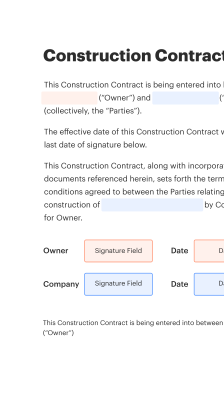
GST Bill Book Format for Efficient Record Keeping
What gst bill book format means and why it matters
Why adopt a formal gst bill book format
A formal gst bill book format reduces errors, simplifies VAT/GST reconciliation, and creates a predictable document trail for audits and returns, improving operational consistency and reporting accuracy.
Common challenges when implementing a gst bill book format
- Incorrect GSTIN entry or mismatched vendor details can lead to input tax credit rejection during reconciliation and filing.
- Manual invoice numbering increases the risk of duplicates or gaps, complicating audits and compliance reviews.
- Inconsistent tax rate application across items causes calculation errors and requires time-consuming corrections before filing.
- Poor storage or version control for bill books makes retrieval slow and raises exposure during tax assessments or disputes.
Representative user profiles for gst bill book format
Small Business Owner
Runs daily sales, issues invoices to customers, and needs a gst bill book format to maintain sequential records, calculate GST correctly, and produce reports for monthly returns and bookkeeping.
Accountant
Prepares client returns, reconciles invoices with input tax credit claims, and uses standardized gst bill book format templates to speed validation and reduce manual adjustments before filing.
Which teams and businesses typically rely on gst bill book format
Accounting, sales, and small-to-medium business operations teams commonly use a gst bill book format to standardize invoicing and tax records.
- Small retailers and e-commerce merchants managing frequent B2C and B2B invoices.
- Wholesale distributors tracking inter-state supplies and input tax credits.
- Accounting firms preparing returns and reconciling client ledgers for compliance.
Consistent use across those groups reduces reconciliation work and simplifies tax reporting during monthly or quarterly return cycles.
Choose a better solution
Essential features for a practical gst bill book format
Custom Templates
Template support enables consistent GST fields such as GSTINs, invoice sequence, HSN/SAC codes, taxable values, and tax rate breakdown. Custom Templates ensure each invoice includes required elements for reconciliations and can be adapted for B2B or B2C needs while keeping layout consistent for printing and digital exports.
Automatic Calculations
Built-in tax engine calculates CGST, SGST, IGST or integrated tax splits automatically based on item location and tax rates. Automatic Calculations reduce manual errors, speed invoice creation, and simplify end-of-period reconciliations by producing reliable line totals and grand totals for filing.
Sequential Numbering
Configurable numbering rules enforce sequential invoice IDs, prefix patterns, and branch-level series to prevent duplicates and maintain audit-ready order. Sequential Numbering supports bulk issuance while preserving traceability required for tax audits and reconciliations.
Export & Integration
Export options include CSV, Excel, or direct sync to accounting software allowing easy import into GST return preparation tools. Export & Integration reduces double entry and streamlines monthly or quarterly return workflows.
How to create and use gst bill book format online
-
Template creation: Design fields and layout
-
Data entry: Fill or import invoice data
-
Validation: Auto-validate GSTIN and totals
-
Archive: Store and retrieve entries
Quick steps to create a gst bill book format
-
01Define fields: GSTIN, invoice number, HSN, tax rates
-
02Set numbering: Sequential invoice ID rules
-
03Tax calculations: Auto-calc line and totals
-
04Export options: CSV and accounting export
Why choose airSlate SignNow
-
Free 7-day trial. Choose the plan you need and try it risk-free.
-
Honest pricing for full-featured plans. airSlate SignNow offers subscription plans with no overages or hidden fees at renewal.
-
Enterprise-grade security. airSlate SignNow helps you comply with global security standards.
Recommended workflow settings for gst bill book format automation
| Setting Name | Configuration |
|---|---|
| Invoice Numbering Pattern | Branch-YY-0001 |
| Reminder Frequency | 48 hours |
| Auto-archive Delay | 30 days |
| Export Schedule | Monthly |
| Validation Rules | GSTIN and totals |
Device and platform considerations for gst bill book format access
Ensure compatibility across devices and browsers so teams can create and review gst bill book format entries wherever they work.
- Supported browsers: Chrome, Edge, Safari
- Mobile platforms: iOS and Android
- Desktop apps: Windows and macOS
Confirm that chosen tools support modern TLS encryption, responsive templates for mobile viewing, and export options that work with your accounting software; this reduces friction and preserves data integrity when creating gst bill book format documents across platforms.
Real-world examples using a gst bill book format
Retail chain modernization
A multi-outlet retailer standardized its gst bill book format across stores to capture GSTINs, HSN codes, and line-item taxes consistently
- Automated sequential numbering and centralized templates
- Reduced reconciliation time by consolidating invoices into a single ledger
Leading to faster monthly filings and fewer input tax credit disputes requiring manual adjustments.
Wholesale distributor compliance
A regional distributor adopted a gst bill book format template for B2B supply invoices with mandatory GST fields
- Template enforced tax rate selection and consolidated totals
- Enabled batch export to accounting software for return filing
Resulting in cleaner audit trails and reduced corrections during tax assessments.
Best practices for accurate gst bill book format management
FAQs About gst bill book format
- How do I ensure my gst bill book format meets tax authority requirements?
Include mandatory fields such as supplier and recipient GSTIN, invoice number, invoice date, item descriptions, HSN/SAC codes, taxable value, applicable tax rates, and clear tax amount breakdown. Validate entries at creation and retain digital copies for the legally required retention period.
- What should I do if invoice numbers are duplicated?
Stop using the affected sequence, correct the numbering in the template, and issue amended invoices if required. Update internal numbering rules to use branch prefixes or automated sequential counters to prevent recurrence.
- Can I export a gst bill book format to accounting software?
Yes. Export formats commonly supported include CSV and Excel, and many eSignature or document platforms provide direct connectors or APIs to push invoice records into accounting systems for reconciliation and GST return preparation.
- How long should gst bill book format records be retained?
Retention often follows local tax authority guidance. Maintain copies for the minimum statutory period specified by law to support audits or assessments, and align retention with internal policies for records governance.
- Is electronic gst bill book format evidence acceptable in audits?
Electronic records with validated fields, secure storage, and tamper-evident audit logs are commonly accepted. Ensure your solution preserves timestamps, immutable logs, and provides reliable export for auditors.
- What common integration issues occur when automating gst bill book format?
Typical issues include mismatched field mappings, character encoding differences in exports, and missing validation rules. Test end-to-end exports and reconcile a sample batch before switching to automated production workflows.
Feature comparison: gst bill book format support across eSignature providers
| Feature Comparison Matrix | signNow (Recommended) | DocuSign | Adobe Sign |
|---|---|---|---|
| ESIGN / UETA Compliance | |||
| Audit trail availability | |||
| API for integrations | |||
| Bulk Send capability |
Get legally-binding signatures now!
Compliance risks tied to improper gst bill book format
Pricing and plan comparison for gst bill book format workflows
| Plan and Feature Comparison | signNow (Recommended) | DocuSign | Adobe Sign | HelloSign | PandaDoc |
|---|---|---|---|---|---|
| Entry-level plan name | Business | Standard | Individual | Essentials | Free |
| Typical starting price (monthly) | $8 per user | $10 per user | $9.99 per user | $15 per user | $19 per user |
| API access included | Yes with plan | Add-on | Included | Add-on | Included with Pro |
| Bulk send support | Yes | Yes | Yes | Yes | Yes |
| Document retention options | Configurable | Configurable | Configurable | Configurable | Configurable |
Understanding the GST Bill Book Format
The GST bill book format is essential for businesses to maintain compliance with tax regulations. This format typically includes details such as the name of the supplier, the GST number, invoice number, date of supply, and a description of goods or services provided. Each entry must be clear and organized to facilitate easy tracking and reporting.
Key Components of a GST Bill Book
A well-structured GST bill book should include the following components:
- Supplier Information: Name, address, and GST registration number.
- Invoice Details: Unique invoice number and date of issue.
- Description of Goods/Services: Clear listing of items provided.
- Tax Details: Applicable GST rates and total tax amount.
- Total Amount: Total cost including taxes.
Creating a GST Bill Book Format Digitally
Using digital tools can simplify the creation of a GST bill book format. Users can prepare and send documents quickly by leveraging templates that include all necessary fields. This ensures consistency and accuracy in every entry. With airSlate SignNow, users can easily create, edit, and customize their GST bill formats to meet specific business needs.
Benefits of Using a Digital GST Bill Book Format
Transitioning to a digital GST bill book format offers several advantages:
- Efficiency: Quickly fill out and send invoices without the hassle of paper.
- Accessibility: Access documents from anywhere, ensuring you can manage your records on the go.
- Security: Protect sensitive information with secure digital signatures and storage.
- Organization: Easily track and manage invoices, reducing the risk of errors.
Tips for Maintaining Your GST Bill Book
To ensure your GST bill book remains compliant and efficient, consider the following tips:
- Regular Updates: Keep your records updated with each transaction.
- Backup Data: Regularly back up your digital documents to prevent data loss.
- Review Entries: Periodically review entries for accuracy and completeness.
- Stay Informed: Keep up with changes in GST regulations to ensure compliance.
Explore Advanced Features
- Tax Invoice Bill Format for Engineering
- Cash Receipt Template PDF for Logistics
- Electronic Receipt Sample for Procurement
- Electronic Receipt Sample for Management
- Electronic Receipt Sample for Shipping
- Consulting Services Invoice Template for Administration
- Consulting Services Invoice Template Word for Purchasing
- Consulting Services Invoice Template for Export