Proposal Writing Apps for Legal Professionals

airSlate SignNow simplifies document management, offering an intuitive platform for seamless eSigning and secure collaboration.

Award-winning eSignature solution

What proposal writing apps for legal do and why they matter

Proposal writing apps for legal streamline creation, review, and execution of proposals, engagement letters, and transactional documents. They combine document templates, role-based workflows, and electronic signature capabilities so legal teams can reduce repetitive drafting, maintain version control, and apply consistent clauses. For U.S. use, these solutions typically support ESIGN and UETA compliance, audit trails, and integration with common document stores and CRMs. When configured for law practices, they can enforce approval gates, track signer identity, and retain records to meet firm policies and client service-level expectations.

Practical advantages of using proposal writing apps for legal

These apps speed proposal turnaround, reduce manual errors, and centralize document controls while supporting legally admissible electronic signatures and audit logs relevant to U.S. compliance frameworks.

Practical advantages of using proposal writing apps for legal

Common obstacles when adopting proposal writing apps for legal

  • Integrating legacy matter-management systems can require custom connectors and IT coordination across vendor APIs and security policies.
  • Ensuring signer identity for high-value engagements may need multi-factor authentication or certificate-based methods beyond basic email verification.
  • Creating legally robust templates demands careful clause standardization and periodic review by senior counsel to avoid inconsistent obligations.
  • Managing document retention and eDiscovery readiness can be complex without clear policies and automated archival rules across platforms.

Representative user profiles

Small Firm Partner

A partner in a small or mid-size law firm who needs rapid, consistent engagement letters and fee proposals; relies on templates and automated approval routing to reduce administrative overhead while preserving compliance with firm policies and client requirements.

Corporate Counsel

An in-house lawyer managing vendor and procurement proposals who requires centralized templates, integrations with procurement systems, and secure audit trails to demonstrate contract integrity and maintain regulatory records.

Which legal roles commonly use proposal writing apps for legal

Legal teams, contract administrators, and business development professionals use these apps to standardize proposals and speed approvals.

  • Partners and billing managers who approve engagement terms and pricing before client presentation.
  • In-house counsel and contracts teams managing vendor agreements and service proposals with compliance checks.
  • Paralegals and operations staff preparing templated proposals and tracking execution status.

Adoption often starts with a few high-volume users and expands as templates, roles, and integrations prove operational value.

Core capabilities of modern proposal writing apps for legal

A comprehensive set of features supports secure signing, automation, and integration to align proposal work with legal standards and business processes.

eSignature

Legally recognized electronic signatures with audit logs and signer authentication options that meet ESIGN and UETA requirements for enforceability in the United States.


Templates

Reusable templates with conditional logic and rich-field types to ensure consistent language, reduce drafting time, and allow administrators to lock or expose specific sections for editors.

Workflow Automation

Automated routing, approval gates, reminders, and escalation rules so proposals move through review and signature stages with minimal manual oversight.

Conditional Fields

Dynamic fields and document sections that appear based on prior inputs, helping to tailor proposals to engagement type without separate template clones.

Bulk Send

Mass distribution tools that send identical proposals to many recipients while tracking individual signature status and creating separate audit records for each transaction.

API & Integrations

APIs and prebuilt connectors that enable integration with case management, CRM, and document storage systems for automated proposal generation and archival.

be ready to get more

Choose a better solution

Integrations and template features that matter

Integrations with document editors, CRMs, and cloud drives plus strong template controls help legal teams maintain accuracy and reduce repetitive work.

Google Docs Integration

Bi-directional integration enables drafting in Google Docs and then converting a document to a template with mapped fields; this preserves formatting and simplifies collaborative editing while ensuring the final proposal is ready for signature and tracking.

CRM Sync

Native CRM connectors synchronize contact and matter data into proposals, auto-populating fields and reducing manual entry; this minimizes data mismatch and keeps client records aligned across sales and legal systems.

Cloud Storage

Direct links to Dropbox or Google Drive allow signed documents to be archived automatically, maintaining a single source of truth and simplifying backup and retention workflows across platforms.

Template Library

Centralized template management enforces clause consistency, enables versioning and review workflows, and allows administrators to restrict editable sections to minimize drafting errors and compliance risk.
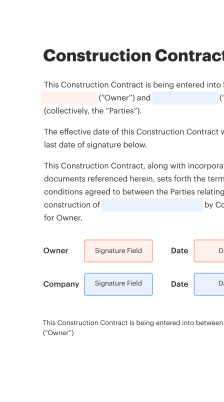
How online proposal drafting and signing typically works

Most systems let you upload or build a proposal, assign roles, collect signatures, and store signed copies with a compliant audit trail.

  • Compose: Use a template or upload a document.
  • Prepare: Add fields, conditional logic, and signers.
  • Send: Deliver via email or secure link.
  • Record: Capture signed PDF and audit log.
Collect signatures
24x
faster
Reduce costs by
$30
per document
Save up to
40h
per employee / month

Quick step-by-step: Setting up proposal templates and workflows

Follow these core setup steps to create consistent proposal flows and secure signature processes tailored to legal work.

  • 01
    Define Templates: Map common clauses into reusable templates.
  • 02
    Set Roles: Assign approvers, reviewers, and signers.
  • 03
    Configure Workflow: Specify signing order and notifications.
  • 04
    Test and Publish: Run pilot sends and adjust settings.

Managing audit trails and signed records

Follow these steps to ensure each proposal transaction has a complete, verifiable audit trail for compliance and evidentiary purposes.

01

Record Events:

Capture signer actions and timestamps.
02

Store PDFs:

Archive final signed documents.
03

Log IPs:

Record signer IP addresses.
04

Preserve Metadata:

Keep hash and certificate data.
05

Export Reports:

Generate compliance-ready logs.
06

Retention Policy:

Apply firm retention rules.
be ready to get more

Why choose airSlate SignNow

  • Free 7-day trial. Choose the plan you need and try it risk-free.
  • Honest pricing for full-featured plans. airSlate SignNow offers subscription plans with no overages or hidden fees at renewal.
  • Enterprise-grade security. airSlate SignNow helps you comply with global security standards.
illustrations signature

Recommended workflow settings for legal proposal processes

Standardize these workflow settings to balance security, speed, and audit readiness for proposal signing and approvals.

Setting Name Configuration
Reminder Frequency 48 hours
Signing Order Sequential signing
Approval Gate Two approvers
Document Retention Period Seven years
Audit Log Detail Full event history

Supported platforms and compatibility notes

Confirm platform compatibility and minimum browser or app requirements before rolling out proposal writing apps for legal.

  • Desktop Browsers: Chrome, Edge, Safari
  • Mobile Apps: iOS and Android
  • API Access: RESTful endpoints

Verify single sign-on, mobile app policies, and device management requirements with your IT group to ensure secure access across desktop and mobile environments without compromising firm security controls or data residency expectations.

Security and protection features to look for

Encryption: AES-256 at rest
Transport Security: TLS 1.2+ in transit
Access Controls: Role-based permissions
Authentication: Multi-factor options
Audit Trail: Immutable event logs
Third-party Audits: SOC 2 type II

Practical examples of legal proposal workflows

Two concise case examples illustrate how legal teams use proposal writing apps for legal in real workflows with measurable outcomes.

Law Firm Intake to Engagement

A mid-size firm automated new-client proposals to standardize fee structures and approval chains

  • Template-driven clause selection reduced drafting time per engagement
  • Automated reminders and eSign reduced turnaround by days

Leading to faster revenue recognition and clearer audit trails that support firm billing and compliance obligations.

Corporate Procurement and Vendor Contracts

An in-house legal team used a proposal app to centralize vendor proposals and approval routing across procurement and legal

  • Integrations pulled vendor data automatically into templates
  • Conditional fields enforced risk review for high-value deals

Resulting in fewer manual errors, consistent contract terms, and streamlined record retention for audit readiness.

Best practices for secure and accurate proposal workflows

Follow these operational practices to reduce risk, speed execution, and maintain legal defensibility when using proposal writing apps for legal.

Standardize and Lock Core Clauses
Maintain a controlled template library where core commercial and risk clauses are locked and only authorized users can update language to preserve consistency across all proposals and prevent unauthorized edits.
Enforce Role-Based Approvals
Implement multi-level approval gates for pricing, compliance, and legal sign-off to ensure proposals pass necessary reviews before being sent to clients and to create a clear accountability record.
Configure Authentication by Risk Level
Apply stronger signer authentication (MFA, SMS, or certificate-based) for high-value or sensitive agreements and lower-friction methods for routine engagements to balance security and user experience.
Use Retention and eDiscovery Policies
Define retention schedules tied to matter types and enable exportable audit logs and storage locations to support legal holds, eDiscovery, and regulatory retention obligations without manual retrieval.

FAQs and troubleshooting for proposal writing apps for legal

Answers to typical questions and issues legal teams encounter when implementing proposal writing apps for legal, focused on configuration, compliance, and common errors.

Feature availability: signNow and DocuSign comparison

A concise feature comparison highlights common technical capabilities and availability between signNow and DocuSign for legal proposal workflows.

Criteria signNow (Recommended) DocuSign
ESIGN / UETA Compliance
Bulk Send Capability
Native Salesforce Integration
HIPAA BAA Available
be ready to get more

Get legally-binding signatures now!

Retention and review milestones for proposal documents

Key retention and review dates help maintain compliance and ensure proposals remain accurate over time.

Initial Review Cycle:

90 days after publication

Template Revision Review:

Annually or on law changes

Signed Document Retention:

Seven years by default

Audit Log Export:

Retain with document copy

eDiscovery Hold Review:

Immediate upon litigation notice

Risks and compliance consequences

Invalid Signatures: Enforceability loss
Data Breach: Regulatory fines
Noncompliant Retention: Discovery exposure
Unauthorized Access: Client confidentiality harm
Incorrect Templates: Contractual liability
Poor Audit Trails: Evidentiary gaps

Pricing and plan comparison across leading providers

Compare representative starting plans, common enterprise capabilities, and integration readiness; signNow is shown first as a recommended option for secure, compliant proposal workflows.

Plan signNow (Recommended) DocuSign Adobe Sign HelloSign PandaDoc
Entry Tier Free eSign / Personal Personal Individual Free Free eSign
Starting Price (per user/mo) From $8/user From $10/user From $14.99/user From $15/user From $19/user
API Access Business+ Available Included Business+ Business+
HIPAA Support Yes (BAA) Yes (BAA) Yes (BAA) No Yes (BAA)
Key Integrations Salesforce, Google, Dropbox Salesforce, MS 365 Microsoft, Salesforce Google, Dropbox HubSpot, Salesforce
Enterprise Features SSO, API, Admin controls SSO, Advanced admin SSO, Enterprise admin SSO on higher plans SSO, eSign + docs
walmart logo
exonMobil logo
apple logo
comcast logo
facebook logo
FedEx logo
be ready to get more

Get legally-binding signatures now!