



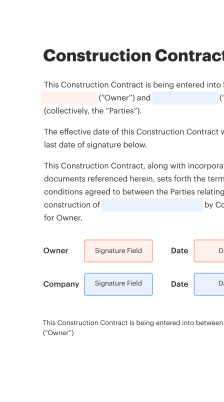
Restaurant Invoice Generator for Mortgage

Streamline your billing process with airSlate SignNow. Generate, send, and eSign invoices effortlessly, saving time and reducing costs.

Award-winning eSignature solution

What the restaurant invoice generator for mortgage does

A restaurant invoice generator for mortgage is a specialized document tool that compiles point-of-sale data, sales summaries, and authenticated invoices tailored for mortgage underwriters and loan processors. It standardizes revenue presentation by creating lender-friendly invoices with consistent line items, tax and tip breakdowns, and formatted payment summaries. The generator often integrates POS systems, adds lender-specific metadata, and supports digital signing and verifiable audit trails so restaurants can provide timely, compliant documentation when applying for mortgages or refinancing commercial property.

Why a tailored invoice generator matters for mortgage applications

A mortgage-focused invoice generator reduces delays by producing lender-ready financial documentation, improving clarity for underwriters and reducing requests for supplemental documents.

Why a tailored invoice generator matters for mortgage applications

Common challenges when using invoices for mortgage review

  • Inconsistent invoice formats from multiple locations create confusion for loan underwriters and increase manual review time.
  • Missing breakdowns of taxable sales, tips, and refunds can cause lenders to question reported revenue and request bank reconciliations.
  • Lack of authenticated signatures or audit trails leads to longer verification cycles and potential rejections of supporting documentation.
  • Manual compilation from POS exports introduces transcription errors and slows the mortgage application timeline for restaurant owners.

Representative user profiles

Small Restaurant Owner

A single-location owner needs lender-ready invoices to support a mortgage or lease refinance. They require simple POS integration, standardized summaries, and a tamper-evident audit trail to satisfy underwriting requirements and shorten approval timelines.

Commercial Lender

A loan officer reviews multiple borrower submissions and values consistent invoice formatting, embedded verification data, and clear breakdowns of revenue categories to streamline credit analysis and document comparisons across applicants.

Who typically uses a mortgage-ready restaurant invoice generator

Lenders, accountants, and restaurant operators rely on standardized invoice outputs to evaluate revenue and verify income during mortgage underwriting.

  • Independent restaurant owners preparing documentation for loan applications or refinancing.
  • Commercial lenders and credit analysts assessing seasonal and average revenue streams.
  • Accountants and brokers compiling verified earnings packages for mortgage submission.

Clear, auditable invoices reduce follow-up questions and support faster underwriting decisions for both borrowers and lenders.

be ready to get more

Choose a better solution

Core features to look for in a mortgage invoice generator

Effective solutions combine document customization, data integration, authentication, and auditability to produce lender-acceptable invoices.

Custom Templates

Template builders let users create lender-specific invoice layouts that include required fields such as gross sales, taxable sales, tips, refunds, and period summaries to ensure consistent presentation across submissions.

POS Integration

Direct connectors or CSV import tools map point-of-sale categories and transactions into invoices, reducing manual re-entry and minimizing reconciliation errors when assembling mortgage documentation.

Lender Fields

Preset and custom lender fields capture metadata like borrower name, legal entity, location IDs, and loan reference numbers so invoices align with underwriting checklist requirements.

Audit Trail

Comprehensive logs record every action, signer identity, timestamps, and IP details to provide verifiable evidence of document authenticity for lenders and auditors.

How the invoice generator processes data

This sequence shows how raw transaction data becomes a lender-ready invoice with traceable authentication steps.

  • Data Ingestion: Import CSV or connect POS API.
  • Field Mapping: Match POS fields to lender line items.
  • Invoice Assembly: Generate formatted invoice PDFs.
  • Verification: Attach signatures and audit metadata.
Collect signatures
24x
faster
Reduce costs by
$30
per document
Save up to
40h
per employee / month

Step-by-step: creating a mortgage-ready restaurant invoice

Follow these core steps to prepare invoices that meet lender expectations and support mortgage underwriting.

  • 01
    1. Create Template: Choose lender fields and layout.
  • 02
    2. Import POS Data: Map sales, taxes, tips, and refunds.
  • 03
    3. Add Verification: Attach supporting bank statements and receipts.
  • 04
    4. Sign & Export: Apply digital signature and export PDF.

Audit trail steps to document invoice authenticity

An audit trail should record every action and create an immutable history to support mortgage due diligence.

01

Record Creation:

Timestamp and creator ID
02

Modification Log:

Track edits and versions
03

Signer Events:

Authentication method recorded
04

IP and Location:

Capture IP address
05

Document Hashing:

Store checksum values
06

Export Snapshot:

PDF/A with embedded metadata
be ready to get more

Why choose airSlate SignNow

  • Free 7-day trial. Choose the plan you need and try it risk-free.
  • Honest pricing for full-featured plans. airSlate SignNow offers subscription plans with no overages or hidden fees at renewal.
  • Enterprise-grade security. airSlate SignNow helps you comply with global security standards.
illustrations signature

Typical workflow settings for mortgage invoice automation

Configure workflow defaults to automate routine invoice generation and lender delivery for mortgage applications.

Setting Name Configuration
Reminder Frequency 48 hours
Signer Authentication SMS code
Template Auto-fill Enabled
Audit Log Retention 7 years
Export Format PDF/A

Device and platform requirements for invoice generation

The generator runs on common desktop and mobile platforms with minimal system requirements.

  • Mobile OS: iOS 13+, Android 8+
  • Desktop Browsers: Chrome, Edge, Safari
  • Minimum Storage: 100 MB free

For best performance, use the latest browser versions, maintain a stable internet connection, and ensure POS exports are current; mobile users should allow app storage and camera permissions for receipt capture.

Security controls and protections

Encryption: AES-256 at rest
Transport Security: TLS 1.2+ in transit
Access Controls: Role-based permissions
Authentication: Multi-factor options
Audit Logging: Immutable transaction logs
Data Segmentation: Tenant isolation available

Industry examples of mortgage invoice generation

Two practical scenarios show how restaurant invoices can be adapted for mortgage underwriting and lender review.

Independent Bistro

A single-location bistro consolidated weekly POS exports into standardized invoices with tax and tip breakdowns for three months

  • Template-based invoice generator mapped POS categories to lender fields
  • The lender required verified sales summaries and an audit trail for consistency

Leading to faster underwriter review and a smoother mortgage approval process.

Regional Quick-Service Chain

A regional quick-service chain aggregated daily sales across ten locations into combined monthly invoices with location subtotals

  • Automated POS integration populated line items and discounts
  • Central finance added signed attestations and metadata for loan officers

Resulting in a consolidated revenue package that reduced due-diligence time and facilitated refinancing negotiations.

Best practices for accurate mortgage invoices

Adopt these practices to improve reliability, reduce lender questions, and support timely mortgage decisions.

Standardize invoice layouts across locations
Use a single template family for all locations to ensure consistent line item order, field names, and totals. Consistency reduces manual reconciliation and speeds lender review by presenting the same structure for month-to-month comparisons.
Include reconciliations and supporting statements
Attach bank deposits or POS batch reports that reconcile invoice totals to bank statements. Providing reconciliations lowers the likelihood of supplemental document requests during underwriting and builds lender confidence in reported revenue.
Use verified signer identities
Require authenticated signers with multi-factor verification or corporate attestations for owner-signed invoices to ensure underwriters can trace approvals to authorized personnel and meet lender verification standards.
Maintain retention and version control
Keep historical invoice versions, change logs, and signed attestations accessible for audits. Proper retention policies demonstrate compliance and simplify responses to lender follow-ups or regulatory inquiries.

FAQs and troubleshooting for mortgage invoice generation

Answers to common questions and solutions for issues encountered when preparing lender-ready restaurant invoices.

Feature availability comparison for mortgage invoice workflows

Quick comparison of capabilities relevant to mortgage invoice generation across leading eSignature platforms, with signNow listed first as a recommended option.

Capability signNow (Recommended) DocuSign Adobe Acrobat Sign
Mortgage templates Customizable Customizable Customizable
Bulk Send
Audit trail detail Full Full Basic
API access REST API REST API REST API
be ready to get more

Get legally-binding signatures now!

Recommended retention schedule for mortgage documents

Maintain documents according to lender and regulatory expectations to ensure availability during underwriting and audits.

Short-term retention (operational):

1 year for working files

Mortgage application records:

7 years recommended

Tax and reconciliation records:

3 to 7 years

Signed attestations and BAA copies:

7 years or per agreement

Archived backups and snapshots:

10 years for enterprise

Risks and regulatory penalties from poor documentation

Loan delays: Extended processing
Application denial: Possible refusal
Compliance violations: Regulatory scrutiny
Audit exposure: Increased risk
Financial loss: Higher costs
Reputation harm: Credibility impact
walmart logo
exonMobil logo
apple logo
comcast logo
facebook logo
FedEx logo
be ready to get more

Get legally-binding signatures now!