Qu'est-ce que set the signing order et pourquoi c'est important
Le terme set the signing order désigne la configuration explicite de la séquence dans laquelle les destinataires d'un document électronique doivent signer. Cette fonctionnalité permet d'imposer des étapes séquentielles ou parallèles, d'appliquer des règles conditionnelles et de garantir que les signatures suivent un ordre logique. Dans les environnements réglementés aux États-Unis, la gestion de l'ordre de signature aide à maintenir une piste d'audit claire et à respecter les processus internes, tout en restant compatible avec des solutions eSignature conformes comme signNow.
Pourquoi définir l'ordre de signature améliore vos processus
Définir l'ordre de signature réduit les erreurs, accélère les cycles d'approbation et clarifie la responsabilité entre signataires, facilitant la conformité et la traçabilité.
Difficultés courantes sans contrôle de l'ordre
Confusion sur la responsabilité quand plusieurs signataires reçoivent simultanément le document.
Retards importants si un signataire critique tarde et bloque le processus global.
Risque de non-conformité lorsque l'ordre requis par une politique interne n'est pas respecté.
Complexité accrue pour les transactions multi-parties avec dépendances documentaires.
Profils utilisateurs typiques pour set the signing order
Responsable juridique
Le responsable juridique définit l'ordre de signature pour garantir que clauses et validations légales précèdent l'exécution finale. Il utilise les règles séquentielles pour certifier conformité, archive la piste d'audit et vérifie l'authentification des signataires selon les exigences ESIGN et UETA.
Gestionnaire RH
Le gestionnaire RH configure des séquences pour l'onboarding : approbation du manager, validation RH, puis signature du nouvel employé. Ceci simplifie la collecte des consentements et centralise la conservation des documents liés au dossier employé.
Qui utilise set the signing order dans les organisations
Services juridiques, RH, ventes et opérations utilisent régulièrement la configuration de l'ordre de signature pour structurer les approbations.
Services juridiques et conformité gèrent l'ordre pour valider conditions contractuelles.
Ressources humaines pour les dossiers d'embauche et consentements séquentiels.
Équipes commerciales pour accords et approbations en cascade.
L'utilisation est fréquente dans les flux nécessitant des étapes obligatoires, ce qui réduit le suivi manuel et renforce la traçabilité.
soyez prêt à en obtenir plus
Choisissez une meilleure solution
Fonctionnalités clés pour maîtriser set the signing order
Fonctions essentielles qui facilitent la configuration, le contrôle et le suivi des ordres de signature dans un flux électronique.
Ordre séquentiel
Permet d'exiger que chaque signataire complète sa partie avant que le document ne soit transmis au suivant, assurant ainsi que les validations critiques se produisent dans l'ordre requis par la politique interne.
Signatures parallèles
Autorise plusieurs signataires à intervenir simultanément lorsque l'ordre strict n'est pas nécessaire, réduisant le temps total de signature tout en conservant la piste d'audit pour chaque action.
Routage conditionnel
Active des règles basées sur les réponses ou champs du document pour diriger automatiquement le flux vers des approbateurs spécifiques selon les critères définis.
Contrôle via API
Offre des endpoints permettant de définir dynamiquement l'ordre des signataires depuis vos systèmes internes, intégrant la logique métier et automatisant les envois.
Fonctionnement général de set the signing order
Comprendre le flux aide à configurer correctement les étapes et règles de routage.
Téléversement: Importer le document source.
Attribution: Assigner rôles et champs.
Routage: Appliquer séquence ou parallélisme.
Suivi: Consulter statut et audit.
Collectez les signatures
24x
plus rapidement
Réduisez les coûts de
$30
par document
Économisez jusqu'à
40h
par employé / mois
Procédure rapide pour configurer set the signing order
Suivez ces étapes simples pour imposer un ordre de signature clair et contrôlé.
01
Préparer document: Téléversez et mettez en forme.
02
Ajouter signataires: Saisissez noms et rôles.
03
Définir ordre: Ordre séquentiel ou parallèle.
04
Envoyer: Lancer le routage et surveiller.
soyez prêt à en obtenir plus
Pourquoi choisir airSlate SignNow
Essai gratuit de 7 jours. Choisissez le forfait dont vous avez besoin et essayez-le sans risque.
Une tarification transparente pour des forfaits complets. airSlate SignNow propose des abonnements sans dépassements ni frais cachés au renouvellement.
Sécurité de niveau entreprise. airSlate SignNow vous aide à vous conformer aux normes de sécurité mondiales.
Paramètres recommandés pour automatiser l'ordre de signature
Configuration typique pour la plupart des workflows séquentiels et mixtes.
Feature
Value
Type de séquence de signataires
Séquentiel
Fréquence des rappels par défaut
48 heures
Durée d'expiration du document (jours)
30 jours
Méthode d'authentification requise par défaut
Email
Compatibilité par appareil pour set the signing order
set the signing order fonctionne sur postes de travail, navigateurs modernes et applications mobiles, mais certaines options d'authentification peuvent varier selon la plateforme.
Desktop:Windows et macOS
Mobile:iOS et Android
Navigateurs pris en charge:Chrome, Safari, Edge
Pour garantir l'expérience complète, vérifiez les capacités d'authentification et d'API sur la plateforme choisie; certaines intégrations ou méthodes d'authentification forte peuvent nécessiter des plugins ou des configurations supplémentaires.
Mesures de sécurité liées à l'ordre de signature
Chiffrement AES:Chiffrement au repos
TLS en transit:Protection des données
Authentification 2FA:Vérification additionnelle
Journaux d'audit:Traçabilité complète
Contrôles d'accès:Permissions par rôle
Stockage redondant:Sauvegardes sécurisées
Cas d'utilisation concrets de set the signing order
Exemples pratiques illustrant comment l'ordre de signature résout des besoins métier spécifiques aux États-Unis.
Transaction immobilière
Lors d'une vente immobilière, l'agent prépare le dossier de closing et initialise l'ordre de signature pour notaire puis acheteur
Séquence séquentielle obligatoire pour documents légaux
Réduit les conflits de signature et garantit la conformité notariale
Resulting in une clôture plus rapide et une piste d'audit complète permettant de prouver chaque étape du processus en cas de contestation.
Onboarding employé
Pour l'onboarding, le département RH envoie les contrats puis les politiques internes en définissant un ordre pour manager, RH, et nouvel employé
Permet l'approbation en cascade et capture des acceptations
Améliore l'intégrité des dossiers employés et facilite la conservation conforme
Resulting in moins d'erreurs administratives, meilleure traçabilité des consentements et conformité aux politiques internes et exigences ESIGN.
Bonnes pratiques pour un ordre de signature fiable
Recommandations pour éviter les erreurs courantes et garantir un routage efficace des documents.
Définir l'ordre logique des signataires
Établissez un ordre qui reflète la séquence décisionnelle réelle de votre organisation afin d'éviter de devoir renvoyer des documents ou de gérer des approbations hors séquence.
Valider les informations des destinataires
Vérifiez adresses e-mail et rôles avant l'envoi pour réduire les refus et les erreurs de routage qui retardent les processus.
Utiliser l'authentification adaptée
Choisissez des méthodes d'authentification proportionnées à la sensibilité du document, par exemple codes d'accès ou SMS pour contrats à haute valeur.
Conserver une piste d'audit complète
Activez les journaux et conservez les métadonnées de routage pour chaque transaction afin de faciliter les vérifications et répondre aux exigences ESIGN et UETA.
Créez ou importez votre document, ajoutez les destinataires avec leurs rôles, puis réglez la séquence en positionnant chaque signataire dans l'ordre souhaité avant d'envoyer. Vérifiez les champs et testez en mode brouillon si disponible.
Modification limitée selon l'état du document : si aucun signataire n'a encore agi, l'ordre peut être modifié; si des signatures ont été apposées, il faudra annuler la session et renvoyer une version mise à jour.
Confirmez l'adresse e-mail saisie et consultez les logs d'envoi. Si l'e-mail est correct, demandez au signataire de vérifier ses spams ou renvoyez l'invitation depuis l'interface de gestion des envois.
Configurez des étapes parallèles où plusieurs destinataires partagent le même rang; la plateforme traitera leurs actions indépendamment tout en conservant la piste d'audit pour chaque signature.
Le refus est enregistré dans la piste d'audit; selon votre processus, vous pouvez annuler, demander modifications ou renvoyer une version révisée après résolution du désaccord.
Assurez-vous que la méthode d'authentification, la conservation des preuves et la piste d'audit répondent aux exigences ESIGN et UETA; conservez journaux et copies horodatées pour démonstration en cas de besoin.
Comparaison rapide des capacités d'ordre de signature
Tableau comparatif succinct des fonctionnalités liées à l'ordre de signature chez deux fournisseurs majeurs.
Criteria
signNow (Recommended)
DocuSign
Contrôle de l'ordre de signature
Oui
Oui
Modes séquentiel/parallèle
Séquentiel et parallèle
Les deux modes
Routage conditionnel
Oui
Oui
Support API pour l'ordre
Endpoints dédiés
Endpoints disponibles
préparez-vous à obtenir plus
Recueillez dès maintenant des signatures juridiquement contraignantes !
Violation de confidentialité:Exposition de données
Litiges accrus:Procédures judiciaires
Perte de confiance:Impact réputationnel
Non-conformité HIPAA:Risque légal
Comparaison tarifaire et fonctionnalités par fournisseur
Vue d'ensemble des plans de base et de la disponibilité des fonctions liées à l'ordre de signature chez plusieurs fournisseurs populaires.
Criteria
signNow (Recommended)
DocuSign
Adobe Sign
HelloSign
PandaDoc
Plan de départ (par utilisateur / mois)
From $8/user/month
From $10/user/month
From $9.99/user/month
From $15/user/month
From $19/user/month
Ordre de signature séquentiel
Oui
Oui
Oui
Oui
Oui
Accès API
Inclus
Inclus (selon plan)
Inclus
Inclus
Inclus
Bulk Send / envois groupés
Inclus
Option payante
Option payante
Inclus
Option payante
Authentification avancée
SMS, code
SMS, code
Adobe ID, SSO
Code, OAuth
SSO, code
Comment définir un ordre de signature avec airSlate SignNow
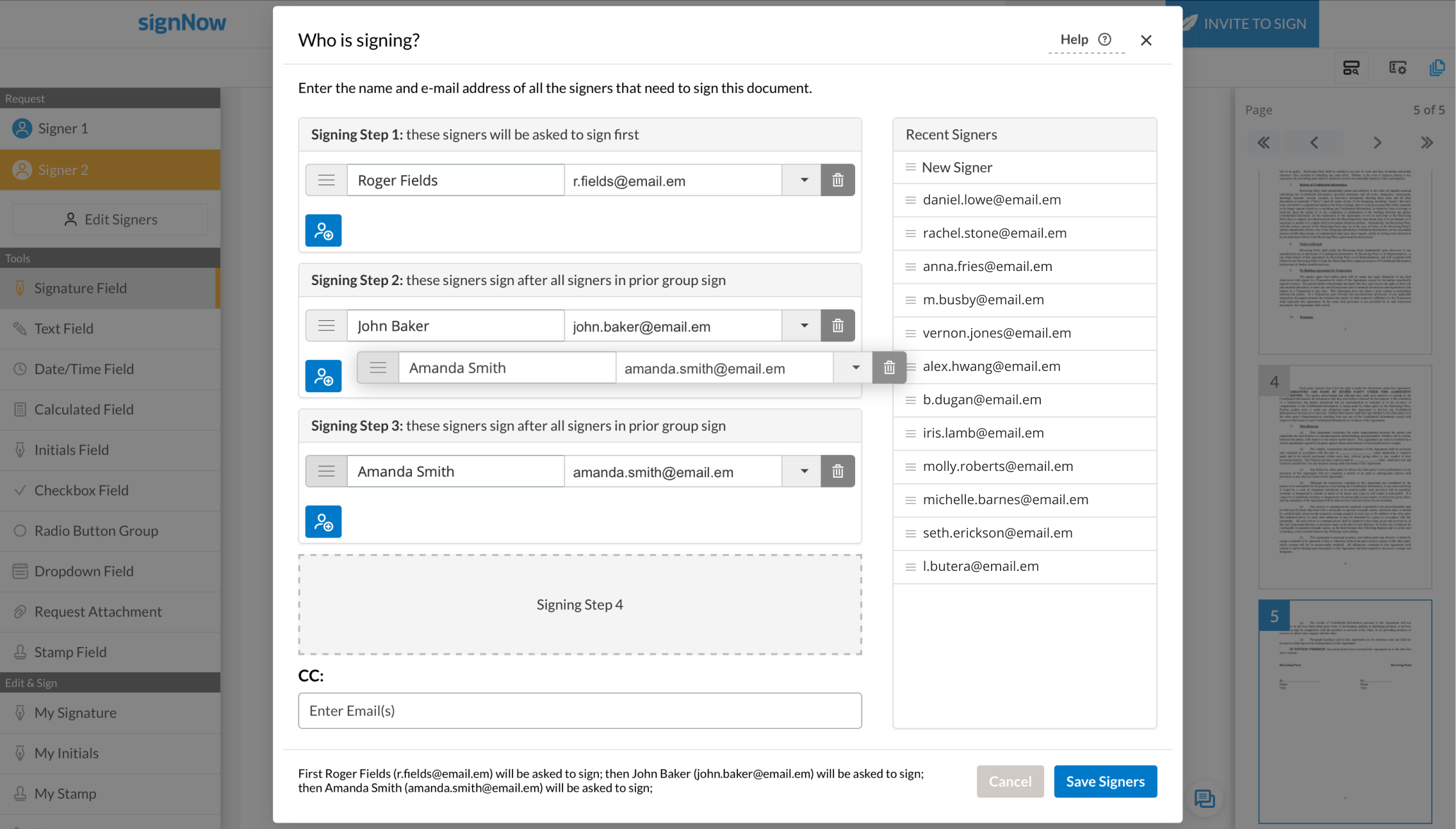
Vous avez besoin que votre document soit signé par plusieurs parties successivement ? Créez plusieurs rôles de signataires et définissez un ordre de signature pour garantir que votre document soit automatiquement livré aux destinataires désignés une fois leur tour venu pour signer.
Configurez votre flux de travail de signature électronique
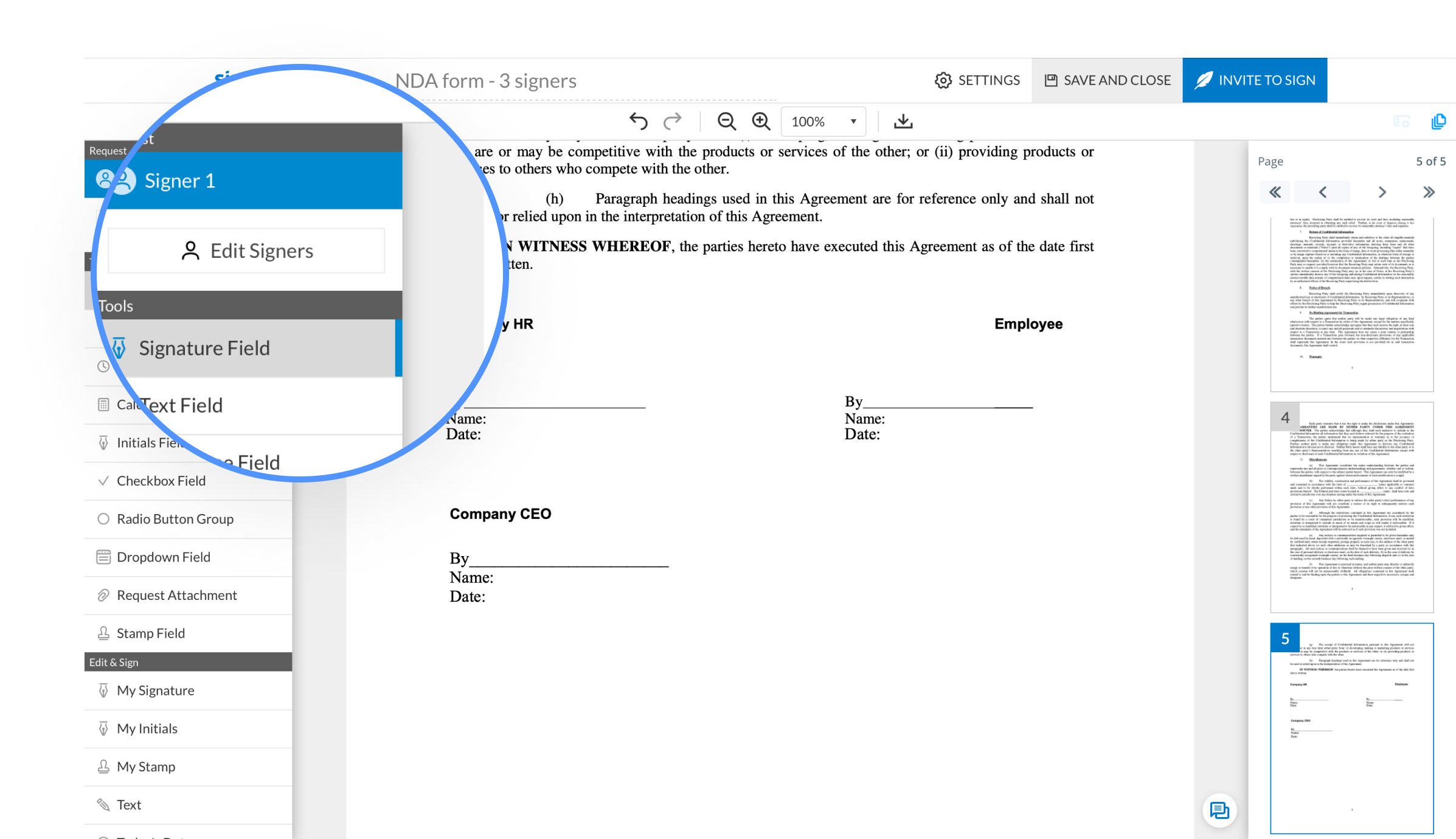
Ouvrez votre document dans l'éditeur et cliquez sur Modifier les signataires.
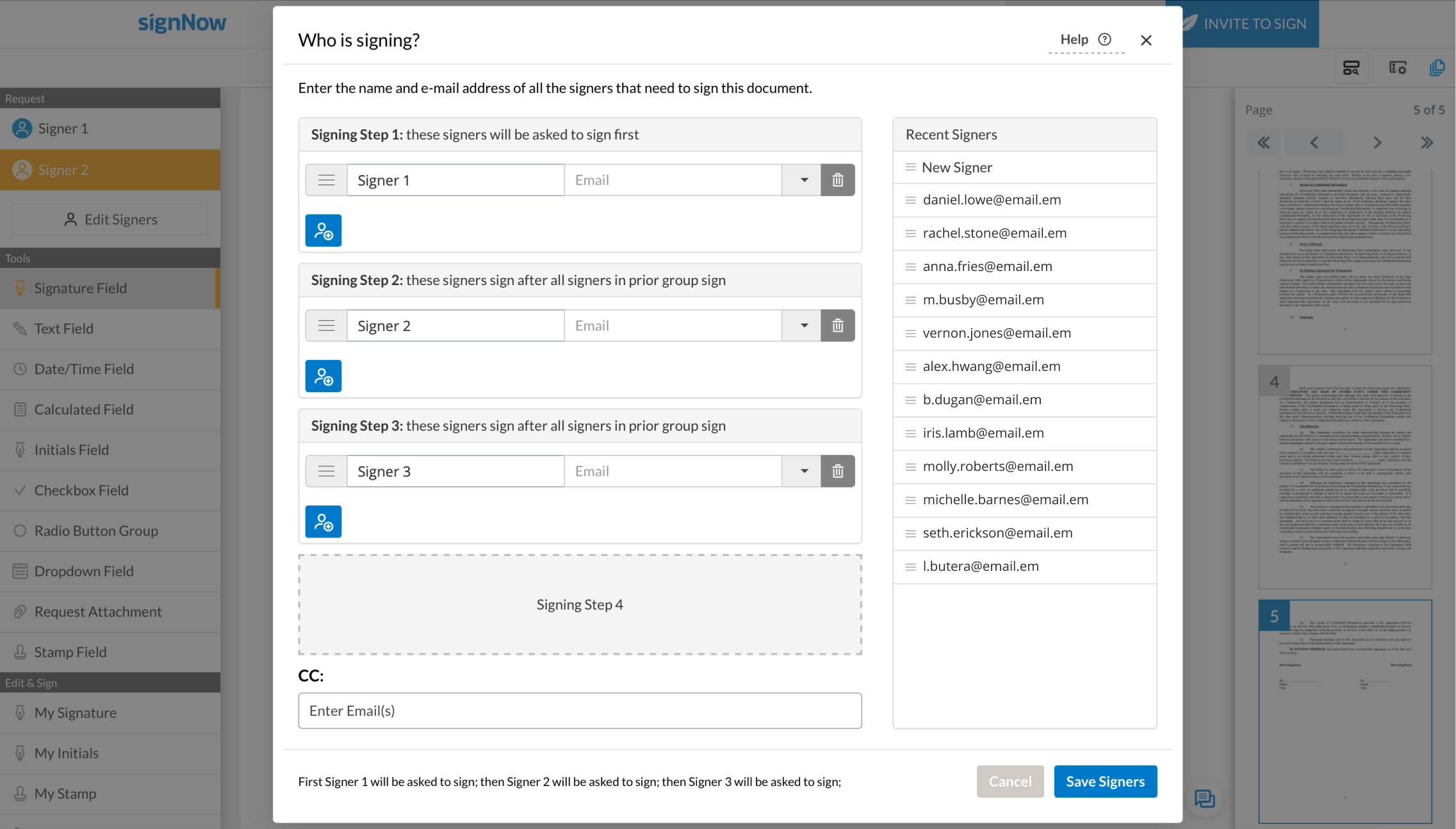
Créez une nouvelle étape de signature en cliquant sur la zone Étape de signature 2. Pour ajouter une troisième étape, cliquez sur Étape de signature 3, etc.
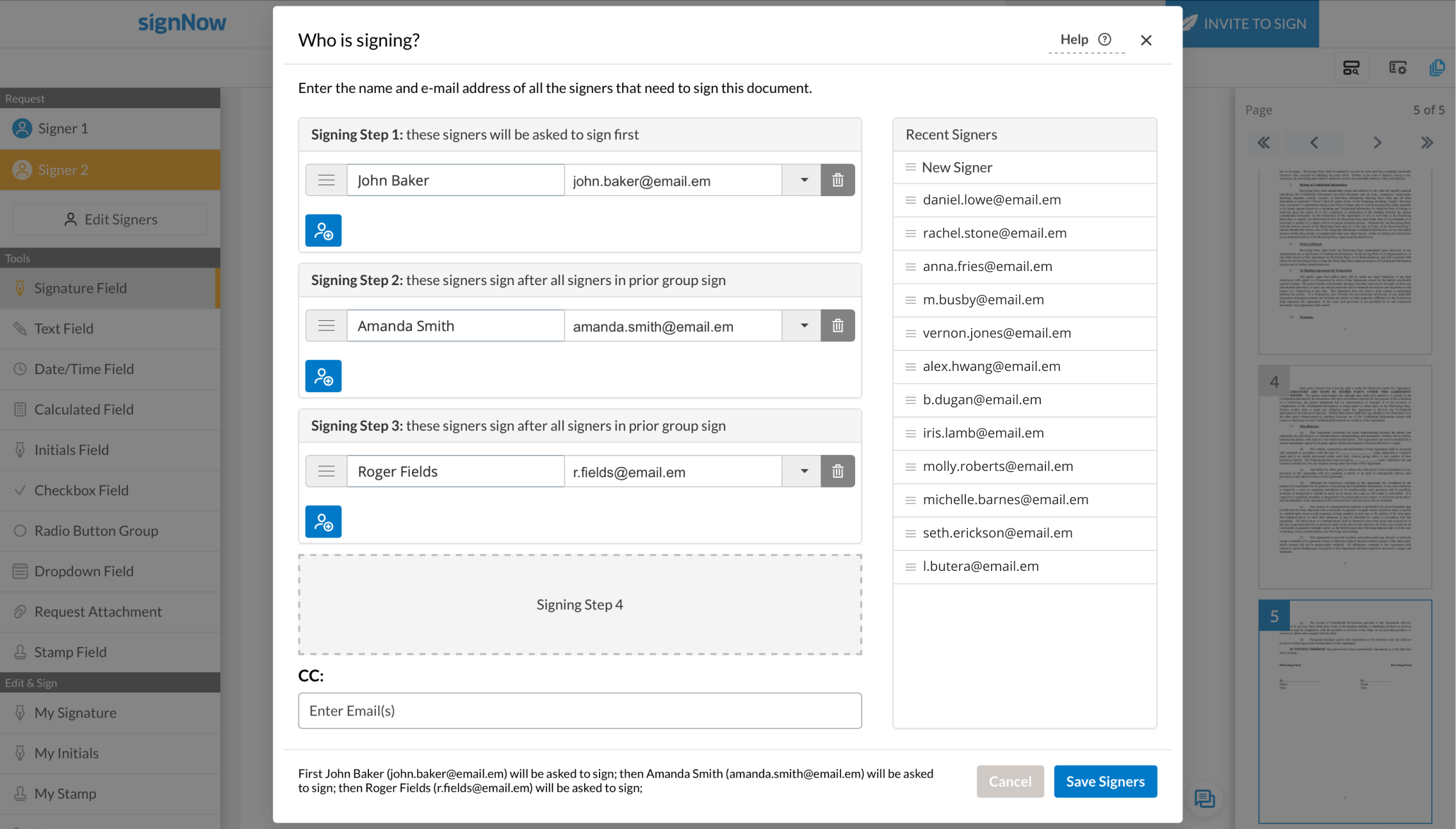
Personnalisez les noms des signataires et saisissez les adresses e-mail de vos destinataires dans les cases correspondantes (optionnel). Ajoutez un nouveau destinataire dans une étape de signature en cliquant sur l'icône silhouette bleue.
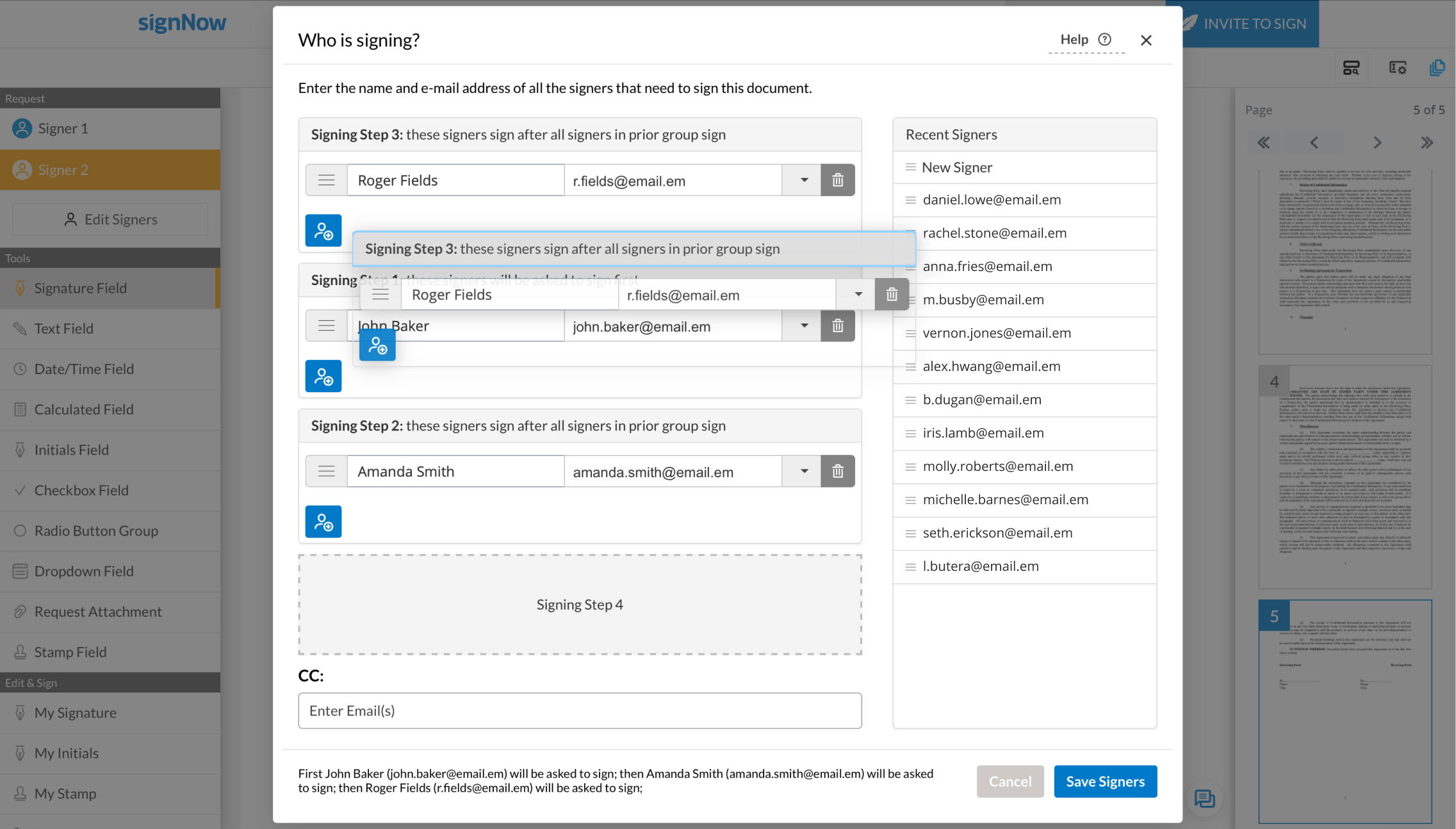
Pour réorganiser vos étapes de signature, faites-les glisser à la position souhaitée.
Déplacez un destinataire d'une étape de signature à une autre en faisant glisser sa case e-mail et en la déposant à l'endroit voulu.
Pour supprimer un signataire et/ou une étape de signature, cliquez sur l'icône de la corbeille à côté de la case e-mail du signataire.
Une fois que vous avez terminé de configurer l'ordre de signature, cliquez sur le bouton Enregistrer les signataires.
Ajoutez des champs remplissables et attribuez des rôles
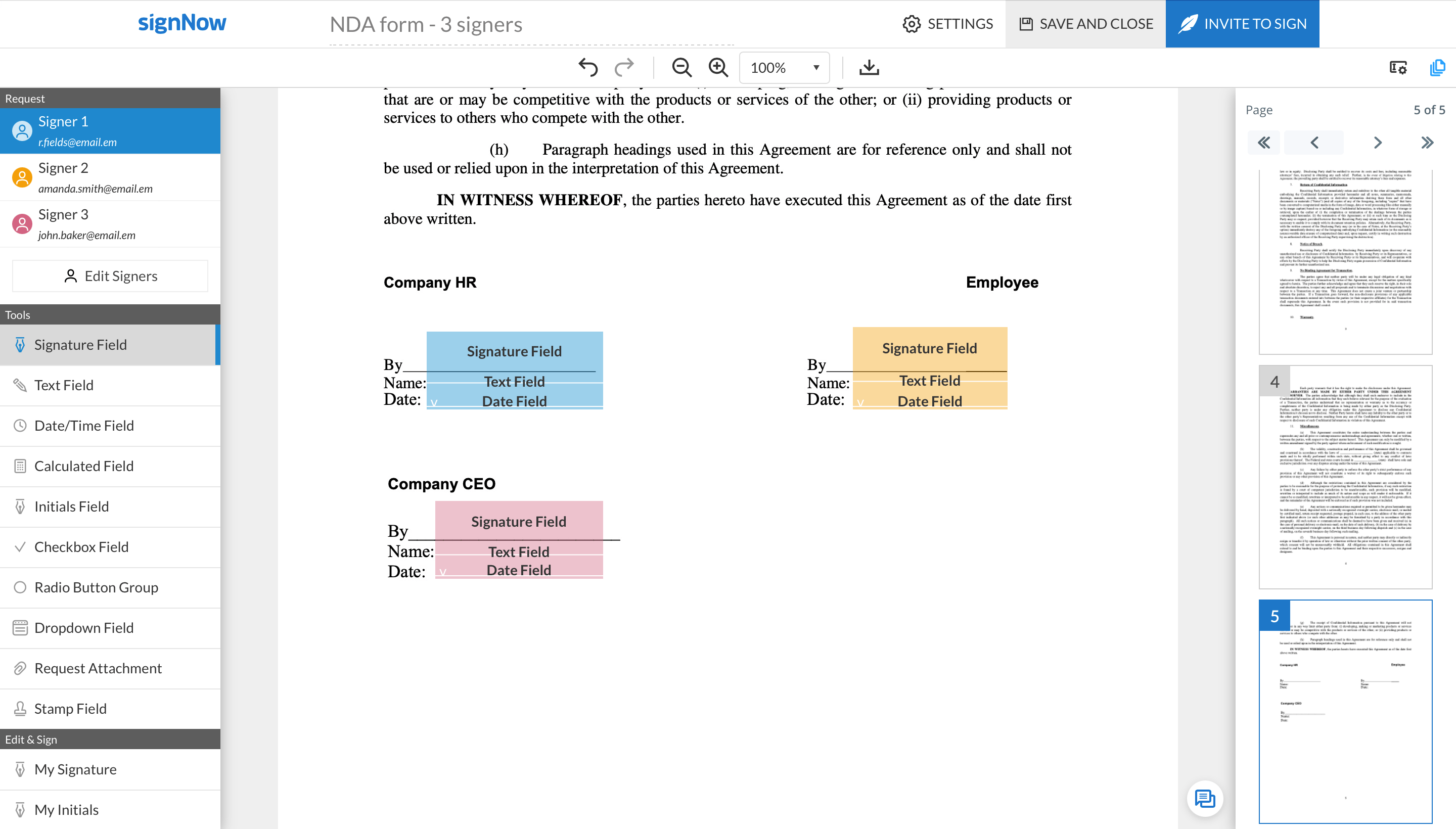
Sélectionnez les champs remplissables dans la barre d'outils à gauche de l'éditeur et déposez-les n'importe où dans votre document. Pour attribuer un rôle spécifique à un champ, cliquez dessus, ouvrez le menu déroulant Rôle dans la barre latérale à droite, et choisissez le signataire à qui vous souhaitez l'attribuer. Ensuite, cliquez sur Ok.
Pour votre confort, les champs remplissables sont affichés dans différentes couleurs en fonction du rôle du signataire que vous leur avez attribué.
Une fois que vous avez terminé de configurer chaque champ remplissable, cliquez sur Inviter à signer pour envoyer votre document pour signature électronique.
Nous utilisons des cookies pour améliorer la sécurité, personnaliser l'expérience utilisateur, renforcer nos activités de marketing (y compris la coopération avec nos partenaires de 3e partie) et pour d'autres usages professionnels. Cliquez ici pour lire notre politique en matière de cookies. En cliquant sur « Accepter », vous acceptez l'utilisation des cookies. ... Lire plusLire moins