Establishing secure connection…Loading editor…Preparing document…

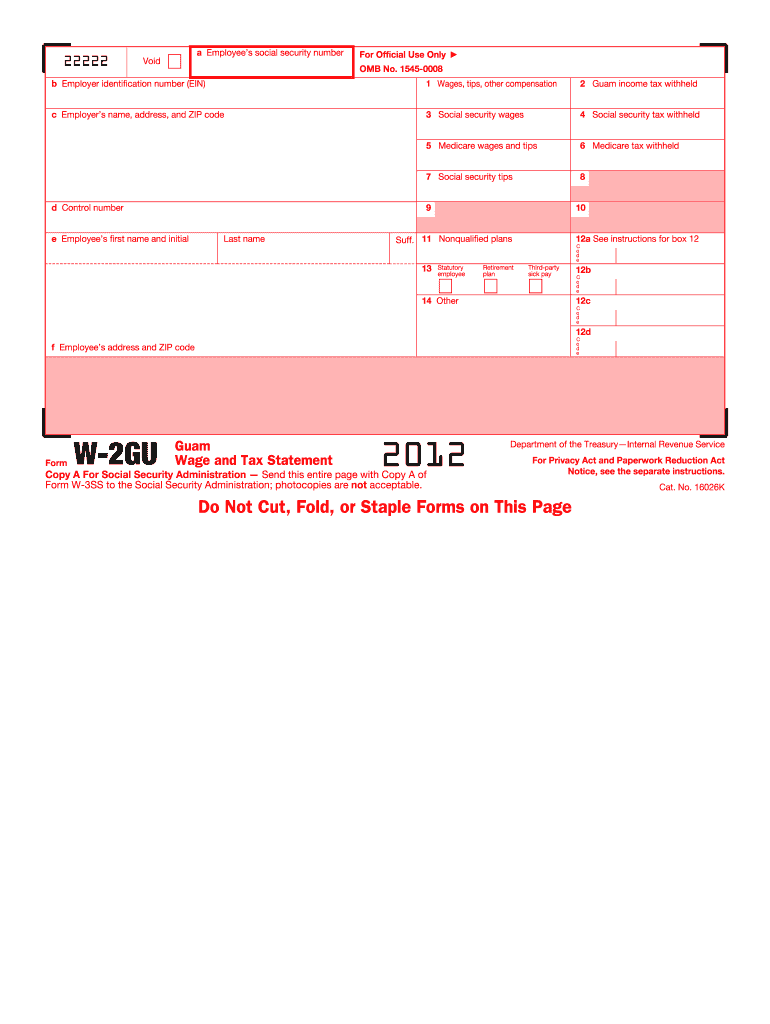
Guam Wage and Tax Statement

This template is fully customizable. Edit the text, fill out the fields, and send it for signature. Give it a try!
Guam Wage and Tax Statement

What the Guam Wage and Tax Statement is and who it serves

The Guam Wage and Tax Statement is a payroll document that records an employee's gross pay, deductions, and taxes withheld for Guam-source wages. Employers issue it to employees and retain a copy for payroll reconciliation, internal accounting, and tax compliance with the Guam Department of Revenue and Taxation. The statement supports year-end reporting, employee pay verification, and corrections to withholding records. It may accompany federal filings where applicable and should reflect payroll, Social Security, Medicare, and any Guam-specific withholding or contributions for each relevant pay period or calendar year.

Why accurate Guam Wage and Tax Statements matter

Accurate statements document pay and withholding, reduce disputes, and help employers meet Guam and federal tax obligations. Clear records support employee tax preparation, internal payroll audits, and responses to agency inquiries while limiting exposure to penalties for incorrect or late reporting.

Why accurate Guam Wage and Tax Statements matter

Who prepares and relies on these statements

Employers, payroll teams, tax preparers, and employees commonly use Guam Wage and Tax Statements as a routine payroll control and reporting document.

  • Small and large employers issuing regular pay stubs and year-end summaries for Guam-based employees and Guam-source wages.
  • Payroll and HR teams generating withholdings, reconciling benefits, and supporting internal audits and payroll tax deposits.
  • Tax preparers and auditors who verify Guam withholding, reconcile wage records, and prepare local and federal filings.

Step-by-step: issue a compliant Guam Wage and Tax Statement

Follow a consistent sequence to prepare, review, deliver, and retain the statement to meet employer and employee needs and reduce filing risk.

  • 01
    Prepare: Compile payroll data and validate employee TINs before populating fields.
  • 02
    Review: Confirm calculations, withholdings, and period dates; run exception reports.
  • 03
    Deliver: Provide the statement to the employee by the employer's usual delivery method.
  • 04
    Retain: Store signed or final copies per retention rules for audits and tax records.

Essential components of a professional statement

A complete Guam Wage and Tax Statement includes clear identification, accurate earnings and deduction breakdowns, and year-to-date summaries to support reporting and reconciliation.

Employee details

Full legal name, address, and SSN/TIN as recorded on payroll. Accurate identification prevents mismatched filings and supports correct tax withholding and reporting.
Employer details

Legal business name, employer identification number (EIN), and contact information so tax authorities and employees can trace the source of wages and withholding.

Pay period

Clear start and end dates plus pay date. Pay period ties earnings to withholding periods and federal/state reporting timelines.

Earnings breakdown

Itemize regular, overtime, bonuses, and reimbursements. Detailed earnings make taxable and nontaxable components clear for payroll reconciliation.

Withholding detail

Separate federal, Guam, Social Security, Medicare, and other deductions. Clear withholding fields help prevent backup withholding and filing discrepancies.

Year-to-date totals

Provide YTD gross, deductions, and net pay. YTD figures support year-end reconciliations and employee tax preparation.

Required data and security flags to capture

Legal Names: Full legal names only
TIN/SSN: Exact numeric ID
Pay Dates: MM/DD/YYYY format
Itemized Deductions: Separate fields required
Retention Mark: Retention date set
Access Controls: Restrict to payroll users

File and deliver: common routing options

Decide who receives the statement and how it will be delivered — electronically or on paper — based on employee preference and legal requirements.

  • Internal Review: Payroll validates amounts and TINs prior to release.
  • Employee Delivery: Provide statement via secure portal, email, or printed copy.
  • Agency Filing: Retain employer copies for Guam or federal filing when required.
  • Archive: Store final versions in secure payroll records.

Configuring an online workflow for completion and eSubmission

Set up a repeatable workflow: import payroll data, map fields, add recipient authentication, and define routing for signatures and archival.

Field Configuration
Data Import CSV or payroll integration mapping for employee fields
Recipient authentication Email link or SMS code for signer verification
Routing order Employer approval, then employee acknowledgment
Auto reminders Schedule reminders for unsigned statements

Digital signing and file format considerations

Ensure providers support required export formats and secure archival so statements remain reproducible for audits and tax filings.

  • Formats: PDF, DOCX preserved for records
  • Integrations: Connect to payroll or HRIS systems
  • Authentication: Email, SMS, or stronger controls

Key deadlines to keep in mind

Timing varies by form and recipient; align wage statements with federal and local filing calendars to avoid penalties and to support employee tax reporting.

Deliver pay statements to employees:

Recurring each payroll cycle; no universal statutory single date

W-2 equivalent to employee:

Provide by January 31 each year for employee tax preparation

1099-NEC reporting:

File and furnish by January 31 when applicable

1099-MISC paper filing:

Paper to IRS by February 28 if applicable

1099-MISC electronic filing:

Electronic filing due by March 31 when required

Milestone timeline for producing and retaining statements

A sequential checklist helps manage creation, distribution, filing, and long-term retention for compliance and audits.

01

Payroll Close

Finalize payroll data and validate TINs before statement generation.

02

Statement Issuance

Deliver statements to employees according to payroll schedule.

03

Agency Filings

Complete any required filings with Guam or federal agencies.

04

Record Retention

Archive records per retention policy for audit readiness.

Common mistakes to avoid when preparing statements

  • Using abbreviated or inconsistent names that do not match TIN records can trigger mismatches and backup withholding.
  • Failing to itemize deductions and withholdings leads to reconciliation errors and complicates year-end reporting.
  • Late distribution of year-end statements can impede employee tax filings and increase exposure to penalty assessments.
  • Relying on manual entry without validation increases transcription errors and delays corrective action during audits.

Penalties and compliance risks associated with errors

Information return penalties: Per-form fines apply for late or incorrect reporting
Intentional disregard: Higher per-form penalties where errors are willful
Backup withholding: 24% withholding can be required for missing TINs
I-9 paperwork fines: Paperwork violations carry civil fines
Employee disputes: Inaccurate statements increase audit and litigation risk
Loss of deductions: Employer errors can affect tax benefit claims

Real-world scenarios illustrating common uses

Two practical examples show how employers and payroll teams use the Guam Wage and Tax Statement in routine situations.

Payroll Audit Response

A payroll manager compiles monthly statements for a multi-site employer to reconcile Guam withholding

  • The team maps earnings and deduction codes across payroll systems
  • Having consistent, dated statements expedited audit responses and corrected withholding errors without regulatory fines.

Year-End Reconciliation

An accounting team issues year-end wage statements to employees and compares YTD amounts to employer tax filings

  • Discrepancies trigger targeted corrections
  • Clear statements and a signed acknowledgment simplified amendments and assisted employee tax filing.

Comparing eSignature vendors for wage and tax statement workflows

Estimate platform costs and capabilities for electronic delivery and signatures; signNow is listed first for straightforward plan comparisons.

signNow DocuSign Adobe Sign PandaDoc HelloSign
Starting Price $8/user/mo $15/user/mo $14/user/mo $19/user/mo $15/user/mo
Free Trial 7-day free trial Varies by vendor Varies by vendor Varies by vendor Varies by vendor
Bulk Send Yes Yes Yes Yes No
Audit Trail Yes Yes Yes Yes Yes
HIPAA Compliant Yes Yes Yes No No
Envelope Cap No cap 100 envelopes/user/year Varies Varies Varies

Frequently asked questions about Guam Wage and Tax Statements

Answers address common points of confusion about signing, delivery, corrections, and retention when managing wage and tax statements.


Need help? Contact support

be ready to get more
Join over 28 million airSlate SignNow users