Establishing secure connection…Loading editor…Preparing document…

Aircraft Agreement

This template is fully customizable. Edit the text, fill out the fields, and send it for signature. Give it a try!
Aircraft Agreement

What an Aircraft Agreement Covers

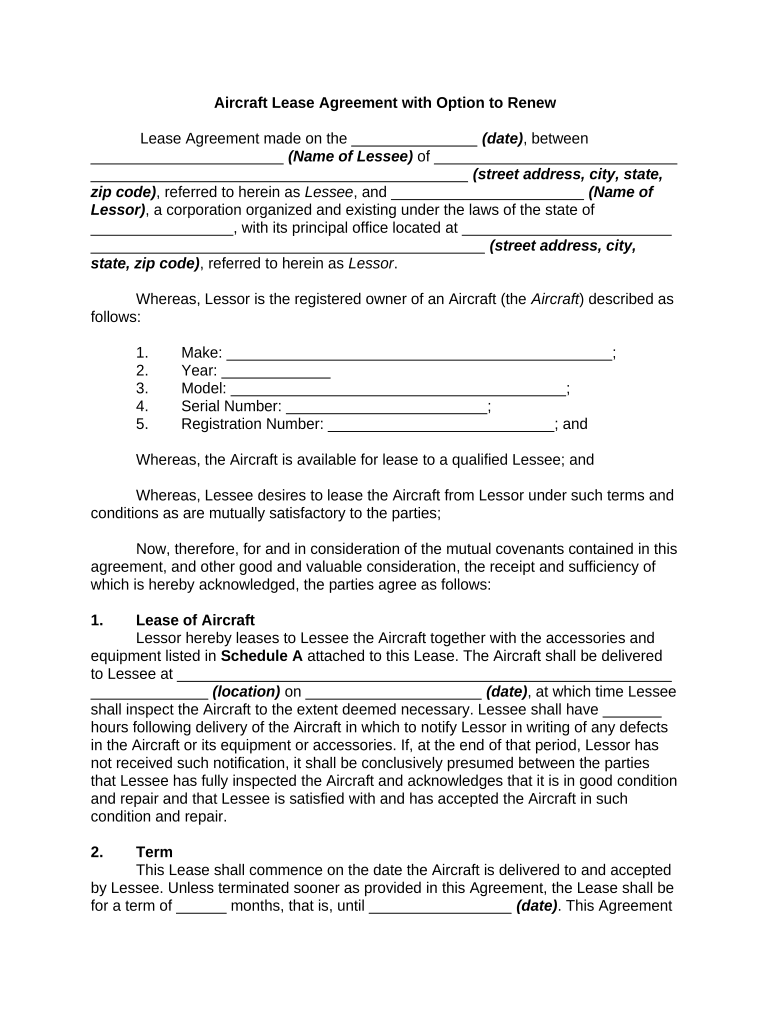
An Aircraft Agreement is a written contract that governs the rights, duties, and commercial terms among parties involved in ownership, lease, operation, maintenance, or sale of an aircraft. Typical provisions include aircraft identification, term and termination, payment or lease schedules, insurance requirements, maintenance responsibilities, warranties, regulatory compliance, indemnities, and remedies. The document allocates financial risk, sets return or transfer conditions, and often references FAA, tax, and export-control obligations that apply to transactions governed by U.S. law.

Why a Clear Aircraft Agreement Matters

An Aircraft Agreement clarifies allocation of operational risk, payment and insurance responsibilities, and regulatory compliance expectations, reducing disputes and aiding finance or lease underwriting. Clear terms preserve asset value, streamline maintenance planning, and support enforceability under U.S. contract and aviation regulations.

Why a Clear Aircraft Agreement Matters

Who Typically Uses an Aircraft Agreement

Common signatories include aircraft owners, commercial lessors, operators, maintenance providers, insurers, and financiers; each party has distinct operational and legal interests that the agreement addresses.

  • Aircraft owner — retains title, sets usage limits, and enforces maintenance schedules.
  • Lessor/finance company — monitors condition, requires insurance, and enforces payment defaults.
  • Operator/pilot entity — accepts operational responsibilities, compliance duties, and routine reporting.

Core Sections to Include in an Aircraft Agreement

Core sections define operational scope, financial terms, insurance and maintenance obligations, regulatory compliance, remedies, and transfer or return procedures; exhibits often include schedules and technical logs.

Scope

Describe permitted uses, geographic limits, authorized pilots, flight hour caps, lease term, and any seasonal or event-based restrictions to prevent operational disputes.
Payment

Specify rent or purchase price, payment schedule, security deposit, late fees, tax responsibility, and remedies for nonpayment including acceleration or repossession.

Insurance

Detail required coverage types and limits, named insureds, proof of insurance delivery, subrogation waivers, and claims procedures to protect owners and financiers.

Maintenance

Assign routine and major maintenance duties, approved facilities and technicians, inspection intervals, recordkeeping standards, and cost allocation for overhauls.

Compliance

Require adherence to FAA regulations, airworthiness directives, export-control and customs rules, and specify notification procedures for incidents or enforcement actions.

Transfer

Define return condition standards, acceptance testing, title transfer mechanics, lien releases, and remedies for damage or diminished value at termination.

Essential Information to Include

Aircraft ID: Registration number and serial
Party Names: Full legal names and entity types
Agreement Term: Start and end dates
Financial Terms: Rates, deposits, and fees
Insurance Details: Policy types and limits
Maintenance Plan: Schedule and recordkeeping

Step-by-Step: Executing an Aircraft Agreement

Follow these steps to complete and execute an Aircraft Agreement accurately and to maintain enforceability under U.S. law.

  • 01
    Prepare: Collect aircraft title, maintenance logs, and insurance certificates.
  • 02
    Draft: Insert payment, insurance, maintenance, and compliance clauses tailored to the transaction.
  • 03
    Review: Have legal counsel and insurer review terms and coverage.
  • 04
    Execute: Obtain signatures, notarizations if required, and distribute completed copies.

Configuring an Online Signing Workflow

Configure the online workflow to map fields, assign signers, and set authentication for secure e-submission and recordkeeping.

Field Configuration
Signer Order Define sequential or parallel signing to reflect contract priorities.
Authentication Use email code, SMS code, or KBA for signer verification.
Conditional Fields Display fields only when specific conditions are met to reduce signer errors.
Delivery Automatically send completed copies and certificates to all parties.

Where to Send and File the Executed Agreement

Typical routing: send executed agreement copies to owner, operator, insurer, and financing parties; file originals where required by regulation.

  • Owner: Keep the original for title and records.
  • Lessor: Maintain a copy for lease portfolio and audits.
  • Insurer: Send evidence of coverage and endorsements promptly.
  • Registry: Submit transfers or registrations to FAA or applicable authority as needed.

Technical Requirements for Digital Completion

Digital signing requires PDF-compatible files, signer contact information, and chosen authentication methods; plan attachments and version control.

  • File Format: PDF, Word, or DOCX accepted
  • Authentication: Email, SMS, KBA, or SSO
  • Integrations: CRM, ERP, and cloud storage connectors

Key Dates and Timing to Track

Key dates depend on transaction type: lease start, insurance effective date, maintenance windows, registration filings, and payment milestones.

Effective Date:

Enter as MM/DD/YYYY; this starts obligations and coverage periods.

Payment Due Dates:

List payment schedule, grace periods, and late fee triggers.

Maintenance Windows:

Schedule inspections, AD compliance, and overhaul intervals.

Registration Filings:

Submit FAA registration or ownership transfers within contract deadlines.

Insurance Renewal:

Provide proof of renewal before policy expiration to avoid gaps.

Common Mistakes to Avoid When Preparing the Agreement

  • Using vague usage or return conditions that leave room for disagreement and costly litigation over acceptable wear and damage.
  • Entering incorrect aircraft registration or serial numbers which can disrupt title searches and FAA filings and complicate transfers.
  • Failing to require named insureds and adequate coverage limits, producing insurance gaps that expose owners and financiers.
  • Omitting complete maintenance records or schedules, which undermines airworthiness proofs and can void warranties or insurance claims.

Penalties and Risks from an Incorrect Agreement

Tax Exposure: Incorrect allocation can trigger IRS audits
Insurance Gaps: Claims may be denied
FAA Action: Regulatory noncompliance fines
Repossession Risk: Lenders may seize aircraft
Contract Damages: Monetary liability for breaches
Loss of Funding: Financing can be withdrawn

Practical Use Cases for an Aircraft Agreement

Two common scenarios illustrate how an Aircraft Agreement protects parties and clarifies operational responsibilities in real transactions.

Lease Transaction

A regional charter operator needed a 12-month lease for a twin-engine aircraft

  • The lessor required monthly payments, named insured status, and quarterly inspections
  • The agreement allocated maintenance responsibilities, required proof of insurance, and defined return condition testing to avoid collection disputes and preserve resale value.

Maintenance Contract

An owner engaged an MRO for scheduled and unscheduled maintenance

  • The MRO asked for detailed log access and parts sourcing clauses
  • The contract set inspection intervals, parts approval processes, warranty handling, and liability caps to ensure continuity of operations and clarity if defects arose.

Frequently Asked Questions About Aircraft Agreements

Answers to common execution, compliance, and recordkeeping questions to help avoid delays and legal exposure when drafting or signing an Aircraft Agreement.


Need help? Contact support

be ready to get more
Join over 28 million airSlate SignNow users