Establishing secure connection…Loading editor…Preparing document…

Bill of Lading

This template is fully customizable. Edit the text, fill out the fields, and send it for signature. Give it a try!
Bill of Lading

What a Bill of Lading Does

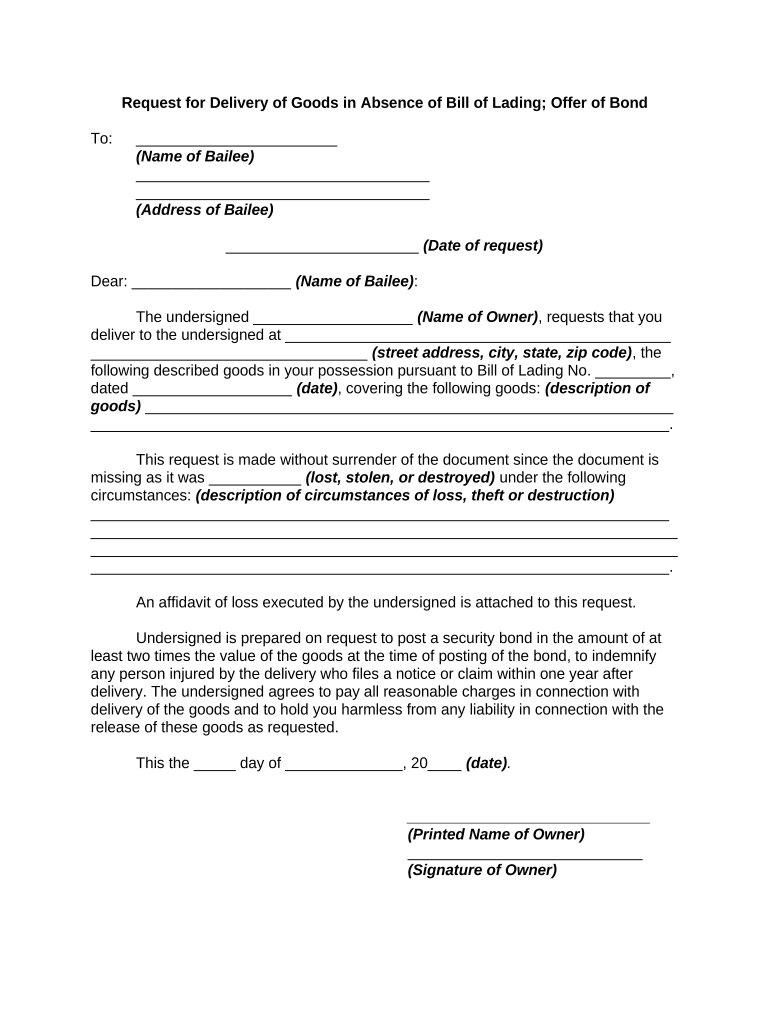
A Bill of Lading (BOL) is a written receipt and contract issued by a carrier documenting shipment of goods from a shipper to a consignee. It serves three primary functions: evidence that goods were received by the carrier, the contract terms for carriage, and, in many contexts, a document of title that enables transfer of ownership. Bills of Lading record commodity details, quantity, weight, packaging, routing instructions, and freight terms. Accurate BOLs are essential for delivery, claims, customs clearance, and payment under trade and logistics arrangements.

Why a Clear Bill of Lading Matters

A well-completed Bill of Lading reduces delivery delays, supports cargo claims, and clarifies liability between carrier, shipper, and consignee. It also speeds customs processing and payment in trade-finance workflows.

Why a Clear Bill of Lading Matters

Who Prepares and Relies on the Bill of Lading

Several parties create, sign, or use the Bill of Lading during transit and settlement.

  • Shippers and exporters who assemble goods and produce the BOL for carriage and customs.
  • Carriers and freight forwarders that acknowledge receipt and perform transportation services.
  • Consignees, banks, customs officials, and insurance adjusters that rely on the BOL for delivery, payment, and claims.

Each party has distinct responsibilities when filling and retaining the BOL to ensure legal enforceability and operational continuity.

Core Elements Every Professional Bill of Lading Should Include

A professional Bill of Lading groups shipment facts, contractual terms, and authentication details so carriers and shippers can process, deliver, and, when necessary, enforce claims.

Parties

Full legal names and contact details for shipper, carrier, and consignee so responsibilities and notices are clear and serviceable.
Goods Description

Precise description including commodity type, packaging type, HS code if used, and any hazardous classification for compliance and handling purposes.

Quantity & Weight

Number of packages, gross and net weight, and unit counts to reconcile loading, billing, and customs valuation.

Freight Terms

Incoterm or agreed freight terms, payer of freight, and routing instructions that govern risk transfer and payment obligations.

Signatures

Carrier acceptance signature, dated by an authorized representative, plus shipper signature when required to confirm receipt and conditions.

Special Instructions

Delivery windows, temperature controls, handling notes, and any documentary conditions tied to delivery or payment.

Required Information and Compliance Notes

Shipper Name: Full legal name.
Consignee Name: Full legal name.
Carrier ID: Carrier legal or MC number.
Description: Goods description and packaging.
Weight/Count: Total weight and package count.
Signature Date: MM/DD/YYYY date of execution.

Step-by-Step: Filling Out a Bill of Lading

Follow these sequential steps to create an accurate, enforceable Bill of Lading that supports delivery and claims.

  • 01
    Prepare shipment: Gather packing lists, weights, and HS codes.
  • 02
    Enter parties: Populate shipper, consignee, notify party fields.
  • 03
    Record goods: List commodity, packaging, count, and weight.
  • 04
    Sign and date: Authorized carrier/shipper signs and dates BOL.

How to Configure an Online Bill of Lading Workflow

Common online settings speed completion, reduce errors, and create an auditable record for each shipment.

Auto-fill Fields Map customer and product master data for reuse.
Conditional Fields Show hazardous fields only when applicable.
Attachments Require packing list and commercial invoice uploads.
Signer Authentication Use email or SMS codes for signer verification.
Delivery Receipts Enable automatic signed copy distribution to parties.

Typical Electronic Submission and Routing

An electronic Bill of Lading moves through upload, population, signature, and distribution steps with audit logging at each stage.

  • Upload Document: Import PDF or DOCX BOL template to the platform.
  • Place Fields: Add signature, date, and text fields where needed.
  • Send to Signers: Route to carrier and shipper in the required order.
  • Distribute Copies: Send completed BOL PDFs to consignee, broker, and bank.

Digital Signing, File Formats, and Integration Considerations

Choose a platform that supports common document formats and integrates with your existing systems to reduce manual work.

  • File Formats: PDF, DOCX, XLSX supported
  • Integrations: Salesforce, NetSuite, Microsoft 365
  • Authentication: Email, SMS, SAML available

Integration with TMS, ERP, or customs filing software and support for PDF/A export and audit trails improves compliance and handoffs.

Key Timing and Processing Expectations

Certain timing milestones affect delivery, claims, and customs clearance. Plan BOL creation and distribution accordingly.

Issue Timing:

Issue the BOL at pickup or receipt by carrier to evidence receipt of goods.

Carrier Retention:

Carriers typically retain their copy for the duration of carriage and related recordkeeping obligations.

Claims Filing:

File cargo claims promptly per carrier terms; delays can jeopardize recoveries and subrogate rights.

Customs Lead Time:

Provide commercial invoice and BOL to customs broker ahead of arrival to avoid release delays.

Bank Presentment:

When used for letters of credit, present signed BOLs per the bank's documentary requirements and timing.

Common Mistakes to Avoid When Preparing a Bill of Lading

  • Incomplete consignee or notify party details that prevent delivery and trigger storage charges or customs delays.
  • Vague goods descriptions or incorrect HS codes that lead to misrouting, duty reassessments, or customs holds.
  • Mismatched weights or counts that create disputes at delivery and complicate freight billing reconciliation.
  • Failing to follow carrier-specific instructions or terms, resulting in rejected carriage or denied claims.

Risks and Consequences of an Incorrect Bill of Lading

Cargo Loss Liability: Higher carrier liability exposure
Customs Delay: Goods held or duties reassessed
Claim Denial: Insurer or carrier may deny claim
Freight Disputes: Billing disputes and demurrage fees
Contract Breach: Commercial or LC noncompliance
Regulatory Fines: Penalties for hazardous misdeclaration

eSignature Provider Comparison for Executing Bills of Lading

Basic vendor criteria that matter when choosing an eSignature solution for Bills of Lading: price, trial availability, bulk send, audit trail, HIPAA support, and envelope limits.

signNow DocuSign Adobe Sign PandaDoc HelloSign
Starting Price $8/user/mo $15/user/mo $14/user/mo $19/user/mo $15/user/mo
Free Trial 7-day free trial Varies Varies Varies Varies
Bulk Send Yes Yes Yes Yes No
Audit Trail Yes Yes Yes Yes Yes
HIPAA Compliant Yes Yes Yes No No
Envelope Cap No cap 100 envelopes/user/year Varies by plan Varies by plan Varies by plan

Practical Bill of Lading Use Cases

Realistic scenarios show how accurate BOLs reduce friction across logistics, customs, and finance workflows.

Freight Forwarder Efficiency

A freight forwarder digitized BOL templates to reduce data rekeying at pickup.

  • Reduced manual entry by centralizing master data.
  • The change lowered arrival holds and improved carrier invoicing accuracy, enabling faster releases and fewer reconciliation disputes across dozens of weekly shipments.

Importer Customs Clearance

An importer standardized BOL descriptions to align with customs invoices.

  • Consistent commodity descriptions eased customs review.
  • Harmonized documentation shortened release cycles, reduced customs queries, and lowered demurrage exposure on time-sensitive import consignments.

Best Practices for Accurate and Efficient Bills of Lading

Adopt controls and standardized templates to reduce errors, support compliance, and shorten settlement cycles.

Use standardized templates
Maintain a single approved BOL template with mandatory fields, pick lists for commodities, and validation rules to prevent omissions and ensure consistent data across shipments.
Confirm party details
Validate shipper and consignee legal names and addresses against master records before issuing the BOL to avoid delivery rejections and payment issues.
Attach supporting docs
Include packing lists, commercial invoices, and certificates of origin with the BOL to facilitate customs, insurance, and bank review without separate follow-ups.
Log audit details
Capture signer identity, timestamp, and IP or authentication method for every executed BOL to support claims and evidentiary needs.

Frequently Asked Questions About Bills of Lading

Answers to common legal and operational questions about completing, signing, and retaining Bills of Lading.


Need help? Contact support

be ready to get more
Join over 28 million airSlate SignNow users