Establishing secure connection…Loading editor…Preparing document…

Consent to Action by the Board of Trustees

This template is fully customizable. Edit the text, fill out the fields, and send it for signature. Give it a try!
Consent to Action by the Board of Trustees

What a Consent to Action by the Board of Trustees Is

A Consent to Action by the Board of Trustees is a written record documenting board approval of a specific action without holding a formal meeting. It memorializes unanimous or required-majority approval by trustees, describes the proposed action, and records effective dates and signatures. Corporations, nonprofit boards, and trust governing bodies use this instrument when statutes or bylaws permit action by written consent in lieu of a convened meeting. The document creates corporate minutes and evidences authority for corporate officers or agents to implement the approved action.

Why a Written Board Consent Matters

A properly drafted consent provides clear evidence of board authorization, reduces administrative overhead, and creates an auditable corporate record that supports downstream transactions or filings.

Why a Written Board Consent Matters

Who Prepares and Relies on This Consent

Parties rely on the consent for third-party verification, bank or registration requirements, and to document compliance with bylaws and applicable state law.

  • Corporate Secretary or Clerk — prepares, circulates, and archives the executed consent as part of corporate records.
  • Board Chair or Chairperson — confirms substance of resolution and typically signs as an approving trustee or attesting officer.
  • Authorized Officers — CFO, CEO, or designated agent use the consent to exercise approved powers, such as opening accounts or executing contracts.

Typical Signatories and Their Roles

Board Chair

The Board Chair is often the primary signatory who certifies the trustees' approval and ensures that the consent aligns with the board's authority and corporate bylaws. Their signature attests that the required quorum and voting thresholds were satisfied.

Corporate Secretary

The Corporate Secretary prepares and maintains the executed consent as a permanent corporate record, attests to signatures when required, and provides certified copies to banks, registrars, or regulators when requested.

Key Elements to Include in a Professional Consent

A complete consent is concise but precise, linking the authority invoked to specific corporate documents and including signature and attestation details to ensure enforceability.

Title

Clear title referencing the board and the subject matter of the consent.
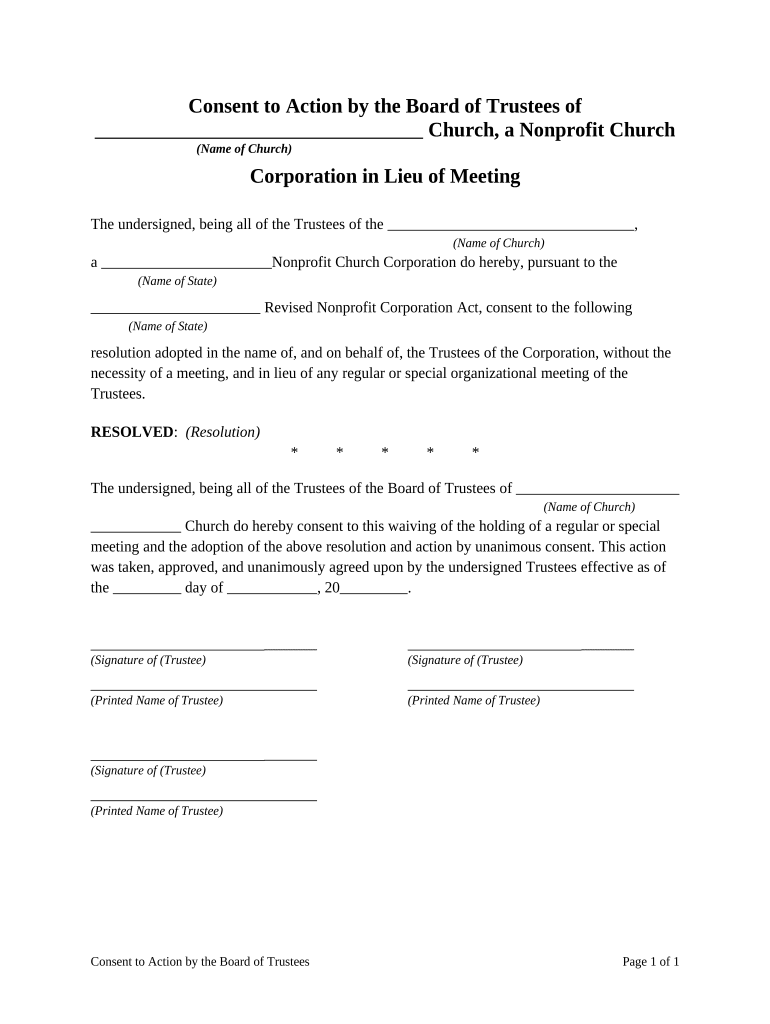
Recitals

Short background statements explaining why the action is proposed.

Resolved Text

Specific, numbered resolution clauses describing the authority granted and the actions approved.

Effective Date

Explicit effective date when the authorization takes effect.

Signatures

Trustees' signatures, printed names, titles, and dates validating approval.

Certification

Corporate Secretary's certification attesting to the validity of signatures and compliance with bylaws.

Required Information and Fields at a Glance

Corporate Name: Exact legal name
Trust Name: Exact trust designation
Resolution Date: MM/DD/YYYY
Action Description: Concise summary
Trustee Signatures: Printed name & date
Secretary Certification: Attestation statement

How to Complete and Execute a Written Board Consent

Follow these basic steps to prepare, approve, and record a consent in lieu of a meeting.

  • 01
    Draft Resolution: Prepare precise resolved clauses and recitals.
  • 02
    Confirm Authority: Verify bylaws allow action by written consent and determine required vote.
  • 03
    Circulate to Trustees: Send the draft for review and signature with clear instructions.
  • 04
    Record and Certify: Have secretary certify and file in corporate minutes.

Configuring an Online Consent Workflow

Set up a clear electronic route for review, signature, and retention when completing the consent online.

Field Configuration
Signer Order Parallel signing typically acceptable
Authentication Level Email + optional SMS or KBA
Document Retention Enable audit trail and PDF export
Access Controls Limit download/print to authorized officers

Where to Send or File the Executed Consent

After execution, route copies to internal and external stakeholders as appropriate and record the consent in official corporate files.

  • Corporate Records: File the executed consent with the minute book or corporate record system.
  • Banks and Counterparties: Provide certified copy when opening accounts or completing transactions.
  • Regulators: Submit only if statute or regulator requires (rare for internal consents).
  • Trustee Archive: Distribute signed copies to all trustees for their records.

Digital Signing and eSubmission Considerations

Ensure the chosen platform meets any industry-specific compliance requirements (for example HIPAA for health-related trusts) and retains records in an exportable format.

  • Authentication: Email plus optional SMS or knowledge-based authentication is commonly sufficient for internal consents.
  • Audit Trail: Time-stamped logs, IP addresses, and signer attribution must be captured and preserved.
  • Storage Formats: Export signed PDF/A with embedded audit trail for long-term retention.

Consequences of an Incorrect or Incomplete Consent

Invalid Authorization: May void actions taken
Third-Party Rejection: Banks or registrars may refuse certified copies
Litigation Risk: Disputes over authority may arise
Regulatory Exposure: Industry regulators may require corrective action
Tax Complications: Poor documentation can complicate audits
Reputational Harm: Internal governance failures may reduce trust

Common Mistakes to Avoid

  • Failing to confirm the bylaws allow action by written consent can render the consent procedurally invalid and subject to challenge.
  • Using vague resolution language that omits key terms or dollar limits leads to ambiguity for banks and counterparties.
  • Mismatched signer names or titles may delay verification or cause third parties to refuse certified copies.
  • Omitting a corporate secretary certification prevents the consent from serving as a reliable corporate minute for auditors or regulators.

Timelines and Processing Expectations

Track key internal dates to ensure timely execution and distribution of the consent and any follow-up filings.

Preparation Deadline:

Date by which draft must be circulated for review

Signature Window:

Period for trustees to sign and return consent

Effective Date:

Date when approved actions become operative

Certification Date:

Date secretary certifies and files the consent

Distribution Date:

Date copies sent to banks and relevant parties

Practical Tips for Accurate and Efficient Completion

Apply these practices to reduce friction, improve acceptance, and maintain a defensible corporate record.

Use Unambiguous Language
Draft resolution text that states the exact authority being granted, limits any discretionary authority, and includes dollar caps where applicable to avoid later disputes and ensure third-party acceptance.
Confirm Bylaws and Statute
Before relying on written consent, check the corporate bylaws and relevant state statute to confirm that written consent is permitted and to determine required voting thresholds and quorum rules.
Preserve an Audit Trail
When using electronic signing, capture a tamper-evident PDF and an audit trail (timestamps, IP addresses, authentication) so the consent can be independently verified if questioned.
Circulate Certified Copies
After execution and secretary certification, provide certified copies to banks, counterparties, and trustees to avoid repeated verification requests and to document official reliance.

Example Scenarios: When a Board Consent Is Used

Two common, real-world scenarios illustrate how consents streamline approvals and document authority without convening a full meeting.

Routine Banking Authorization

A nonprofit needed new signatories on a bank account

  • The board used written consent to name the treasurer as an authorized signer
  • The secretary certified the consent, the bank accepted the certified copy, and account operations continued without delay.

Asset Sale Approval

A corporate board approved sale of non-core equipment outside a scheduled meeting

  • Trustees reviewed documents and signed a written consent remotely
  • The buyer received a certified copy, and closing documents referenced the consent as corporate authority to sell.

Comparing eSignature Options for Executing Board Consents

Platform features and pricing vary. The table lists entry-level pricing and common capabilities to consider for secure, auditable consent execution.

signNow DocuSign Adobe Sign PandaDoc HelloSign
Starting Price $8/user/mo $15/user/mo $14/user/mo $19/user/mo $15/user/mo
Free Trial Yes, 7-day free trial No No Yes, limited Yes, limited
Bulk Send Yes Yes Yes Yes No
Audit Trail Yes Yes Yes Yes Yes
HIPAA Compliant Yes Yes Yes No No

Frequently Asked Questions About Board Consents

Answers to common questions about validity, signatures, notarization, revocation, and electronic execution for consents of trustees.


Need help? Contact support

be ready to get more
Join over 28 million airSlate SignNow users