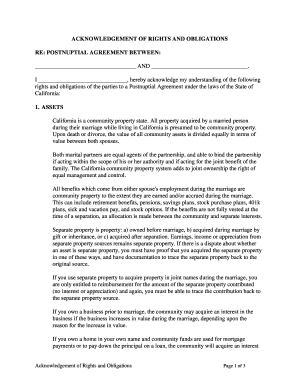
California Form CA
What the California Form CA typically represents
Why accuracy and compliant eSigning matter for Form CA
Completing Form CA correctly reduces processing delays, avoids statutory penalties, and preserves enforceability. Using an auditable eSignature workflow and verifying identity where required helps ensure the form satisfies both California practice and federal e-signature standards such as ESIGN and UETA.
Who commonly prepares and signs the California Form CA
Typical users range from public-sector staff to private practitioners; responsibilities differ by role and industry.
- State and local agency clerks responsible for intake and verification of public records and administrative filings.
- Business owners, HR teams, and finance staff who submit compliance-related forms or acknowledgements for operations.
- Attorneys, real estate brokers, and title professionals who prepare or review documents with legal or property consequences.
Understanding which role you occupy helps determine required fields, signer authority, and whether notarization or witnessing is necessary.
Step-by-step: filling out California Form CA
-
01Gather documents: Collect IDs, TINs, and supporting records before you begin.
-
02Enter details: Complete each field using required formats and spellings.
-
03Verify roles: Confirm signer authority and whether a notary or witness is required.
-
04Sign and submit: Apply signatures and route the form to the correct filing destination.
Configuring a digital workflow for California Form CA
| Field | Configuration |
|---|---|
| Automatic detection | Enable to map names, dates, and addresses to form fields. |
| Signer authentication | Use email plus optional SMS or KBA for higher assurance. |
| Signing order | Set sequential or parallel routing per your process. |
| Audit trail | Capture timestamps, IPs, and signer actions for evidence. |
Where to send Form CA after completion
-
Agency filing: Submit to the named California state or county office per instructions.
-
Internal records: Store in secure document management for compliance and audit.
-
External recipients: Send signed copies to counterparties, lenders, or counsel as required.
-
Notary return: If notarized, return the original to the submitter or file per agency rules.
Digital signing and integration considerations
Ensure any eSignature platform you use supports required security, auditability, and integration with your systems.
- File formats: PDF, DOCX accepted
- Integrations: Salesforce, NetSuite, Google Workspace
- Authentication: Email, SMS, SSO options
Choose a platform that provides tamper-evident signed PDFs, a complete audit trail, and integrations with your document storage or workflow systems to reduce manual handling and ensure reproducible records.
Common filing deadlines and timing considerations
W-9 requests:
Provided on request; no fixed IRS filing deadline
1099-NEC / 1099-MISC:
Recipient and IRS copy often due Jan 31 for nonemployee compensation
Individual tax return:
Form 1040 due April 15; extension to Oct 15 with Form 4868
General agency filings:
Follow agency-specified deadline on the form or instructions
Notarization timing:
Sign before a notary within the timeframe required by the receiving party
Penalties and risks from incorrect or late submissions
Common preparation mistakes to avoid
- Entering abbreviated or informal names that do not match government ID can trigger rejections or require notarized corrections.
- Using inconsistent date formats (eg, mixing DD/MM/YYYY and MM/DD/YYYY) causes confusion and may invalidate timing-sensitive provisions.
- Omitting the notary venue, authority, or official seal when required will often render the acknowledgement ineffective for filing.
- Failing to obtain proper signer authority (corporate officer, authorized agent) can leave the document unenforceable and open to challenge.
eSignature pricing and capabilities comparison relevant to Form CA workflows
| signNow | DocuSign | Adobe Sign | PandaDoc | HelloSign | |
|---|---|---|---|---|---|
| Starting Price | $8/user/mo | $15/user/mo | $14/user/mo | $19/user/mo | $15/user/mo |
| Free Trial | 7-day free trial | Varies by plan | Varies by plan | Varies by plan | Varies by plan |
| Bulk Send | Yes | Yes | Yes | Yes | No |
| Audit Trail | Yes | Yes | Yes | Yes | Yes |
| Envelope Cap | No cap | 100 envelopes/user/year | Varies | Varies | Varies |
How organizations use a state form like California Form CA in practice
Optica Ventures LLC
The interface is simple and easy-to-use for our team; more importantly, it is just as easy for our customers.
- Faster turnaround reduced manual follow-up.
- Optica uses digital workflows to streamline customer signings and improve recordkeeping while keeping documents accessible across devices and reducing in-person meetings.
Tech Data
Tech Data uses airSlate SignNow to improve our internal and external customer service while increasing our speed to revenue.
- Integration with existing systems accelerated processing.
- The company automated routing for approvals and signatures which reduced cycle time and centralized audit trails for compliance reviews.
Practical tips for accurate and efficient completion
FAQs and troubleshooting for California Form CA
-
Can I e-sign California Form CA?
Yes, electronic signatures are generally valid under the ESIGN Act (15 U.S.C. ch. 96) and UETA where applicable; confirm the recipient accepts eSigned submissions and that any required consumer disclosures are provided.
-
Is notarization required for Form CA?
Not all versions require notarization; when a notary or witness is specified, complete the notary block or secure remote notarization per state rules and the receiving agency's instructions.
-
How do I correct a signed error?
If minor, execute a written amendment or correction and have it signed by all parties; for substantive errors, complete a replacement form and note supersession to maintain a clear record.
-
Who may sign on behalf of an organization?
An authorized officer or agent with written authority should sign; for entities, maintain delegation documentation to prove signatory authority if challenged.
-
How long should I keep the completed form?
Retention depends on purpose: follow federal minimums (for example, IRS records 3 years under IRC §6501(a)) and industry rules such as HIPAA six-year retention under 45 CFR §164.530(j).
-
Can I revoke or cancel a submitted Form CA?
Revocation depends on form type and recipient rules; contact the receiving agency or counterparty immediately, document the cancellation in writing, and, if necessary, submit an amended or replacement form.