Establishing secure connection…Loading editor…Preparing document…

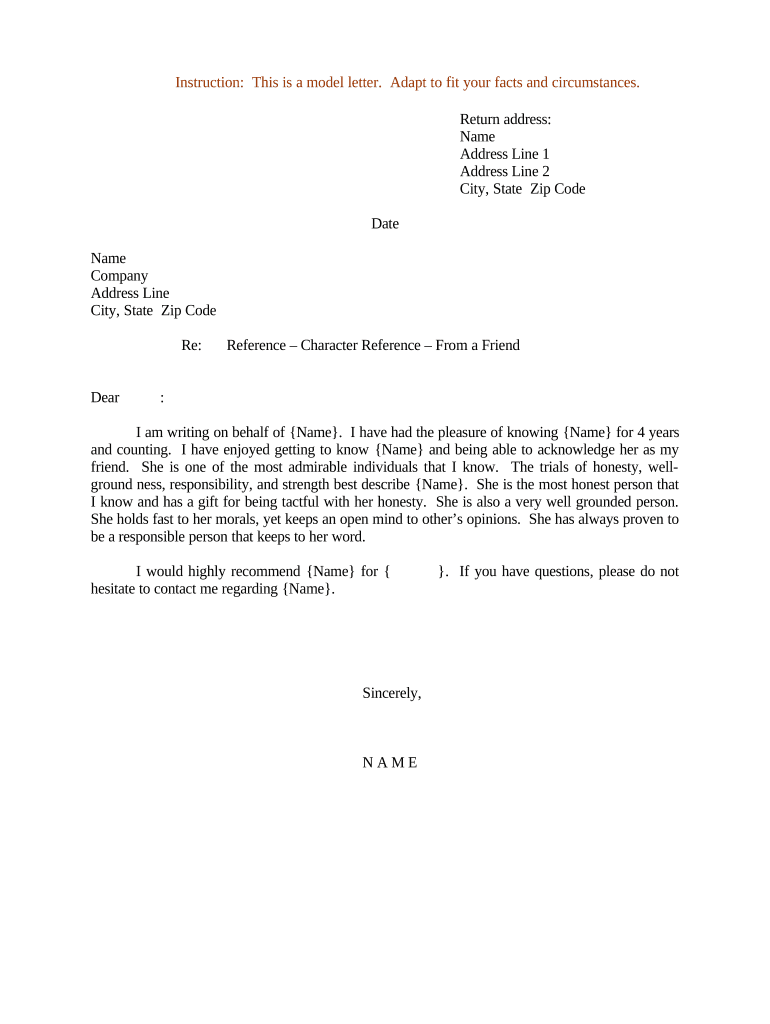
Character Reference Letter

This template is fully customizable. Edit the text, fill out the fields, and send it for signature. Give it a try!
Character Reference Letter

What a Character Reference Letter Is and When It’s Used

A Character Reference Letter is a written statement from a third party describing an individual’s personal qualities, behavior, and reputation. Commonly submitted to courts, employers, landlords, academic committees, or immigration authorities, it provides a qualitative perspective beyond formal records. Letters should be factual, dated, and signed by someone who knows the subject well; they may include examples of conduct, length of relationship, and contact information. Electronic signing is legally acceptable in most U.S. contexts under ESIGN and UETA, subject to exceptions for certain court filings or testamentary documents.

Why a Well‑Written Letter Matters

A clear, credible Character Reference Letter supplies context that documents alone cannot, helping decision‑makers evaluate honesty, responsibility, and rehabilitation. It can influence sentencing, hiring, housing, or immigration outcomes when paired with objective evidence.

Why a Well‑Written Letter Matters

Who Typically Writes and Receives These Letters

Typical authors include supervisors, colleagues, counselors, clergy, neighbors, or friends who can attest to the subject’s character and provide specific examples.

  • Employers or hiring managers evaluating reliability, references, or character in candidate screening or disciplinary reviews.
  • Attorneys submitting letters for sentencing, plea mitigation, or immigration petitions where personal character supports legal arguments.
  • Landlords, school admissions officers, and licensing boards assessing trustworthiness or fitness for housing, programs, or professional privileges.

Step‑by‑Step: Preparing and Submitting a Character Reference Letter

Follow these steps to draft, verify, sign, and route a Character Reference Letter for legal, employment, housing, or immigration use.

  • 01
    Draft the Letter: Write plainly, include examples, and avoid legal conclusions.
  • 02
    Confirm Details: Verify names, dates, and recipient instructions before finalizing.
  • 03
    Sign Properly: Provide signature, printed name, date, and contact information.
  • 04
    Deliver to Recipient: Send per recipient instructions: court filing, HR, or immigration packet.

Core Elements of a Professional Character Reference Letter

A concise, organized letter builds credibility. Include identification, relationship, examples, assessment, contact details, and a clear signature block to meet common recipient expectations.

Header

Date and recipient line: include a formal salutation and, when relevant, court or agency reference numbers for ease of filing and linkage.
Introduction

Identify yourself, your role, and how long you have known the subject; this establishes your perspective and the basis for your observations.

Concrete Examples

Describe specific actions or behaviors that demonstrate the trait you claim, with brief context and approximate dates when possible.

Character Assessment

Offer a fact‑based appraisal of honesty, responsibility, work ethic, or rehabilitation rather than speculative or legal conclusions.

Contact Info

Provide daytime phone number and email so the recipient can verify or request clarification if needed.

Signature

Sign and date the letter. For eSigned letters include a certificate of completion or audit trail for attribution.

Required Information and Common Fields

Subject Name: Full legal name
Author Identity: Your full name and title
Relationship Detail: Nature and duration
Specific Instances: Concrete supporting examples
Contact Details: Phone and email
Signature Date: MM/DD/YYYY format

Where to Send a Character Reference Letter

Routes depend on purpose. Follow recipient instructions precisely—courts, employers, landlords, and immigration authorities each have preferred submission channels.

  • Court Filings: File per clerk instructions or deliver to counsel before hearing.
  • Employment: Send to HR or hiring manager as directed in job process.
  • Housing: Provide to landlord or leasing office with application materials.
  • Immigration: Include with petition packet or mail per USCIS guidance.

Customizing and Completing the Letter Online

Use a digital workflow to create templates, add signer fields, and capture an audit trail; configure authentication and storage according to recipient needs.

Field Configuration
Template Prepopulate name, dates, and static text for reuse
Signature Field Require signer signature and date with audit data
Authentication Email or SMS code to confirm signer identity
Storage Save signed copy to secure cloud location

Digital Signing and eSubmission Considerations

Electronic submission can meet recipient requirements if authentication and retention meet legal standards under ESIGN and UETA.

  • File Formats: PDF and DOCX supported
  • Integrations: Works with Google Workspace, Microsoft 365
  • Authentication: Email, SMS, or stronger options

Timelines and Timing Expectations

Timing depends on recipient: court hearings, employer start dates, or immigration filing windows require different lead times—confirm deadlines and allow processing time.

Court Hearing:

Submit at least 7–14 days before the hearing

Sentencing Letters:

Provide several weeks lead time for counsel review

Immigration Petitions:

Include letters when filing or per counsel instruction

Employment Processes:

Send promptly after request to avoid delays

Housing Applications:

Attach with application or upon landlord request

Common Mistakes to Avoid

  • Using vague praise without concrete examples reduces persuasiveness and invites follow-up verification.
  • Including legal conclusions or promises about outcomes can be inappropriate and weaken the letter’s credibility.
  • Submitting unsigned or undated letters results in rejection or requests for re‑execution; always sign and date.
  • Sharing sensitive health information without authorization risks HIPAA violations and should be avoided.

Potential Legal and Practical Risks

Perjury Risk: False statements may be criminal
Privacy Breach: Unauthorized health details risk HIPAA
Reputational Harm: Misleading content can damage author credibility
Rejected by Recipient: Improper format or lack of signature
Notarization Errors: Incorrect notary procedure invalidates affidavit
Late Submission: Missed deadlines may reduce letter impact

eSignature Vendor Comparison for Character Reference Letters

Select an eSignature provider based on price, authentication, audit trail requirements, and HIPAA or court acceptance; signNow appears first for easy comparison.

signNow DocuSign Adobe Sign PandaDoc HelloSign
Starting Price $8/user/mo $15/user/mo $14/user/mo $19/user/mo $15/user/mo
Free Trial 7‑day free trial, no credit card Varies by vendor Varies by vendor Varies by vendor Varies by vendor
Bulk Send Yes Yes Yes Yes No
Audit Trail Yes Yes Yes Yes Yes
HIPAA Compliant Yes Yes Yes No No
Envelope Cap No envelope cap 100 envelopes/user/year Varies by plan Varies by plan Varies by plan

Practical Examples: When a Character Reference Letter Helps

Short scenarios illustrate how to adapt tone and detail depending on recipient and purpose.

Employment Reference

Intro: A manager describes a former employee’s reliability and teamwork over five years.

  • Point: Emphasize punctuality and collaboration.
  • Outro: Provide specific incidents, include contact details, and state willingness to discuss the candidate by phone if requested.

Immigration Support

Intro: A community leader attests to the applicant’s good moral character and community contributions.

  • Point: Cite volunteer roles and duration.
  • Outro: Keep statements factual, attach corroborating documents where possible, and include full contact information for USCIS verification.

Who Can Sign a Character Reference Letter

Colleague / Supervisor

A colleague or supervisor can sign if they have direct working experience and can document specific examples of professional conduct, length of relationship, and observable skills or behaviors relevant to the recipient’s inquiry.

Community Leader

Church leaders, coaches, or nonprofit directors may sign to attest to service, volunteerism, or rehabilitation; include organizational role and contact details for verification.

Amending or Updating an Existing Letter

When revising, track changes, note effective dates, and re‑execute signatures to maintain record integrity.

01

Review:

Identify required updates and reasons
02

Edit:

Make concise, factual adjustments
03

Date:

Use new effective date for revision
04

Sign:

Have author re‑sign or eSign
05

Store:

Retain prior and revised copies
06

Notify:

Send updated version to recipients

Tips for a Clear, Credible Letter

Follow these best practices to make the letter useful and legally defensible while protecting privacy and avoiding unintended statements.

Be Specific and Factual
Cite concrete examples with dates and outcomes; avoid unverifiable claims or speculation about legal consequences.
Keep Tone Professional
Use respectful, formal language; avoid emotional appeals that may undermine objective credibility.
Avoid Sensitive Health Details
Do not disclose protected health information without written HIPAA authorization or counsel guidance.
Provide Verification Contact
Include daytime phone and email so recipient can confirm details without delay.

Frequently Asked Questions About Character Reference Letters

Answers to common questions about drafting, signing, and submitting Character Reference Letters for legal, employment, or immigration purposes.


Need help? Contact support

be ready to get more
Join over 28 million airSlate SignNow users