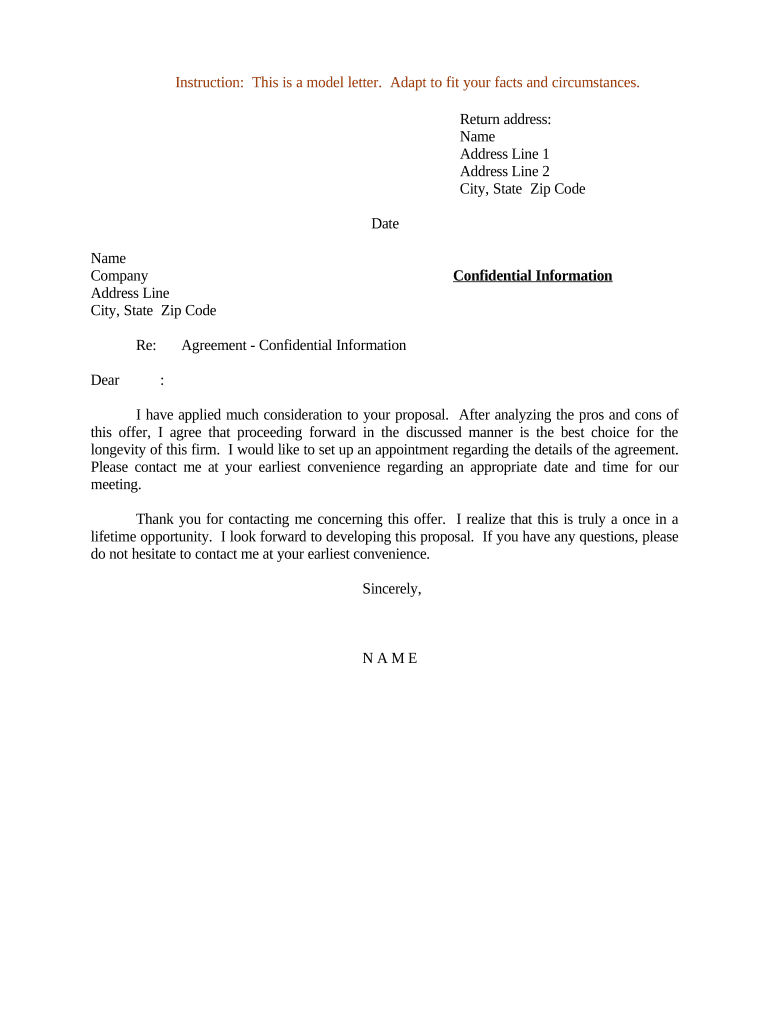
Letter Regarding Confidential Information Agreement
What the Letter Regarding Confidential Information Agreement Is
Why Use a Letter to Accompany a Confidentiality Agreement
A concise letter clarifies scope, timing, and authorized recipients, reduces ambiguity in enforcement, and creates a dated record that complements an NDA; it supports attribution and retention under ESIGN (15 U.S.C. §7001) and state UETA rules.
Who Typically Prepares and Receives This Letter
The letter is useful across sectors to document expectations and to support later disputes or audits without replacing a full NDA.
- Corporate legal and compliance teams preparing disclosures during diligence or vendor onboarding.
- Healthcare providers attaching HIPAA-authorized disclosures to patient data sharing agreements.
- Small businesses and startups sharing technical or financial materials with potential partners.
Typical Signatories and Their Roles
Company Representative
A senior manager or authorized officer signs to confirm the company is disclosing confidential material under the referenced agreement and to accept any return, use, or destruction conditions.
Recipient Signatory
An authorized recipient or counsel signs to acknowledge receipt, confirm understanding of restrictions, and provide consent to electronic delivery or record retention when required.
Key Risks if the Letter Is Incomplete or Incorrect
Common Preparation Mistakes to Avoid
- Failing to reference the exact NDA or agreement by date and title, which creates uncertainty about which terms apply and when confidentiality obligations started or expire.
- Using vague descriptions like 'proprietary information' without examples or categories, increasing the likelihood of later disputes over what was intended to be protected.
- Not specifying return or destruction procedures and timeframes, which complicates compliance with data minimization or regulatory retention rules.
- Overlooking required legal exceptions such as compelled disclosure, permitted disclosures to advisors, or carve-outs for preexisting knowledge.
Step-by-Step: Completing the Letter Regarding Confidential Information Agreement
-
01Identify Parties: Enter full legal names and roles for each party
-
02Reference Agreement: Cite the NDA title and effective date precisely
-
03Describe Materials: List categories or attach an exhibit describing confidential items
-
04Sign and Date: Include signature, printed name, title, and MM/DD/YYYY date
How to Configure an Online Workflow for the Letter
| Field | Configuration |
|---|---|
| Signature Field | Required; signer name auto-fill |
| Date Field | MM/DD/YYYY format enforced |
| Attachment Field | Allow exhibit upload (PDF/DOCX) |
| Authentication | Email link or SMS code to verify signer |
Technical Options for eSigning and Delivery
Ensure the selected platform can produce a tamper-evident PDF with an audit trail and satisfies any industry compliance obligations.
- Integrations: Salesforce, Microsoft 365, NetSuite, Google Workspace supported
- Formats: PDF, DOCX, and HTML accepted for uploads
- Authentication: Options include email, SMS code, and advanced verification
Comparing eSignature Vendor Pricing and Key Capabilities
| signNow | DocuSign | Adobe Sign | PandaDoc | HelloSign | |
|---|---|---|---|---|---|
| Starting Price | $8/user/mo | $15/user/mo | $14/user/mo | $19/user/mo | $15/user/mo |
| Free Trial | 7-day free trial | No | No | No | No |
| Bulk Send | Yes | Yes | Yes | Yes | No |
| Audit Trail | Yes | Yes | Yes | Yes | Yes |
| HIPAA Compliant | Yes | Yes | Yes | No | No |
| Envelope Cap | No envelope cap | 100 envelopes/user/year | Varies by plan | Varies by plan | Varies by plan |
Typical Deadlines and Timing to Include in the Letter
Effective Date:
Enter the date the confidentiality obligations begin (MM/DD/YYYY)
Disclosure Window:
State the period during which the recipient may use the materials
Return Deadline:
Set a firm date for return or certified destruction, e.g., within 30 days of request
Audit Response Time:
Specify reasonable response time for compliance inquiries, commonly 10–15 business days
Document Retention:
Note retention obligations and when records will be purged or archived
Frequently Asked Questions About the Letter and Execution
-
Is this letter legally binding?
Yes, when it evidences mutual intent, the parties consent to electronic records where applicable, and signature attribution is clear. ESIGN (15 U.S.C. §7001) and state UETA rules govern enforceability.
-
Can I sign this letter electronically?
Yes. Electronic signatures are valid under ESIGN and UETA provided intent, consent, attribution, and retention requirements are met. For regulated industries, verify additional standards like 21 CFR Part 11 or HIPAA BAAs.
-
Who should sign the letter?
An authorized representative of the disclosing party and an authorized recipient or their authorized agent should sign. The signer should have capacity and documented authority to bind the organization.
-
What if disclosure is required by law?
Include a compelled disclosure clause that requires notice to the discloser where permitted, and cooperate on protective orders. Ensure compliance with applicable laws such as subpoenas or regulatory requests.
-
How do I amend or revise the letter after signing?
Prepare a written amendment signed by the same authorized parties; if electronic, use an audit-tracked signature solution that preserves prior versions and shows the amendment date.
-
Where should I store the signed letter?
Store signed documents in a secure, access-controlled repository with tamper-evident copies and retention policies that meet IRS, HIPAA, or other applicable regulatory timelines.