Establishing secure connection…Loading editor…Preparing document…

Estate Distribution Letter

This template is fully customizable. Edit the text, fill out the fields, and send it for signature. Give it a try!
Estate Distribution Letter

What an Estate Distribution Letter Is and When it’s Used

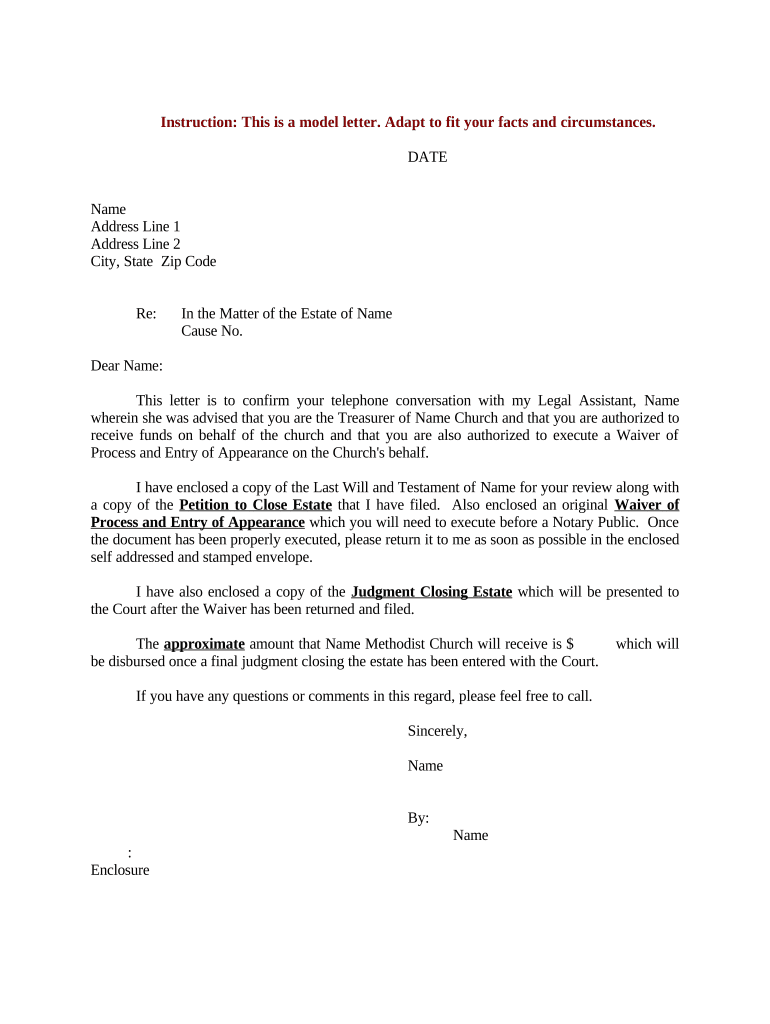
An Estate Distribution Letter is a formal written notice prepared by an executor, administrator, trustee, or attorney that explains how a deceased person’s assets will be or have been allocated to beneficiaries. It typically references the governing will or trust, identifies the estate or trust account, lists specific assets or cash distributions, and states the effective distribution date. The letter creates a clear record of the distribution plan, provides contact information for follow-up, and may attach supporting documents such as a probate case number, inventory, or copies of the decedent’s dispositive instrument.

Why a Clear Estate Distribution Letter Matters

A well-drafted letter reduces ambiguity, documents the executor’s authority, and creates a paper trail for probate and tax purposes. It helps manage beneficiary expectations, speeds administrative tasks, and lowers the risk of disputes or creditor challenges while supporting compliance with probate and tax reporting obligations.

Why a Clear Estate Distribution Letter Matters

Who Prepares and Relies on an Estate Distribution Letter

The Estate Distribution Letter is used by parties involved in estate administration to communicate allocations and next steps to beneficiaries and third parties.

  • Executor or Personal Representative — Confirms authority, lists distributions, and instructs custodian actions in straightforward terms.
  • Estate Attorney or Probate Counsel — Drafts or reviews wording to ensure legal accuracy and conformity with the will or trust.
  • Financial Institutions or Custodians — Receive the letter to process transfers, release funds, or update account ownership records.

Clear distribution letters streamline transfers, reduce follow-up questions, and provide a contemporaneous record for probate files and tax reporting.

Stepwise Process to Prepare and Send the Letter

Follow these core steps to prepare an accurate, verifiable Estate Distribution Letter and complete distribution tasks in proper order.

  • 01
    Draft Letter: Assemble authority, list assets, and calculate shares or amounts.
  • 02
    Attach Records: Include will/trust excerpt, probate order, and inventory as needed.
  • 03
    Authenticate: Sign, notarize if required, and obtain witness signatures where applicable.
  • 04
    Distribute and Retain: Send to beneficiaries and custodians; keep a certified copy in estate file.

Essential Elements of a Professional Estate Distribution Letter

Include clear identification, legal authority, detailed asset breakdown, distribution calculations, recipient instructions, and contact information to produce a defensible record.

Recipient Header

Identify each beneficiary by full legal name, address, and relationship so recipients are unambiguous and verifiable.
Authority Statement

Cite the executor’s appointment, probate case number, or trustee authority and reference the governing will or trust document.

Asset Inventory

List assets with identifiers (account numbers, addresses, VINs) and state whether transfers are in kind or cash.

Distribution Schedule

Set out exact shares or dollar amounts, payment method, and any conditions or withholding obligations.

Attachments

Attach relevant probate orders, the will/trust excerpt, account statements, or tax documents to support each distribution.

Contact Details

Provide executor or counsel contact information for follow-up and include instructions for submitting claims or questions.

Required Identifiers and Short Data Checklist

Executor: Full legal name
Estate ID: Probate case number
Decedent Info: Full name and date of death
Account IDs: Bank or account numbers
Beneficiary Info: Full name and address
Effective Date: MM/DD/YYYY format

Routing: From Letter Draft to Asset Transfer

A simple routing flow ensures the letter is verified, signed, delivered, and recorded with necessary parties.

  • Prepare: Draft letter and attach verification documents.
  • Approve: Executor or counsel reviews and signs.
  • Send: Deliver to beneficiaries and institutions by certified mail or secure eDelivery.
  • Confirm: Receive acknowledgments and confirm transfers complete.

Digital Signing and Platform Considerations

Use a platform that supports secure e-signatures, audit trails, and appropriate authentication for legal documents.

  • File Formats: PDF and DOCX accepted for consistent records
  • Authentication: Email, SMS code, or advanced verification
  • Integrations: Connectors for bank or records systems

Verify the chosen platform meets legal standards (ESIGN and UETA) and retention needs; consider platforms with HIPAA, SOC 2, and ISO certifications where required.

How to Configure a Digital Distribution Workflow

Configure fields and authentication to match legal needs and the parties involved before sending letters for signature or confirmation.

Field Configuration
Recipient Authentication Email link plus SMS code or identity verification
Conditional Fields Show distribution details only to intended recipient
Template Reuse Save letter as template for consistent repeat use
Audit Trail Enable IP, timestamp, and action logging

eSignature Pricing Snapshot for Estate Distribution Workflows

Compare common vendor pricing and capabilities relevant to processing estate distribution letters; signNow is listed first per vendor comparison conventions.

signNow DocuSign Adobe Sign PandaDoc HelloSign
Starting Price $8/user/mo $15/user/mo $14/user/mo $19/user/mo $15/user/mo
Free Trial 7-day free trial Varies Varies Varies Varies
Bulk Send Yes Yes Yes Yes Varies
Audit Trail Yes Yes Yes Yes Yes
HIPAA Compliant Yes Yes Yes No No

Short Risk Summary

Beneficiary Dispute: Civil litigation risk
Tax Exposure: Incorrect reporting penalties
Transfer Delays: Custodian holds or freezes
Withholding Trigger: Missing TINs cause backup withholding
Invalid Authority: No probate proof causes refusal
Record Loss: Missing audit trail undermines defense

Common Mistakes to Avoid When Preparing the Letter

  • Using informal or ambiguous language that fails to identify assets precisely, which can delay transfers and create disputes.
  • Omitting the probate case number or court order that verifies the executor’s authority, causing custodians to refuse action.
  • Failing to verify beneficiary legal names or TINs, which can trigger backup withholding or incorrect tax reporting.
  • Sending distribution instructions without attaching required documents such as the will, trust excerpt, or account statements.

Real-World Examples of Digital Document Use in Estate Workflows

Below are two concise examples showing how organizations used secure document workflows for estate-related communications.

Martin Properties — Tim Martin

Martin Properties moved estate notices online to serve distributed beneficiaries efficiently.

  • The team used mobile and offline signing when needed to collect authorizations.
  • Tim Martin (Founder) said he could process and execute documents online with compliance and security, enabling timely distributions without in-person meetings and reducing processing delays for the property portfolio.

Fertility Centers of Illinois — John Butler

A healthcare organization standardized notices and authorization letters for estate matters to protect PHI.

  • They combined role-based signing and audit trails for accountability.
  • John Butler (Founder) praised the responsive support and API integration that helped the organization maintain records and compliance when sending sensitive documents.

Practical Tips for Accurate, Efficient Estate Distribution Letters

Adopt consistent templates, verify data carefully, and maintain a secure copy of signed letters and supporting records for probate and tax review.

Use a Template
Create a standard template that includes required fields, authority citation, and attachment checklist to reduce omissions and speed preparation.
Verify Identities
Confirm beneficiary names and TINs against government ID or institution records to prevent withholding or transfer refusal.
Attach Evidence
Include the probate order, will or trust excerpt, and account statements to support transfers and prove executor authority.
Keep an Audit Trail
Record timestamps, delivery receipts, and signed copies; retain these records per retention policy for defense against disputes.

Primary Signers and Responsible Parties

Executor / Personal Representative

The executor named by the will or appointed by the court signs distribution letters and authorizes transfers. Their signature should match court records and be supported by the probate appointment or letters testamentary.

Estate Attorney

An attorney may sign or co-sign distribution letters when acting under power of attorney or when counsel has been authorized to administer certain disbursements; attorney review reduces legal risk.

Timelines and Typical Processing Expectations

Expect varying timelines depending on probate status, creditor notice periods, and institutional processing times.

Probate Opening:

File with court to obtain letters of administration; timing varies by county.

Creditor Notice Window:

State-specific; institutions often wait until creditor period closes.

Inventory Deadline:

Courts may require an inventory within a set period after appointment.

Distribution Approval:

Court or accountant approval may be required before final distributions.

Final Accounting:

Complete final report and receipts before estate closure.

How to Edit or Reissue an Estate Distribution Letter

Use a controlled amendment process to avoid conflicts and preserve the audit trail when the distribution plan changes.

01

Identify Change:

Document why the distribution must change and who authorized it.
02

Draft Amendment:

Prepare a clear amendment or superseding letter referencing original date.
03

Obtain Approval:

Get court or co-executor approval if required by the will or probate rules.
04

Notify Parties:

Send updated letters to beneficiaries and custodians with rationale.
05

Record Change:

Attach amendment to the estate file and retain signed copies.
06

Confirm Transfers:

Verify custodians processed the revised instructions.

Notarization, Witnessing, and Remote Options: Typical Steps

Follow a consistent authentication workflow for signatures and notarization to satisfy state and institutional requirements.

01

Check State Rules

Confirm whether notarization or witnesses are required under local probate or notary law.

02

Arrange Witnesses

Secure the required number of impartial witnesses before signing where state law mandates.

03

Sign in Presence

All required parties should sign in the physical presence of the notary or witnesses.

04

Notary Acknowledgement

Have the notary complete an acknowledgement or jurat as appropriate.

05

Use RON if Allowed

If the state permits Remote Online Notarization, follow identity-proofing and A/V recording rules.

06

Retain Notary Record

Keep journal entries or RON recordings as required by state law.

07

Deliver Certified Copy

Provide institutions with a certified copy or authenticated digital record when requested.

08

Confirm Acceptance

Obtain written confirmation that the custodian accepted the document for processing.

Frequently Asked Questions About Estate Distribution Letters

Answers to common questions about authority, formatting, delivery, and legal concerns when preparing distribution letters.


Need help? Contact support

be ready to get more
Join over 28 million airSlate SignNow users