Claimant Details
Full legal name, date of birth, Social Security number, contact information, and job title so insurers can match payroll and identity records reliably.
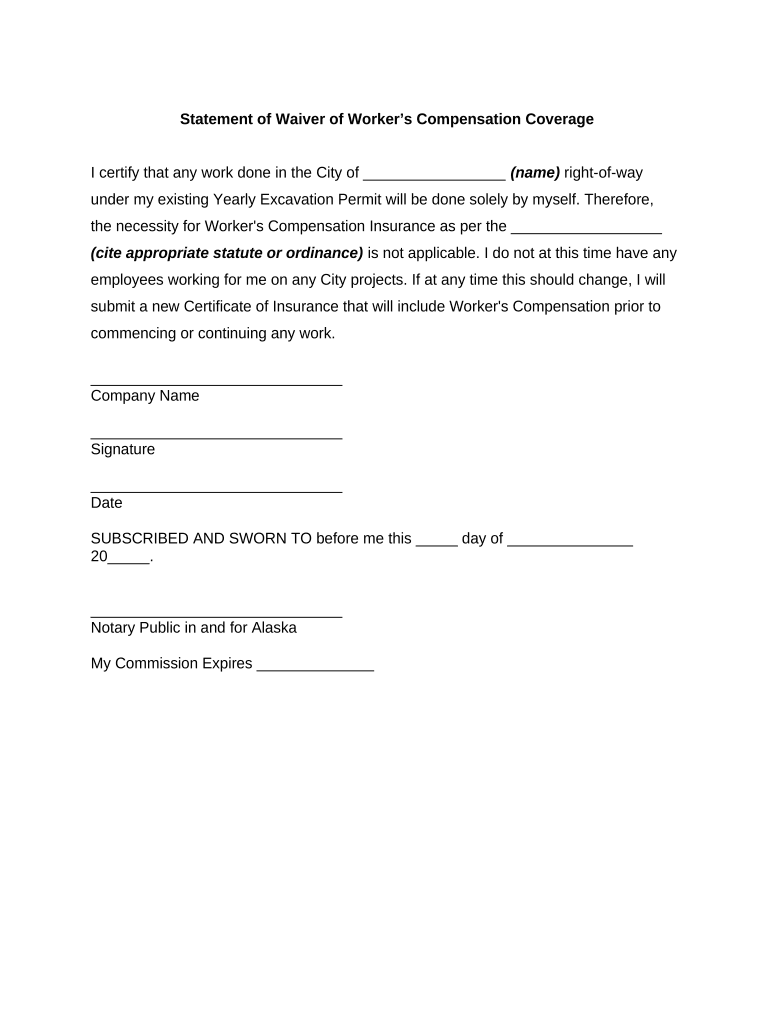
Completing the form correctly preserves the injured worker’s rights, starts the claims process, and reduces delays in medical care and wage replacement. Accurate, timely reporting also limits exposure to penalties and helps employers meet statutory reporting obligations across jurisdictions.

Each actor has distinct responsibilities: employers report quickly, claimants provide accurate facts, and insurers document decisions to create a complete claim record.
An HR or safety officer who documents employer details, job role, incident location, and immediate corrective actions. They ensure the claim is submitted to the insurer or state fund and retain copies per employer recordkeeping obligations.
The employee (or authorized agent) who provides personal information, a narrative of the injury, treatment received, and consent for medical release when required. Their accurate account supports benefit eligibility and medical billing.
| Field | Configuration |
|---|---|
| Authentication | Email link or SMS code for signer verification |
| Document Format | PDF/A or DOCX with flattened fields for archival |
| Notifications | Auto-email on submission and status changes |
| Integrations | Connect to HRIS, claims system, or cloud storage |
Ensure the platform offers role-based access, audit reporting for compliance, and HIPAA-capable workflows when PHI is included to reduce regulatory risk.
Report the injury to employer as soon as possible; many states require immediate notice.
Employers often must forward claim to insurer or authority within 7–30 days depending on jurisdiction.
Seek initial medical care immediately; early records support causation and benefits.
Workers must file formal claims within state statute of limitations; time limits vary widely.
Administrative hearing and appeal deadlines are short; preserve records and dates.
Worker notifies employer and employer documents the incident and starts intake procedures.
Insurer receives claim, assigns adjuster, and requests medical records as needed.
Insurer issues acceptance or denial and begins wage-replacement or medical payments when accepted.
Claim resolves through agreement, claim closure, or administrative hearing if disputed.
| Criteria | Worker's Compensation Form | Employer Incident Report |
|---|---|---|
| Purpose | benefit claim | internal safety record |
| When used | after injury | immediately after event |
| Required signatures | worker + employer | supervisor only |
| Legal effect | initiates benefits | safety review only |
| signNow | DocuSign | Adobe Sign | PandaDoc | HelloSign | |
|---|---|---|---|---|---|
| Starting Price | $8/user/mo | $15/user/mo | $14/user/mo | $19/user/mo | $15/user/mo |
| Free Trial | 7-day free trial | Varies by vendor | Varies by vendor | Varies by vendor | Varies by vendor |
| Bulk Send | Yes | Yes | Yes | Yes | No |
| Audit Trail | Yes | Yes | Yes | Yes | Yes |
| HIPAA Compliant | Yes | Yes | Yes | No | No |
| Envelope Cap | No cap | 100 envelopes/user/year | Varies by plan | Varies by plan | Varies by plan |
Full legal name, date of birth, Social Security number, contact information, and job title so insurers can match payroll and identity records reliably.
Employer legal name, address, FEIN or payroll identifier, and supervisor contact details to establish coverage and facilitate communication during claim handling.
Concise description of what happened, the specific task, tools or equipment involved, and environmental conditions to support causation analysis.
Provider names, treatment dates, diagnoses, and work restrictions to determine medical necessity and temporary disability entitlements.
Recent wage data, average weekly earnings, and pay frequency to calculate indemnity benefits accurately and consistently.
Signed and dated confirmations from worker and employer; include e-signature metadata for electronic submissions to ensure legal traceability.
A roofer slips on wet decking and reports the injury the same day to a supervisor.
A nurse reports a needlestick injury after patient contact and completes the form with treatment provider details.