Establishing secure connection…Loading editor…Preparing document…

Exculpatory Clause in Mortgage Regarding Deficiency Judgment

This template is fully customizable. Edit the text, fill out the fields, and send it for signature. Give it a try!
Exculpatory Clause in Mortgage Regarding Deficiency Judgment

What the Exculpatory Clause in Mortgage Regarding Deficiency Judgment Means

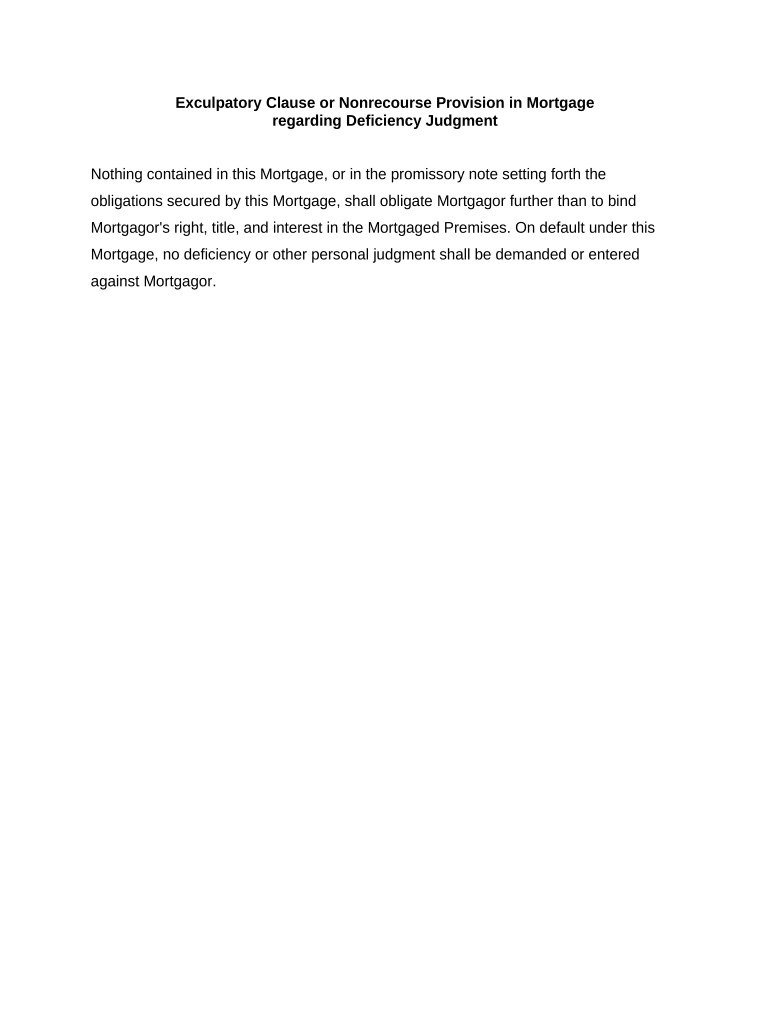
The Exculpatory Clause in Mortgage Regarding Deficiency Judgment is a contractual provision in a mortgage or deed of trust that limits or eliminates a lender's right to pursue a borrower for a deficiency after foreclosure or sale. It specifies circumstances under which the lender waives a deficiency judgment, allocates responsibility for sale proceeds, and clarifies whether a credit bid or statutory deficiency remedy applies. This clause interacts with state foreclosure and deficiency statutes and can materially affect borrower liability, lender remedies, and negotiation outcomes in distressed property situations.

Why This Clause Matters to Lenders, Borrowers, and Counsel

Used in mortgage drafting and loan workouts, an exculpatory clause reduces post-foreclosure litigation risk, clarifies recovery expectations, and guides debtor-creditor negotiation. Properly drafted, it can limit deficiency exposure while aligning contractual remedies with applicable state law and lender policy.

Why This Clause Matters to Lenders, Borrowers, and Counsel

Who Typically Drafts or Relies on an Exculpatory Clause

Primary users include mortgage lenders, loan servicers, portfolio investors, and real estate attorneys drafting foreclosure provisions.

  • Mortgage lenders and special servicers managing nonperforming loans and foreclosure strategy.
  • Investors acquiring distressed mortgage pools who require clear deficiency exposure terms.
  • Real estate and bankruptcy attorneys advising clients on post-sale liabilities and negotiation tactics.

Key Elements to Include in an Effective Exculpatory Clause

Core elements of an Exculpatory Clause in Mortgage Regarding Deficiency Judgment define limits on claims, allocation of sale proceeds, and conditions for waiver.

Scope

Specify whether the lender waives deficiency actions, limits recovery to collateral, or preserves deficiency rights only under defined exceptions such as fraud or judicial sale irregularities.
Trigger Events

List the events that trigger the clause, such as judicial foreclosure, trustee sale, deed in lieu, short sale, or agreed settlement, and state whether each eliminates or preserves deficiency claims.

Calculation

Describe how deficiency is calculated, whether fair market value, sale proceeds, or statutory formula applies, and include timing, credits for expenses, and allocation of surplus or shortfall.

Governing Law

Identify the governing state law and explicitly reference applicable deficiency statutes or case law to avoid ambiguity about whether judicial or strict foreclosure rules control.

Cure Rights

State borrower cure periods, reinstatement rights, redemption window if applicable, and how these affect the lender's decision to pursue a deficiency judgment.

Representations

Include borrower representations about property condition, disclosure of liens, and authority to encumber, plus lender covenants regarding disposition and application of proceeds.

Step-by-Step: How to Prepare and Execute the Clause

Follow these steps to complete an exculpatory clause accurately and ensure enforceability under state law.

  • 01
    Verify Authority: Confirm signatories have authority to bind parties.
  • 02
    Choose Triggers: Specify which foreclosure methods activate the waiver.
  • 03
    Define Calculation: State formula for deficiency and applicable credits.
  • 04
    Document Execution: Sign, date, notarize as required by state law.

Configuring an Online Template and Routing for Execution

Configure an online template to capture required fields, attach supporting exhibits, and automate routing for approvals and notarization.

Field Configuration
Template Name Exculpatory clause template for mortgages
Required Fields Borrower, loan number, property, sale date, signatures
Routing Order Lender then borrower then notary
Authentication Email plus SMS code optional KBA

Typical Processing Flow for e-Execution and Recordation

Typical processing flow for an exculpatory clause when used in electronic mortgage documentation and e-submission.

  • Upload Document: Attach mortgage and exhibits to the eTemplate.
  • Place Fields: Insert signature, date, and calculation fields
  • Send to Signer: Email or link with authentication instructions
  • Complete Audit: Capture timestamp, IP, and certificate

Timing Considerations: Execution, Foreclosure, and Recording

Key timing considerations include execution date, foreclosure sale dates, statute of limitations, and retention requirements for the executed clause.

Execution and Effective Date (MM/DD/YYYY format):

Sign and date on agreed effective date

Foreclosure Sale and Triggering Event:

Identify sale date that activates waiver provisions

Statute of Limitations for Deficiency Claims:

State statutes generally set periods; verify local law

Notarization and Witness Deadlines Where Required:

Complete notary acts before recording or sale to ensure validity

Recordation and Documentary Filing Times:

File recorded instruments per county schedule to memorialize disposition

Essential Data Elements for the Clause and Associated Records

Borrower Name: Full legal name as on ID
Property Address: Street, city, state, ZIP
Loan Number: Servicer loan identifier code
Sale Date: Enter as MM/DD/YYYY format
Consideration: Amount paid or credit amount
Signatures: All parties sign and date

Common Pitfalls to Avoid When Drafting or Reviewing the Clause

  • Vague language about what constitutes a 'deficiency' can lead to litigation, inconsistent court interpretations, and successful borrower challenges under state law.
  • Failing to align the clause with state deficiency statutes or case law risks unenforceability and exposes lenders to unexpected monetary judgments.
  • Not specifying calculation method, credits, or expense allocation often results in disputes about surplus application and improper deficiency amounts.
  • Missing signatures, incorrect parties, or failure to notarize where required can invalidate the clause and void deficiency waivers.

Legal and Practical Consequences of an Incorrect or Omitted Clause

Enforceability Risk: Clause struck down
Monetary Exposure: Unexpected deficiency judgments
Litigation Costs: Increased defense expenses
Regulatory Scrutiny: State law noncompliance
Recording Issues: Failure to record invalidates notice
Operational Delay: Sale postponements

Practical Examples: How Clause Language Affects Outcomes

Real-world scenarios illustrate how exculpatory clauses affect deficiency claims, settlements, and post-sale obligations for borrowers and lenders.

Investor Pool Sale

An investor purchased a portfolio of defaulted loans that included exculpatory clauses limiting deficiency recovery to collateral value and excluding statutory remedies.

  • Clause substantially reduced litigation exposure.
  • As a result, the investor structured bid pricing to reflect capped recovery, negotiated indemnities for title defects, and closed without material deficiency litigation, demonstrating how precise clause drafting can materially alter loss forecasting and recovery strategy.

Servicer Foreclosure

A loan servicer conducted a trustee sale where the mortgage included an exculpatory waiver conditioned on a judicial foreclosure but not a trustee sale.

  • Ambiguous language triggered costly dispute.
  • Courts examined statutory definitions; the servicer renegotiated with the borrower, executed a release, and updated templates to explicitly enumerate triggering foreclosure methods to prevent recurrence.

Frequently Asked Questions About Exculpatory Clauses and Deficiency Judgments

Answers to common questions about drafting, executing, and enforcing the Exculpatory Clause in Mortgage Regarding Deficiency Judgment.


Need help? Contact support

be ready to get more
Join over 28 million airSlate SignNow users