Establishing secure connection…Loading editor…Preparing document…

Florida Supplemental Petition for Modification of Alimony

This template is fully customizable. Edit the text, fill out the fields, and send it for signature. Give it a try!
Florida Supplemental Petition for Modification of Alimony

What the Florida Supplemental Petition for Modification of Alimony Is and When it Applies

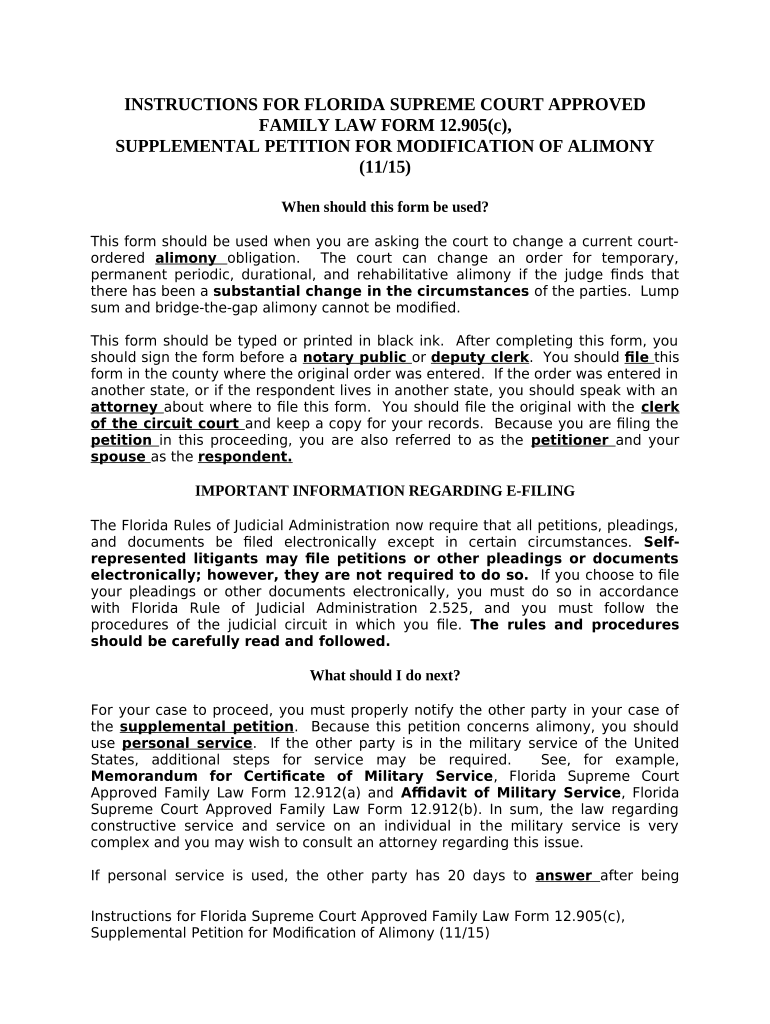
The Florida Supplemental Petition for Modification of Alimony is a court filing used to request a change to an existing alimony order after circumstances materially change. It explains the factual basis for modification, states the relief requested, and attaches supporting financial documentation. Typical triggers include a substantial change in either party's income, employment status, medical condition, or remarriage. The petition is filed in the county where the original order was entered or in the county where the payor currently resides, and it follows Florida family-court procedures for service, filing fees, and case management.

Why a Supplemental Petition for Modification Matters

A well-prepared Supplemental Petition for Modification of Alimony clarifies the legal and factual basis for relief, reduces delays at the hearing, and helps the court assess the requested change against Florida statutory standards and prior orders.

Why a Supplemental Petition for Modification Matters

Who Typically Prepares and Files This Petition

The petition is most often completed by the alimony payor or recipient, their family-law attorney, or a paralegal working under counsel.

  • Self-represented parties: Use when you cannot afford counsel or want to control filing and evidence presentation.
  • Family-law attorneys: File on behalf of clients to meet procedural rules, craft legal arguments, and present financial affidavits.
  • Paralegals and clerical staff: Prepare exhibits and organize supporting financial records under attorney supervision.

Step-by-Step: Completing the Petition

Follow these steps to prepare a complete Supplemental Petition for Modification of Alimony before filing with the clerk.

  • 01
    Gather Documents: Collect recent pay stubs, tax returns, medical records, and the original final judgment.
  • 02
    Draft Petition: State the material change, requested relief, and supporting facts in clear numbered paragraphs.
  • 03
    Attach Affidavits: Include a sworn financial affidavit and any supporting exhibits showing income and expenses.
  • 04
    File and Serve: File with the clerk, pay fees, and serve the opposing party per Florida Rules of Judicial Administration.

Filing and Case Progression Overview

A clear process helps set expectations from filing through hearing and post-order enforcement or appeal.

  • Filing: Submit petition, affidavit, and exhibits to the county clerk; pay required filing fee.
  • Service: Serve the respondent using certified mail, sheriff, or process server per rule.
  • Response & Discovery: Respondent may answer, request additional records, or propose mediation.
  • Hearing & Order: Court holds hearing, then issues an order granting, denying, or modifying alimony terms.

How to Configure an Online Workflow for This Petition

Set up an online workflow to collect the petition, affidavits, and signer authentication before electronic filing or printing for clerk submission.

Field Configuration
Document Template Create a petition template with fixed caption and editable party fields
Required Attachments Make financial affidavit and tax returns mandatory uploads
Signer Authentication Use email+SMS code or stronger ID verification for signer attribution
Delivery Route signed copies to clerk, opposing counsel, and both parties

Key Elements to Include for a Professional Petition

A complete petition combines factual clarity, statutory references, supporting exhibits, and proper procedural steps to reduce challenges and support judicial review.

Clear Caption

Exact court name and case number to attach the petition to the correct file and avoid clerical returns.
Statement of Change

Concise, dated description of the material change and how it affects alimony obligations.

Financial Affidavit

Sworn disclosure of income, assets, liabilities, and monthly expenses to allow judicial comparison.

Supporting Exhibits

Pay stubs, tax transcripts, medical bills, or employer letters that corroborate the factual claims.

Proposed Order

Drafted order showing the exact modifications requested to streamline the court’s ruling.

Certificate of Service

Proof that the opposing party received the petition as required by Florida rules.

Security and Legal Data to Include and Protect

Encryption: TLS 1.2/1.3 in transit
At Rest: AES-256 encryption
Audit Trail: Timestamp, IP, action log
Authentication: Email+SMS or stronger
Compliance: ESIGN and UETA adherence
HIPAA Support: BAA available when required

Typical Timeframes and Filing Deadlines to Expect

Timing varies by county and case complexity; plan for service, response periods, and hearing scheduling when preparing your filing.

Filing Processing:

Clerks typically acknowledge filings within 1–5 business days

Service Time:

Allow 5–14 days for personal service or certified mail delivery

Response Deadline:

Respondent often has 20–30 days to file an answer

Hearing Scheduling:

Hearings set within 30–90 days depending on court calendar

Emergency Relief:

Motions for temporary relief may be heard within days when exigent circumstances exist

Key Milestones from Filing to Final Order

Track these numbered milestones so each required step is completed and evidence is ready for hearing.

01

Prepare Petition

Draft petition and collect affidavits and exhibits before filing

02

File with Clerk

File petition, pay fees, and obtain a stamped copy for service

03

Serve Opposing Party

Complete service and file certificate of service with the court

04

Hearing and Order

Attend hearing; the court issues a written order modifying or denying relief

Common Pitfalls to Avoid When Preparing the Petition

  • Incomplete financial affidavit that omits income sources or deductions
  • Incorrect case caption or number causing clerk rejection
  • Failure to attach supporting exhibits like pay stubs or medical records
  • Improper service method or missing certificate of service

Consequences of Errors or Omitted Information

Clerk Rejection: Delays and additional fees
Default Orders: Judgment for failure to respond
Contempt Risk: Sanctions for noncompliance
Financial Penalties: Attorney fee awards possible
Statute Limits: Timing bars may impair relief
Tax Consequences: Alimony character affects tax treatment

Comparison: eSignature Vendor Pricing and Key Features for Petition Workflows

Choose an eSignature provider based on price, compliance needs, and volume. The table lists starting prices, trial availability, bulk send, audit trail, HIPAA support, and envelope or usage caps.

signNow DocuSign Adobe Sign PandaDoc HelloSign
Starting Price $8/user/mo $15/user/mo $14/user/mo $19/user/mo $15/user/mo
Free Trial Yes, 7-day free trial No No Yes, limited Yes, limited
Bulk Send Yes Yes Yes Yes No
Audit Trail Yes Yes Yes Yes Yes
HIPAA Compliant Yes Yes Yes No No
Envelope Cap No cap 100 envelopes/user/year Varies by plan Varies by plan Varies by plan

Practical Examples of Document Workflows Used by Organizations

These examples show how organizations streamline signing and document management to reduce turnaround and ensure compliance.

Optica Ventures LLC

The interface is simple and easy to use for our team; more importantly, it is just as easy for our customers.

  • Ease of use accelerated customer sign-off and internal approvals.
  • Optica reduced physical paperwork and improved turnaround, enabling repeatable petition preparation and signature capture processes for legal forms.

Fertility Centers of Illinois

The airSlate SignNow team has been exceptional, responsive, the API has been great, and we're extremely happy that we chose airSlate SignNow as a company.

  • API integration enabled automated routing and storage.
  • The center now collects signed consents and supporting documentation electronically while maintaining audit trails and HIPAA protections.

Practical Tips for Accurate, Efficient Petition Preparation

Applying consistent best practices reduces rework, speeds hearings, and helps the court focus on substantive issues rather than clerical defects.

Complete Financial Disclosure
Provide full, organized financial exhibits to support claimed changes and avoid requests for supplemental material.
Use a Proposed Order
Draft a clear proposed order that precisely states the modification to make judicial entry simpler.
Confirm Service Rules
Follow local rules for service method and timing to prevent jurisdictional disputes.
Preserve Originals
Keep original signed documents and maintain a secure digital copy with audit trail for enforcement.

Digital Signing and eSubmission Considerations

Determine authentication, document formats, and storage workflows before using e-signature for court-related petitions.

  • File Formats: PDF, DOCX supported
  • Integrations: Salesforce, Microsoft 365, NetSuite, Google Workspace
  • Authentication: Email+SMS, KBA, or stronger methods

Preserve signed PDFs with embedded audit trails and follow local court rules for converting electronic records to acceptable filing formats.

Frequently Asked Questions About the Petition and eSignature Use

Answers to common procedural and technical questions about filing a Supplemental Petition for Modification of Alimony and using electronic signatures.


Need help? Contact support

be ready to get more
Join over 28 million airSlate SignNow users