Establishing secure connection…Loading editor…Preparing document…

Disclaimer for Website

This template is fully customizable. Edit the text, fill out the fields, and send it for signature. Give it a try!
Disclaimer for Website

What a Website Disclaimer Is and Why It Matters

A Disclaimer for Website is a concise legal notice placed on a website that explains limits on liability, the intended scope of information, and user responsibilities. It clarifies that content is informational only and not professional advice, discloses third-party links and affiliations, and reserves the owner’s right to update content. The disclaimer helps set user expectations, reduce legal exposure from inaccuracies or omissions, and provide a clear contact point for concerns about site material and use.

Why a Clear Disclaimer Protects Your Organization

A clear website disclaimer reduces legal uncertainty by documenting intent, limiting damages from content errors, and notifying users of responsibilities. It supports regulatory compliance for consumer disclosures and clarifies that online communications do not create professional-client relationships.

Why a Clear Disclaimer Protects Your Organization

Core Elements Every Effective Website Disclaimer Needs

Well-drafted disclaimers include focused clauses that limit liability, state scope, disclaim advice, disclose third-party links, explain endorsements, and provide contact details.

Scope

Define which pages, content types, and user interactions the disclaimer covers; specify that archived or third-party content may not be updated and that the owner is not responsible for external site accuracy.
Accuracy Statement

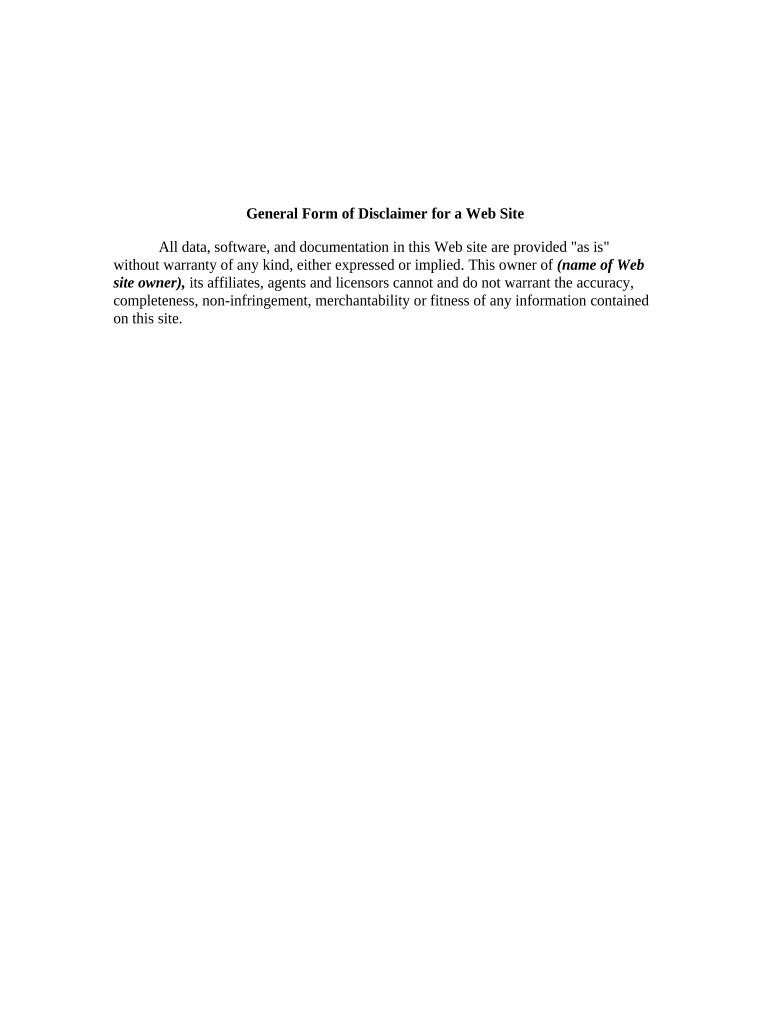
State that information is provided 'as is' without warranties of accuracy or completeness; recommend users verify critical facts and consult qualified professionals before relying on site content for decisions.

No Advice

Make clear that content does not constitute legal, medical, or financial advice; indicate that viewing content does not create a professional-client relationship and recommend seeking licensed counsel for specific matters.

Third-Party Links

Disclose that external links are provided for convenience, clarify the site does not endorse or control linked content, and note that third-party sites have separate terms and privacy practices.

Endorsements

Explain whether testimonials, sponsored content, or affiliate links imply endorsement; disclose paid relationships and describe how affiliate or advertising income may affect content presentation.

Contact Info

Provide a clear contact method for questions, takedown requests, and disputes, plus an expected response timeframe and, where appropriate, a physical address for formal notices.

Who Typically Publishes a Website Disclaimer

Businesses, nonprofits, and individual site owners use disclaimers to limit liability, describe content scope, and set user expectations.

  • Ecommerce businesses clarifying product descriptions, shipping estimates, and return policy relationships.
  • Publishers and bloggers noting opinion content and disclaiming professional or medical advice to readers.
  • SaaS platforms and services clarifying integration limits, third-party links, and user responsibilities.

Step-by-Step: Drafting and Publishing Your Disclaimer

Follow these practical steps to draft, review, and publish an effective website disclaimer that aligns with your operations and legal requirements.

  • 01
    Draft Text: Write clear clauses covering scope, accuracy, and third-party links.
  • 02
    Legal Review: Have counsel review language for regulated services or high-risk exposures.
  • 03
    Publish Notice: Place the disclaimer prominently in the footer and on a dedicated policy page.
  • 04
    Monitor & Update: Review annually or after material changes to laws or business operations.

How to Configure Disclaimer Display and Tracking Online

Configure display, user acknowledgement, and version control so the disclaimer is visible, stored, and tracked for audit purposes across web and app environments.

Field Configuration
Display location Footer link plus dedicated policy page.
Acceptance method Passive link or affirmative consent modal as required.
Versioning Archive prior versions; show effective dates.
Update notification Email or in-app notice for material changes.

Technical Considerations for Publishing and Managing Disclaimers

Choose formats and integrations that support accessibility, auditability, secure storage, and easy updates across your existing tech stack.

  • Supported Formats: PDF, HTML, and plain text
  • Integrations: Salesforce, Google Workspace, NetSuite
  • Authentication: Email link, SMS code, or MFA

Typical Publishing Flow for a Website Disclaimer

A simple publishing workflow ensures users see the disclaimer, acknowledgement is recorded when required, and copies are archived for compliance.

  • Add to Footer: Place a concise link visible on every page.
  • Policy Page: Post the full disclaimer text on a dedicated policies page.
  • Acceptance Banner: Use a cookie banner or modal for affirmative consent when required.
  • Email Notice: Include a policy link in transactional and onboarding emails.

Key Timelines and Review Expectations

Set clear timelines for effective dates, periodic review, and responses to takedown or legal requests to maintain compliance and defensibility.

Effective Date Publication:

Display the effective date on the policy page and archive prior versions.

Annual Review Schedule:

Review language annually or after regulatory changes.

Material Change Update:

Notify users within a reasonable timeframe when material changes occur.

Takedown Response Time:

Respond to valid content removal requests promptly, typically within 30 days.

Record Retention Review:

Verify retention schedule aligns with legal and audit requirements.

Common Mistakes to Avoid When Preparing a Disclaimer

  • Failing to update the disclaimer after regulatory or operational changes creates compliance gaps and increases exposure to consumer protection claims.
  • Using vague or overly broad language without specifics — such as imprecise limits on liability — can render clauses unenforceable in dispute.
  • Hiding the disclaimer behind deep links or obscure menus prevents adequate notice and undermines enforceability for consumer-facing transactions.
  • Omitting clear contact and takedown procedures delays dispute resolution and can escalate regulatory scrutiny or consumer complaints.

Key Risks and Potential Consequences

Consumer Claims: Class actions or individual suits
Regulatory Fines: State consumer protection penalties
Contract Disputes: Challenges over enforceability
HIPAA Exposure: Fines and breach notifications
Reputation Damage: Loss of trust and traffic
Operational Costs: Remediation and legal expenses

eSignature Vendor Pricing Snapshot (signNow listed first)

Compare baseline pricing and a few core features to match an eSignature plan to your disclaimer publication and signing needs.

signNow DocuSign Adobe Sign PandaDoc HelloSign
Starting Price $8/user/mo $15/user/mo $14/user/mo $19/user/mo $15/user/mo
Free Trial 7-day trial Varies Varies Varies Varies
Bulk Send Yes Yes Yes Yes No
Audit Trail Yes Yes Yes Yes Yes
HIPAA Compliant Yes Yes Yes No No

Real-World Examples of Online Acknowledgements and Disclaimers

Organizations across industries use online acknowledgements to speed processes, capture consent, and maintain auditable records of user acceptance.

Martin Properties

Martin Properties moved key disclosures and client acknowledgements online to speed transactions and reduce in-person paperwork.

  • Reduced turnaround time for lease closings.
  • I can process and execute all of these documents online with 100% compliance and built-in security. Whether on mobile or working offline, I can get forms back to their necessary parties efficiently.

Fertility Centers of Illinois

A medical practice implemented secure online acknowledgements to ensure patient forms were completed before appointments.

  • Improved secure patient intake and recordkeeping.
  • The airSlate SignNow team has been exceptional, responsive, the API has been great, and we're extremely happy that we chose airSlate SignNow as a company. They cited reliable API integration and responsive support.

Practical Best Practices for Clear, Enforceable Disclaimers

Adopt these best practices to make your disclaimer readable, legally defensible, and operationally sustainable over time.

Keep Language Plain and Specific
Use short, plain-language sentences and avoid legalese. Be specific about what is disclaimed, which pages are covered, and what actions users should take for critical decisions.
Make Notice Conspicuous and Accessible
Place a concise link in the footer, provide a dedicated policy page, and ensure mobile users can access the full text without scrolling through unrelated content.
Archive Versions and Record Changes
Archive prior versions with effective dates for auditability. Maintain a changelog that records when and why material updates occurred to defend against retrospective disputes.
Coordinate with Privacy and Terms
Ensure consistency with privacy policies and terms of service. Cross-reference documents and keep all policies synchronized when business or regulatory changes occur.

Essential Metadata and Security Details to Display

Website Name: Full legal public site title
Owner Entity: Legal business or individual name
Effective Date: Enter as MM/DD/YYYY date
Revision Number: Sequential numeric version identifier
Contact Email: Public-facing contact address
Governing Law: State chosen to interpret the agreement

Frequently Asked Questions About Website Disclaimers

Answers to common questions about enforceability, updates, electronic acknowledgement, and when to get legal review.


Need help? Contact support

be ready to get more
Join over 28 million airSlate SignNow users