Establishing secure connection…Loading editor…Preparing document…

Order for Writ of Possession

This template is fully customizable. Edit the text, fill out the fields, and send it for signature. Give it a try!
Order for Writ of Possession

What an Order for Writ of Possession Is

An Order for Writ of Possession is a court-issued directive that authorizes recovery of property, typically used after a judgment for possession in eviction or replevin cases. The order instructs law enforcement or a marshal to remove occupants and restore possession to the judgment creditor, and it often sets times, conditions, and required notice to occupants. Procedures, timelines, and required attachments vary by jurisdiction and by court level. Parties seeking or responding to such an order must follow local rules and may need accompanying affidavits, judgments, or service proof to obtain enforcement.

Why the Order Matters

An Order for Writ of Possession provides a clear, enforceable mechanism to restore property rights after a court judgment. It reduces uncertainty about lawful possession, establishes an official timeline for eviction or repossession, and creates a record for enforcement actions.

Why the Order Matters

Who Prepares and Uses This Order

Typical users include landlords, property managers, sheriffs, bailiffs, and civil process attorneys enforcing possession judgments.

  • Landlords and property managers seeking enforcement after a possession judgment.
  • Tenants responding to writs or contesting service and timelines with legal counsel.
  • Sheriff’s or marshal’s offices executing the writ and documenting compliance.

Common Roles Involved

Landlord Rep

A landlord representative files the writ after obtaining a final possession judgment. They coordinate with counsel and the local sheriff, provide proof of service and judgment documentation, and may schedule eviction dates per court order and statutory notice requirements.

Sheriff/Marshal

An executing officer enforces the writ, follows court instructions, inventories surrendered property, and submits a return of service or execution. Proper identification and documentation ensure compliance with local and state procedures.

Essential Parts of a Professional Writ

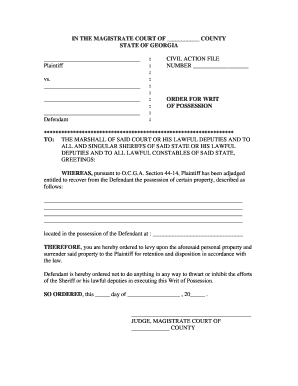
Primary elements of a professional Order for Writ of Possession identify parties, case details, execution instructions, and required supporting records.

Caption

Include case caption with court name, docket number, party names, and judgment date so clerks and enforcement officers can match the writ to the underlying judgment and docket entry.
Order Language

State explicitly that possession is awarded to the judgment creditor, authorize lawful removal, and specify any limits on timing, personal property handling, or supervised turnovers.

Execution Details

List the executing agency, contact person, dates available for execution, and any required witness or inventory procedures to guide enforcement officers and instructions for returning property to the court.

Notice

Specify how notice was provided, required occupant warnings, and any statutory waiting periods to ensure the writ's enforceability during execution and post-removal obligations.

Supporting Docs

Attach certified judgment, proof of service, lease or title documents, and any statutory affidavits; omitting required attachments can delay or bar enforcement and include proposed execution dates where required by local rule.

Return of Service

Require the officer to file a detailed return describing actions taken, property removed, time of execution, and any incidents; this preserves the record for appeals.

Step-by-Step: From Judgment to Enforcement

Follow these steps to prepare, sign, and submit an Order for Writ of Possession to the court clerk or e-filing system.

  • 01
    Prepare Documents: Assemble judgment, proof of service, and required affidavits.
  • 02
    Complete Writ: Fill caption, order language, and execution details.
  • 03
    File With Court: File according to local clerk rules; use e-filing where available.
  • 04
    Coordinate Execution: Notify sheriff and arrange a date consistent with notice requirements.

Setting Up an Online Workflow for the Writ

Configure online workflows to collect signatures, attach supporting files, and route final writs to court clerks and executing officers.

Online Workflow Configuration Table for Writs Setting | Value
Required Authentication Settings for Signers Email link or SMS code; KBA optional per court rule.
Automatic Attachment of Supporting Documents Attach judgment PDF, proof of service, lease or title documents automatically.
Routing Rules and Clerk Notification Settings Route to clerk then executing agency; notify parties after filing automatically.
Execution Scheduling, Windows, and Restrictions Include available dates, hours, and statutory waiting periods required by the court.

Filing, Serving, and Enforcement Flow

This section outlines filing, service, and enforcement flow for an Order for Writ of Possession.

  • Upload: Upload completed writ and attachments to the court e-filing portal or deliver to clerk.
  • File: Pay filing fees and obtain filing stamp or confirmation number.
  • Serve: Provide required notice to occupants and file proof of service with the court.
  • Enforce: Sheriff or marshal executes writ, returns inventory, and files execution report.

Technical and Platform Considerations

Digital submission and e-signature options can streamline execution where courts accept electronic filings and signatures.

  • File Formats: PDF or searchable DOCX accepted.
  • Authenticator Options: Email, SMS, or two-factor authentication.
  • Integrations: Supports common systems like Salesforce and NetSuite.

Time-Sensitive Deadlines to Track

Key timing for filing, service, and enforcement varies by state and court; follow local rules for deadlines.

Filing After Judgment: Deadline Guidance:

File writ per local clerk rules promptly after final judgment to preserve enforcement rights.

Notice to Occupant Required Before Execution:

Many states require statutory notice; confirm form and timing before scheduling execution.

Execution Scheduling Window and Restrictions:

Courts or statutes may set waiting periods and permissible hours for enforcement.

Return of Service: Filing Obligation:

The executing officer must file a return describing actions and property disposition.

Appeal and Stay Motions Possibility:

A timely appeal or stay motion can postpone execution; check local rules for procedures.

Key Milestones from Judgment to Execution

Typical processing stages for obtaining and executing a writ proceed in sequential steps.

01

Judgment Entry

Court issues final judgment awarding possession; entry triggers right to seek writ.

02

Writ Preparation

Prepare order, attach judgment and proof of service, and verify clerk requirements.

03

Clerk Filing

File writ with clerk and obtain filing stamp or electronic confirmation.

04

Execution & Return

Officer executes writ, removes occupants if lawful, and files return of execution.

Common Preparation Mistakes to Avoid

  • Failing to attach certified judgment, proof of service, or required affidavits, causing clerk rejection or delayed enforcement and additional filing fees.
  • Using imprecise order language that omits authorization for removal or property handling, resulting in execution refusal by law enforcement.
  • Misspelling party names or docket numbers in the caption, which can create mismatches and clerical processing errors.
  • Scheduling execution without verifying statutory notice or waiting periods, leading to contested actions or sanctions.

Legal Risks and Consequences

Clerk Rejection: Delays enforcement
Contempt Risk: Sanctions or fines possible
Damages Claim: Wrongful eviction damages
Criminal Exposure: Possible arrest if illegal entry
Appeal Stay: Execution may be stayed
Record Defect: Vacated or reversed order

Security and Compliance for Electronic Handling

Transit Encryption: TLS 1.2 and 1.3 transport encryption
Rest Encryption: AES-256 encryption for stored data
Certifications: SOC 2 Type II and ISO 27001
HIPAA: HIPAA compliant; BAA required
Audit Logs: Timestamps, IPs, and activity history
21 CFR Part 11: Features supporting FDA electronic records

Practical Examples of Orders and Outcomes

Two concise examples illustrate typical landlord and government enforcement scenarios and outcomes in practice.

Landlord Enforcement

After a final judgment for unpaid rent, the landlord prepared an Order for Writ of Possession with certified judgment and proof of service and filed it with the county clerk.

  • Sheriff scheduled execution within statutory window and served occupants.
  • Execution proceeded without incident; officer filed a return of execution documenting removal of personal property and the court closed the case. The record supported enforcement and left a clear paper trail for any subsequent challenges.

Municipal Repossession

A municipality secured a writ to remove an abandoned structure after code violations and failure to remedy; the clerk required statutory notices and an environmental checklist.

  • Execution included inventory and secure storage of items.
  • The executing agency documented property condition, secured hazardous materials per protocol, and returned a detailed report to the court. Proper documentation avoided later liability claims and expedited administrative closure efficiently.

Frequently Asked Questions and Troubleshooting

Answers to common questions about preparing, filing, serving, and enforcing an Order for Writ of Possession, plus digital signature and retention concerns.


Need help? Contact support

be ready to get more
Join over 28 million airSlate SignNow users