Establishing secure connection…Loading editor…Preparing document…

Georgia Will

This template is fully customizable. Edit the text, fill out the fields, and send it for signature. Give it a try!
Georgia Will

What a Georgia Will Is and why it matters

A Georgia Will is a written legal document that expresses a testator’s instructions for distributing property, appointing an executor, and naming guardians for minor children upon death. It creates testamentary directions that take effect at death and typically goes through probate to validate and execute those instructions. Wills can be revoked or amended by later wills or codicils while the testator has capacity. Because state formalities determine validity, a properly executed Georgia Will reduces intestacy risk, clarifies administration, and helps avoid contested probate.

Why a clear Georgia Will protects your estate and family

A valid Georgia Will lets you choose who receives assets, appoints an executor, and names guardians for minors rather than letting default intestacy rules apply.

Why a clear Georgia Will protects your estate and family

Who typically prepares or signs a Georgia Will

Each group has different needs — individuals focus on clarity, attorneys on legal robustness and probate readiness.

  • Individuals with assets and dependents who want control over post‑death distribution and guardianship.
  • Parents of minor children seeking to name guardians and specify care arrangements.
  • Estate attorneys and paralegals drafting documents and advising on probate and tax implications.

Step-by-step: completing a Georgia Will

Follow these practical steps to prepare a will that meets basic Georgia formalities and is probate-ready.

  • 01
    Gather information: Collect asset lists, beneficiary contact details, and ID documents.
  • 02
    Draft terms: State gifts, executor, and guardianship clearly and unambiguously.
  • 03
    Execute with witnesses: Sign before the required number of witnesses under Georgia law.
  • 04
    Store securely: Keep the original in a safe place and tell the executor where it is located.

Core parts of a professional Georgia Will

A complete Will includes standard clauses that clarify intent, appointment, and distribution to streamline probate administration.

Introductory Clause

Identifies the testator, states mental capacity and intent, and revokes prior wills to avoid conflicting documents during probate.
Executor Appointment

Names the personal representative, provides powers and bond waivers if desired, and names alternates to ensure administration continuity.

Guardianship Clause

Specifies guardian(s) for minor children and includes instructions about care, education, and trustee appointment for inheritances held for minors.

Specific Bequests

Lists individual gifts of property or sums of money, described with sufficient detail to allow identification and transfer after probate.

Residual Clause

Directs distribution of the remaining estate (the residue) after specific bequests, taxes, and debts are paid to avoid partial intestacy.

Self-Proving Affidavit

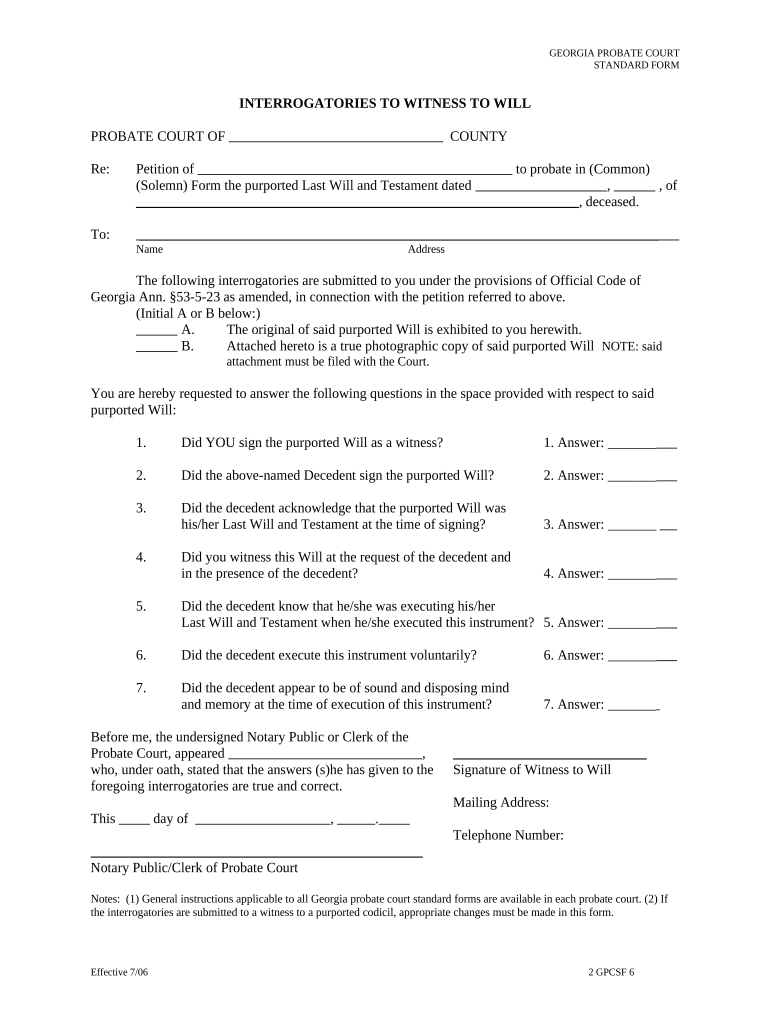
A notarized self-proving affidavit attached to the Will can eliminate live witness testimony at probate and speed estate administration.

Required details and legal formalities

Full Legal Name: Use accurate legal name
Execution Date: MM/DD/YYYY format
Witness Signatures: Witnesses must sign
Notary / Self-Prove: Optional affidavit available
Beneficiary IDs: Names and relationships
Executor Details: Primary and alternate

Where to file, send, or submit a Georgia Will

A Will itself is not filed immediately; it is presented to probate court after the testator’s death. These routes describe common post‑death steps.

  • Probate Court Filing: File original Will with the clerk in the county where decedent resided.
  • Attorney Retention: Many attorneys hold originals and submit to court when probate begins.
  • Executor Submission: Executor presents Will to probate court to open administration.
  • Record Keeping: Clerk will docket the Will; original remains part of estate file.

Customizing an online Georgia Will workflow

When preparing a Will with digital tools, configure authentication, signature order, and storage to match Georgia formalities.

Field Configuration
Signature Type Wet signature recommended; attach self-proving affidavit if notarized
Witness Handling Collect witness names, addresses, and signatures in presence of testator
Notarization Record notary details and attach certificate
Final Storage Save a PDF original and store physical original securely

Digital signing and eSubmission — technical considerations

Preserve a clear audit trail and retain the physical original when state formalities call for wet signatures or self-proving affidavits.

  • File Formats: PDF/A and DOCX supported
  • Integrations: Works with document systems like NetSuite and Google Workspace
  • Authentication: SMS, email, or advanced signer verification

Key risks when a Georgia Will is prepared incorrectly

Invalidation: Will may be ruled invalid
Probate Delay: Administration timeline extends
Beneficiary Disputes: Litigation likelihood increases
Tax Consequences: Unplanned estate/tax issues
Guardian Uncertainty: Minor care arrangements unclear
Clerical Errors: Ambiguity causes contested interpretation

Practical tips for accurate Georgia Will completion

Follow straightforward practices to reduce disputes, avoid probate friction, and ensure the testator’s intent is honored.

Use Full Legal Names
Always enter exact legal names and addresses for testator, beneficiaries, and executors to avoid identity confusion and delays in probate processing.
Attach Self-Proving Affidavit
Consider notarizing a self-proving affidavit at execution to remove the need for witness testimony when probate is opened.
Name Alternates
Provide alternate executors and guardians to ensure continuity if the primary appointee cannot serve.
Keep Originals Safe
Store the signed original in a secure location and inform the executor to prevent loss or inadvertent destruction.

Real-world examples of how estate documents are used

These short examples show typical scenarios where a Georgia Will clarifies post‑death distribution and administration.

Individual Testator

A single parent drafts a will to name a guardian and leave assets to children

  • Uses a self-proving affidavit
  • Attorney stores original and executor files probate paperwork promptly to reduce delays and disputes.

Estate with Property

An owner of rental property directs real estate disposition and appoints an executor

  • Executor authority includes sale powers
  • Clear specific bequests and residual clause prevent partial intestacy and simplify probate sales.

Frequently asked questions about Georgia Wills

Answers to common concerns about validity, signing, witnesses, eSign use, and revocation under Georgia rules.


Need help? Contact support

be ready to get more
Join over 28 million airSlate SignNow users